

An excavator here has two ways of having a bad year, and neither of them is really about the excavator. One is under the tracks, left there by an industry that has been putting pipe in this ground since long before anyone was keeping careful records. The other arrives from above, in spring, while the machine is parked and nobody is anywhere near it.
This page covers both, along with the working shape of the dig-notice regime and the reason we name the governing Act here without linking it. For what stays true of the machine in any state — boom and swing geometry, undercarriage life, the attachment ecosystem — see the excavator insurance pillar.
What excavator insurance costs in Oklahoma
No number belongs on this page, because the machine is not the main input. What moves an Oklahoma excavator premium is what you take on and where it lives: how often you work inside congested corridors or on former production ground, how deep you go, whether energy-support work is part of the book, the size and age of the unit, the attachments, your record, and — unusually for this class — how well protected the yard is where the equipment sits between jobs. Two crews with identical fleets, one trenching in a built-up district and one grading pad in the country, are separate risks and price that way.
Oklahoma excavator regulations: dig notice and the one-call duty
Operators must mark within 48 hours of notice (excluding weekends/holidays).
Our data records the governing law as the Underground Facilities Damage Prevention Act at 63 O.S. § 142.6, administered through OKIE811, and we name it here without linking it — this site cites only documents it has opened and read, and that one has not been verified to the standard the rest of these citations meet. The operating shape is not in dispute. Notice belongs inside a band that opens ten days ahead and closes two days before work, with weekends and legal holidays excluded from the count, and the operators then have a matching two-day period to mark. Where Oklahoma differs is in what those marks can possibly cover. Both major markets sit on ground that has been produced, gathered and piped for well over a century, by operators that have merged, sold or vanished, under recording practices that were not what they are now. So a locate that is completely accurate about the registered, currently-owned facilities may still be a partial description of the subsurface — and the marks were never a survey, never a warranty, and never a transfer of what happens when the bucket finds something older than the records.
Common excavator risks in Oklahoma
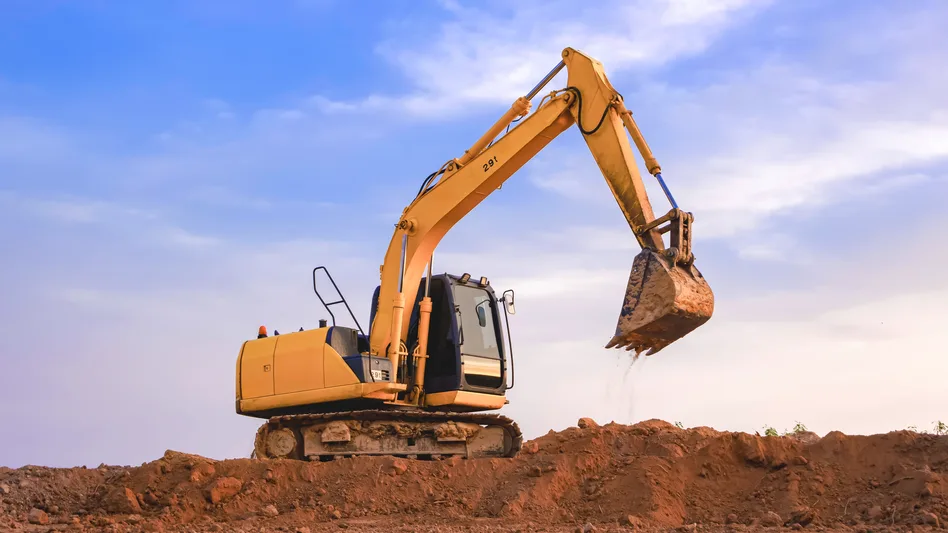
The strike leads, as it does on every excavator, and the local variant is a line that belongs to an era rather than to an owner. When one of those lets go the bill is the facility restoration, the service lost downstream, an idled crew and a closed site — and on anything pressurized or carrying fiber it runs far past what the machine is worth. Sitting beside that, and genuinely competing with it here, is weather. Severe convective storms bring hail, damaging gusts and occasional tornado tracks across the state each year, and equipment loses glass, lights, mirrors, hoses and cab interiors while parked and unattended. Ground behavior contributes the rest: expansive red clays and shale that hold well when dry and lose strength quickly when wet, so trench walls and access both deteriorate after rain, and the familiar constants of a swing into something behind the operator and a slide at the lip of the cut.
Common Oklahoma excavator claims we see
- Strike on legacy production infrastructure. The characteristic Oklahoma loss — the current records were right and the ground was older than the records.
- Storm damage to equipment at rest. Hail and wind reaching a yard or staging area, hitting glass, lights, hoses and cab interiors across several machines at once.
- Utility strike with downstream interruption. Restoration plus lost service, on a scale set by whoever was fed by the line rather than by the damage.
- Wall failure in wet clay. Red clay and shale that stand up dry and come apart after rain, taking shoring and spoil into the cut.
- Swing contact on a constrained site. Counterweight into a structure, a fence or a parked vehicle in tight urban and residential work.
Why Oklahoma excavator owners choose Equipment Guard Insurance
With no state license standing behind general contracting here, the documents in your file are doing the work a credential does elsewhere, and a package assembled around somebody else’s trade is a poor way to present yourself. We write the equipment on its own so both halves of the Oklahoma problem get asked about directly — what you dig and where, and where the machines sleep when they are not earning — then place the schedule and the underground exposure with markets, named on our homepage, that will underwrite excavation and storm-exposed equipment on their merits. Liability and comp you already carry can stay exactly where they are.
Major Oklahoma excavator markets
- Oklahoma City. A wide, low-density metropolitan footprint built over producing ground, so urban corridor work and legacy field infrastructure overlap constantly.
- Tulsa. The oldest concentrated industrial and pipeline subsurface in the state, with river-adjacent sites and long-established service networks.
- Norman. University and institutional build-out on constrained campus ground where live services run beneath almost every site.
- Edmond. Sustained residential and commercial expansion at speed, which is exactly the schedule pressure that shortens locate discipline.
- Broken Arrow. Suburban and light-industrial development on the north-eastern side, with heavy site work and tight delivery windows.
- Lawton. South-western municipal, military-adjacent and regional work, with long approaches and dispersed jobs.
Related
- Excavator insurance — the machine physics that hold in every state.
- Skid Steer insurance in Oklahoma — the machine whose Oklahoma peculiarity is where its lien gets filed.
- All equipment insurance in Oklahoma — the state hub.
- Equipment floater · Rented & leased equipment
Primary sources
We do not link an Oklahoma dig-notice section here. The notice duty described above follows Oklahoma’s own one-call statute as our data layer records it; where the state publishes a document that states it directly, this page links it.
Oklahoma excavator insurance FAQs
How far ahead does an Oklahoma excavation have to be called in?
The band runs from ten days out at the earliest to two days before the work at the latest, with Saturdays, Sundays and legal holidays left out of the count, and the operators then have their own two-day window to get marks down. Both edges do damage. A call made too early for a job that slips has to be replaced, and a call made on a Friday for a Monday start has not actually bought the notice period the crew thinks it has.
What is under the ground around Tulsa and Oklahoma City that is not on a map?
A great deal, and it is the defining local exposure. Both metropolitan areas grew up inside producing fields, so alongside the current utility network there is more than a century of gathering line, flow line, service pipe and plugged-and-abandoned well infrastructure — installed by operators who no longer exist, under practices that predate systematic recording. Marks can be entirely accurate about the facilities that are owned and registered today and say nothing about what an earlier era left behind. Treating a clean locate as a picture of the whole subsurface is how the expensive claims start here.
Do you link the statute on this page?
No. Our data records the governing law as the Underground Facilities Damage Prevention Act at 63 O.S. § 142.6, and we name it without linking it, because this site links only documents it has opened and read to the standard the rest of its citations meet, and this one has not been verified to that standard. Naming the reference and being open about the gap is more useful than a link nobody checked.
Does the storm season really matter to an equipment schedule?
It matters more than most owners expect, because the loss happens when nobody is working. An excavator is a large, exposed, immovable object for most of its life, and severe convective weather in this state produces hail, damaging straight-line gusts and occasional tornado tracks that reach yards and staging areas as readily as job sites. Glass, lights, mirrors, hoses, body panels and cab interiors are what actually get hurt. Where machines sit between jobs is therefore a real underwriting question here rather than a formality.
Who checks that a heavy-equipment contractor is competent?
Not the state, for general contracting. The Construction Industries Board licenses electrical, plumbing and mechanical trades and registers roofers, but general contracting is not licensed at state level, so an owner or general contractor evaluating you is reading your experience, your references and your insurance documents. That puts unusual weight on what those documents actually say — which is an argument for having the equipment and the underground exposure arranged deliberately rather than inherited.
Can the excavator be placed on its own?
Yes. Equipment Guard Insurance writes equipment monoline in Oklahoma, so the machine and its attachments carry their own schedule and the strike exposure is dealt with alongside, with no need to disturb liability or comp you already have in place.