
This page is about the machines that lift on a construction site rather than in a building: rough terrain forklifts on big tires, and telescopic handlers that reach a pallet onto the third floor of a frame from the mud at the bottom of it. They are the material-handling backbone of a build, and they behave nothing like the counterbalance trucks that share their name.
The distinguishing fact is that a telehandler’s capacity is not a number. It is a surface — a function of how far the boom is extended and how high it is raised — and it falls away much faster than intuition suggests. Understanding that is understanding this class of risk.
Get a Free Quote Call 317-942-0549
The load chart is the machine
Every telehandler carries a load chart in the cab. It maps boom angle and extension against the maximum weight the machine can carry without losing stability. At short reach and low height the capacity is generous. Extend the boom out toward horizontal and the same machine may be rated for a fraction of that.
The reason is leverage. As the load moves forward, it acts on a longer arm about the front axle, and at some point the moment it creates exceeds what the counterweight and rear axle can resist. The machine does not fail gradually; it reaches a tipping point and goes over the front, usually forward and often while the operator is watching the load rather than the machine.
Almost every serious incident on this class traces back to that chart — a load placed at a reach the machine was not rated for, or a load whose actual weight was estimated rather than known. It is why underwriters ask about lift capacity and typical loads rather than simply about machine value.
Ground, slope and the stability that is not on the chart
The load chart assumes firm level ground. Construction sites rarely provide it.
A machine on a slope has already used part of its stability margin before it lifts anything, and a machine on soft or backfilled ground can lose that margin mid-lift as one wheel settles. Frame leveling and outriggers exist to recover some of it, and they only help if they are used. Sideways stability is worse than forward stability on most of these machines, which is why a load swung across the machine on a cross-slope is a disproportionately dangerous maneuver.
This is also why the same machine on a paved yard and on an active earthworks site are genuinely different submissions.
Lifting people changes the machine
A telehandler with an approved work platform fitted becomes, in practical terms, a way of putting a person in the air. That is a different exposure class from moving pallets, and it is treated as one.
Platforms must be designed for the specific machine, secured as intended, and used within their own restrictions. Improvised arrangements — a pallet, a cage that came from another machine, forks used to raise someone directly — are the origin of the most serious injuries on this equipment and are indefensible after the fact.
From an insurance standpoint, personnel lifting needs to be declared. It affects the liability picture and the workers compensation picture at once, and it is not something to discover on a claim file.
Attachments: more than forks
The carriage on a telehandler takes far more than a pair of forks. Buckets, grapples, sweeper heads, truss booms and jibs that extend reach further, winches, and work platforms all mount to it.
Two of those are worth flagging on a schedule. A truss boom extends the load further forward, which pushes the machine down its own capacity curve and is exactly the configuration in which chart limits get exceeded. And a work platform is both expensive and, as above, a change in what the machine is being used for. Neither belongs in a blanket tools limit.
Struck-by, and the people around the machine
Unlike an excavator or a dozer, a lifting machine works where people are. Material is being delivered to crews, which means crews are near the load, under it, or in the path of a machine reversing with restricted visibility.
The recurring events are a load falling or shifting during placement, a person struck by a machine maneuvering on a congested site, and crush injuries between the machine and a fixed object. These are injury claims first and equipment claims a distant second, which is why this pillar’s center of gravity sits closer to liability and workers compensation than most of the machines on this site.
Transport, theft and where it sleeps
Rough terrain machines are trailered between sites, though some travel short distances under their own power between adjacent work areas — which raises the same road-use questions a backhoe does, and which is worth declaring if it happens routinely.
Theft sits in the middle of the range. These are large, slow, conspicuous machines, which helps, but they are also in constant demand and they live on open construction sites for the duration of a build rather than returning to a yard nightly. Site-left is the norm on this class rather than the exception, and the storage conversation has to be realistic about that rather than pretending a yard is involved.
Who runs one
Framing and shell contractors, masonry outfits, roofers moving material up, general contractors running site logistics, agricultural operations, and rental fleets. The common thread is that the machine is a service to other trades rather than a machine doing its own work, which means it spends its day around other people’s crews and other people’s materials. A rental fleet or a dealer holding lift trucks as stock is written differently from a crew’s own machine; see equipment dealer insurance.
That has a practical consequence for liability: much of what a telehandler damages belongs to someone else on the same site, which is precisely the territory the care, custody and control exclusion occupies. It is worth reading that part of the liability page with this machine in mind.
Tires, wear and the costs the floater will not carry
Rough terrain machines run large pneumatic or foam-filled tires, and on a site full of rebar offcuts, broken block and general debris those tires take punishment. Tire cost is a real line in the operating budget on this class, larger than owners expect and entirely outside what a floater answers for.
The distinction is the same one that applies across every machine here: sudden and accidental damage is a loss, and gradual deterioration is maintenance. A sidewall opened by a piece of steel is arguably the former; four tires worn out over a season is unambiguously the latter. Foam filling changes the economics — it removes puncture as a failure mode and adds substantially to the replacement cost when the tire does wear out.
Boom wear pads, chains on masted machines and the hydraulic cylinders that do the lifting are the other consumables worth knowing about, for the same reason: they are the bills people expect insurance to absorb and it does not.
Rental, and the machine you do not own
Telehandlers are among the most heavily rented machines on any build, because most contractors need one for part of a job rather than all year. A framing crew may want one for six weeks and have no use for it afterwards.
That makes the rented and leased equipment line more relevant here than on almost any other pillar. Rental agreements on lifting machines frequently carry additional conditions — restrictions on who may operate, requirements around platforms, and obligations for continuing rental charges while a damaged unit is repaired. Reading the agreement matters more on this class than on a machine that simply digs.
It also means many operators are running a machine they are unfamiliar with, whose load chart differs from the one they learned on. That is a real contributor to incidents and a reasonable thing for an underwriter to ask about.
Where state law changes the answer
The physics is universal. The regulatory framework around who may operate these machines is not.
Powered industrial truck operation carries training, evaluation and refresher requirements. What varies is which program administers them where you work: some states run their own occupational safety program covering private employers, some cover only public employees, and others operate under the federal scheme directly. The consequences are practical rather than theoretical — different inspection posture, different recordkeeping expectations, different penalty structures, and sometimes additional requirements layered on top of the federal baseline.
For a contractor operating in more than one state, that means an identical training record can satisfy one jurisdiction and fall short in another. Working out which regime applies where you actually work is the job of the state pages now being built; this section explains why the question exists rather than answering it forty-eight times.
A note on the warehouse machine
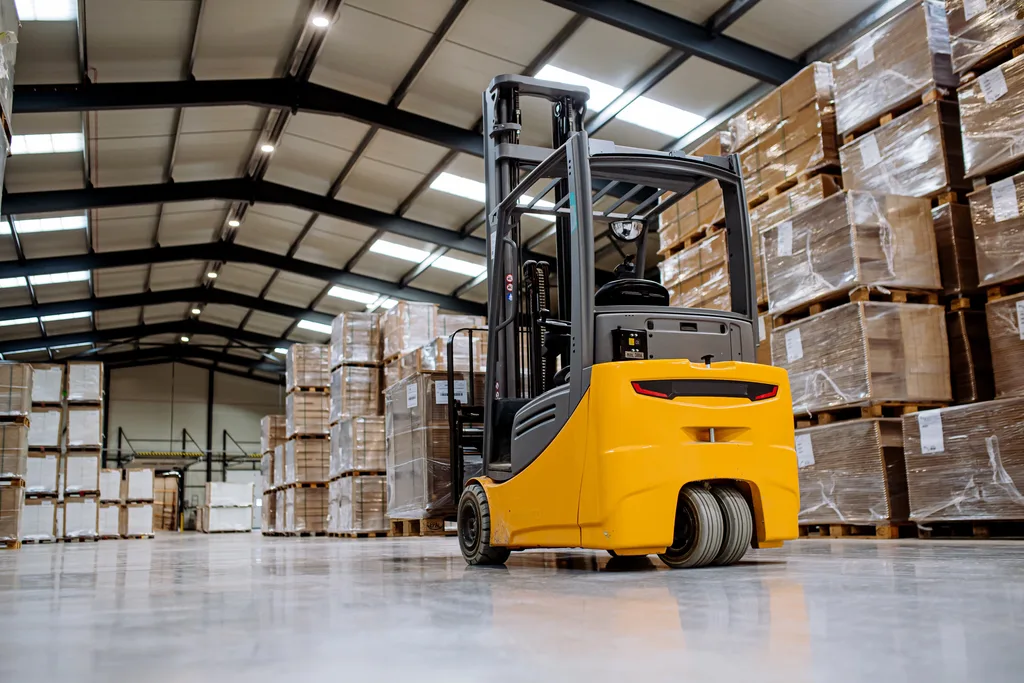
Counterbalance forklifts working indoors on flat concrete are a different animal from everything described above, and they are usually a different account — the exposure sits inside a building, alongside racking, stock and pedestrians, rather than on open ground. If your machines are warehouse trucks rather than site machines, say so at the outset, because almost none of the reasoning on this page transfers.
Forklift insurance by state
Whether operator safety runs through a state OSHA plan or federal OSHA changes state by state, so this machine gets a page per state rather than a paragraph. Each one covers who enforces the operator obligation there, and what the state does with the shared federal frame.
- Alabama
- Arizona
- Arkansas
- California
- Colorado
- Connecticut
- Delaware
- Florida
- Georgia
- Idaho
- Illinois
- Indiana
- Iowa
- Kansas
- Kentucky
- Louisiana
- Maine
- Maryland
- Massachusetts
- Michigan
- Minnesota
- Mississippi
- Missouri
- Montana
- Nebraska
- Nevada
- New Hampshire
- New Jersey
- New Mexico
- New York
- North Carolina
- North Dakota
- Ohio
- Oklahoma
- Oregon
- Pennsylvania
- Rhode Island
- South Carolina
- South Dakota
- Tennessee
- Texas
- Utah
- Vermont
- Virginia
- Washington
- West Virginia
- Wisconsin
- Wyoming
We are licensed in all 48. A state listed without a link does not yet have its own forklift page — send the schedule and we will write it regardless.
Coverage breakdown
- Equipment floater — the machine and its attachments.
- General liability — dropped loads, damage to other trades’ materials, site injury to non-employees.
- Workers compensation — the operator and everyone working near the load.
- Rented and leased equipment — telehandlers are among the most-rented machines on a build.
- Transit and trailer transport — moving between sites.
- Commercial auto — if the machine uses public roads.
- Umbrella and excess — injury claims on this class are the ones that reach primary limits.
What forklift and telehandler insurance costs
No published figure would be honest. The inputs that move it: rated capacity and machine value; whether personnel lifting is part of the work; the ground and slope conditions of typical sites; attachment values, particularly truss booms and platforms; operator training and evaluation records; whether machines stay on site for the duration of a build; and loss history, weighted toward injury claims rather than damage.
Claims scenarios
- Forward tip at extended reach. The load-chart event, usually with a load whose weight was estimated.
- Load dropped during placement. Damage to the structure, to other trades’ materials, or to anyone beneath.
- Person struck on a congested site. Reversing or maneuvering with restricted visibility around the boom.
- Machine into soft ground mid-lift. One wheel settles, the stability margin disappears, and the load goes over.
Underwriting realities
Rated capacity and maximum reach for each machine. Whether work platforms are used and whether they are machine-matched. The attachment list with values. Training and evaluation records for operators, and whether refreshers are tracked. Typical site conditions — paved yard against active earthworks. Whether machines are site-left for the duration of a job. And loss history with injury claims separated from damage claims, because on this class they say different things.
Why Equipment Guard Insurance
Lifting machines sit at the join between the equipment schedule and the injury exposure, and they are frequently the machine a generalist underwrites least carefully. We ask about the load chart and the platform before we ask about the value. The panel is named on our homepage.
Related
- Skid steer insurance — the other machine that lifts with forks on a site.
- Backhoe insurance — the other machine that may use a public road.
- Workers compensation — the line this machine leans on hardest.
- All equipment we cover
Primary sources
Frequently asked questions about forklift and telehandler insurance
Is a telehandler the same thing as a forklift?
It does the same job with different physics. A conventional forklift lifts vertically on a mast; a telehandler extends a boom forward as well as up, which moves the load away from the machine and changes its stability continuously as the boom goes out. That difference is the reason the two are underwritten differently even though both are described as lifting equipment.
What is a load chart and why does it matter so much?
It is the table that states what the machine can safely lift at each combination of boom extension and angle. Capacity falls sharply as the load moves away from the machine, so a telehandler that handles a heavy pallet at low reach may be well over its limit with the same pallet at full extension. Most tipping incidents on this class are load-chart events rather than mechanical failures.
Can I use a telehandler to lift people?
Only with a work platform designed and approved for it, and the rules around that are specific. Lifting personnel converts the machine into something closer to an aerial work platform for risk purposes, and it changes the exposure enough that it needs to be declared rather than assumed.
Does operator certification affect my premium?
It affects both premium and the conversation after an incident. Powered industrial truck operators require training and evaluation, and refresher requirements apply. Whether your workplace falls under the federal program or a state-run equivalent changes some specifics, which is one of the reasons this machine gets a page per state.
Are attachments covered?
Only if they are on the schedule. Telehandlers take forks, buckets, truss booms, jibs, winches and platforms, and several of those are worth enough to exceed a per-item blanket sublimit. A truss boom or a work platform is not a tool in any useful sense.
Does a rough terrain forklift travel on public roads?
Sometimes short distances between adjacent sites, which raises the same road-use questions a backhoe does. Most travel is on a trailer. Tell us if road travel is routine, because it moves part of the exposure onto a different policy.
How much does telehandler insurance cost?
There is no honest published number. What moves it is the machine value and lift capacity, whether personnel lifting is part of the work, the sites you work on and how uneven the ground is, attachment values, operator training records, and loss history.