
The telehandler is usually the least discussed machine on a Maine site and the one with the longest reach into things that cannot be replaced quickly. It carries block and lumber up a wall, lands a bundle on a deck, and never features in the morning briefing until it lands one somewhere nobody meant.
The regulatory picture here is the one owners most often get wrong, and it is wrong in a specific direction: Maine does have an approved safety plan, and it does not cover a private contractor. That is not a technicality on a site where a public crew and your crew are both lifting. For the behavior of the machine itself — load charts, boom geometry, ground bearing, the forward-tip pattern — begin at the forklift insurance pillar.
What forklift insurance costs in Maine
There is no honest premium to publish here, because the figure follows the people and the paperwork rather than the machine. What actually moves it in Maine is the number of operators on the unit and whether each has a recorded evaluation against that model, whether you run a fixed-mast truck or a boom machine reaching into structures, how much of your calendar is compressed into the short building season, whether the unit winters outdoors, and your own record of losses. The value on the schedule matters least of the group, which is the opposite of what most owners expect when they call.
Maine forklift regulations: who enforces operator safety
Maine runs an OSHA-approved State Plan that covers only state and local government employees; a private equipment contractor here is under federal OSHA, including the powered-industrial-truck standard.
Read that carefully, because both halves are load-bearing and contractors routinely keep only the first. Yes, there is an approved Maine plan; no, it is not the authority over your operators. Its jurisdiction stops at state and local government employers, which means the town garage, the school district and the county highway crew sit inside it while a private equipment contractor sits under federal enforcement — including the powered-industrial-truck standard, the operator evaluation requirement and the refresher obligation. The practical consequence is sharpest on public work, which is a large share of the lifting in this state. On a municipal project you can have two enforcement identities on one patch of ground: the owner’s own employees answering to the state program, your crew answering to a federal inspector, and bid documents written by people fluent in only one of the two. That mismatch shows up as safety language in a contract that does not quite describe the regime your crew is actually under. It is not a reason to argue with an owner. It is a reason to keep operator evaluations documented to the specific machine, so the answer is the same whichever authority does the asking.
Common forklift risks in Maine
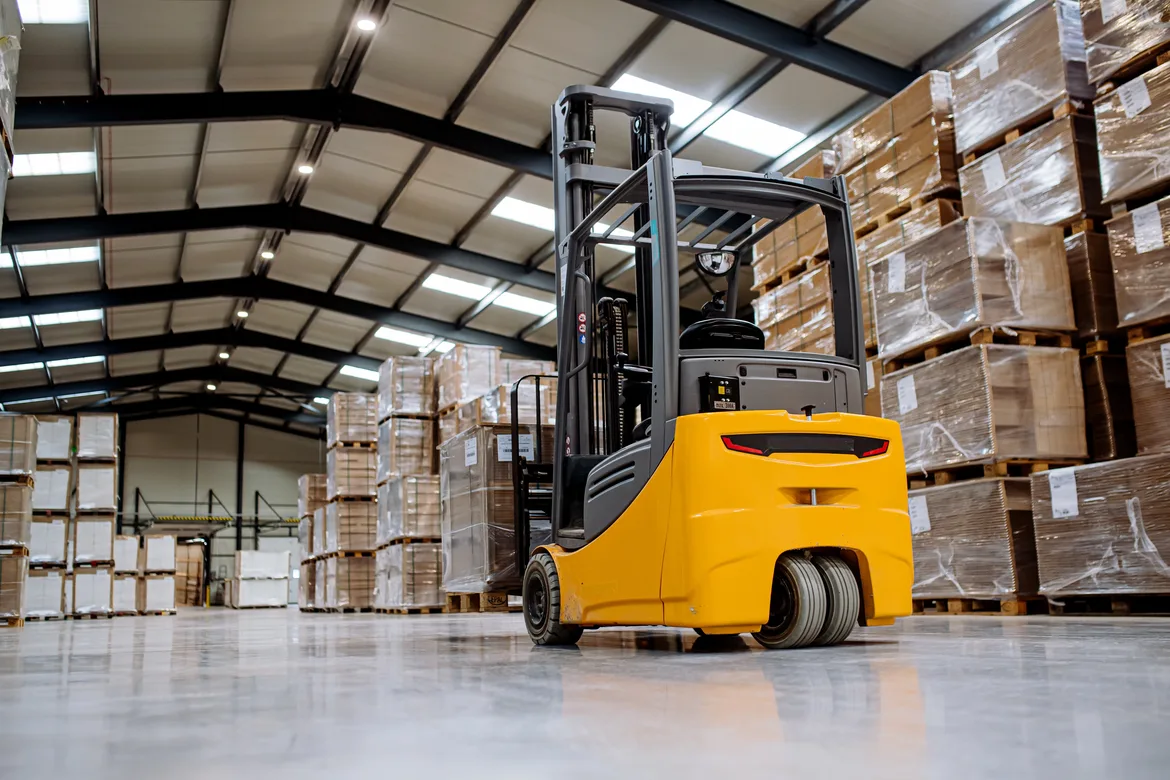
People and finished work carry these claims, and the machine rarely does. A boom machine that lets go of a load, or that leans as reach consumes the capacity it started with, hurts whoever was underneath and destroys whatever it was carrying, and then damages the building it was reaching into. Maine adds a ground problem with a schedule attached: frost lifts the surface and thaw drops it, so set-up assumptions made in one month are wrong in the next, and a compressed season puts more machines and more seasonal operators into the same weeks. Coastal and island work adds barging, tides and sites where getting a second machine or an ambulance to the scene is not a short trip.
Common Maine forklift claims we see
- Load released at height during placement. The material and the finished work beneath it drive the number, not the repair bill.
- Forward lean as the boom reaches out. Capacity falls away with extension and the chart is consulted least when it matters most.
- Injury to a worker positioned under the lift. The single largest outcome on this class, and it never touches the equipment policy.
- Set-up failure on thawing or frost-disturbed ground. A seasonal certainty in this state rather than an unlucky event.
- Strike on a completed wall, window or roof edge. Reaching into finished work is where a routine lift becomes an expensive one.
Why Maine forklift owners choose Equipment Guard Insurance
We will tell you before you ask that the floater is the cheap part of this account. The expensive part is the person under the load and the material that landed on the wrong thing, and in Maine that sits under a federal regime a lot of owners here believe they have already satisfied because the state has a plan. Clearing that up is worth more than a few points of rate. We write the equipment monoline so the machine can be scheduled properly on its own, and we place through markets — named on our homepage — that will read a jobsite lifting exposure honestly instead of pricing it as indoor equipment.
Major Maine forklift markets
- Portland. The densest build-out in the state, with lifts made on constrained peninsula sites where the boom is always over something occupied.
- South Portland. Waterfront industrial and terminal work, where placements happen around live operations and salt air lives on the machine.
- Lewiston and Auburn. Mill conversion and heavy renovation, where material is landed into structures that were built long before anything was standardized.
- Bangor. The regional hub for the eastern interior, with long travel to work and machines that stay out for weeks at a time.
- Augusta. State and institutional projects where documented operator evaluation is checked before a unit is let onto the site.
- Biddeford. Coastal redevelopment and older mill stock, with tight streets and no room to reposition a machine once it is set.
Related
- Forklift insurance — the machine physics that hold in every state.
- Excavator insurance in Maine — the machine whose obligations start before the bucket moves at all.
- All equipment insurance in Maine — the state hub.
- Equipment floater · Rented & leased equipment
Primary sources
- State Plans — Occupational Safety and Health Administration (operator safety)
- Professions and Occupations | Office of Professional and Occupational Regulation — No statewide general contractor license (specialty trades licensed by the Office of Professional and Occupational Regulation under the Department of Professional and Financial Regulation) (contractor licensing)
Maine forklift insurance FAQs
Does Maine run its own workplace safety plan?
It runs one, and it does not reach you. The approved Maine plan covers state and local government employers — the public works garage, the school district, the county highway crew. Private-sector employers, including every equipment contractor reading this, remain under federal OSHA, and that is where the powered-industrial-truck operator training and evaluation requirements come from for your people. Both halves are true at once, and only the second one governs your machine.
So who arrives if a telehandler drops a load on my site?
A federal inspector, working to the federal standard, issuing a federal citation with a federal appeal route. There is no Maine safety office in that sequence for a private employer. The state plan you may have heard about would be the relevant authority only if the injured operator worked for the town or the state rather than for you.
What happens on a municipal job where both are present?
You get a single site with two enforcement identities on it, which is the part contractors here find genuinely counterintuitive. The town crew running its own lift equipment on that project sits inside the state plan; your crew running a telehandler ten steps away sits under federal OSHA. Nothing about the physical work changes at that line, but the training records each side has to produce, and to whom, do.
Does the split change what the owner asks me for at prequalification?
Often, yes — and not always coherently. Public owners in Maine write bid documents in the vocabulary of the program they themselves live under, so a contractor can be handed safety language framed around the state plan for work that its own crew performs under the federal standard. The practical answer is to keep operator evaluations documented against the specific machine, which satisfies the question whichever way it is asked.
How much does Maine weather actually change the exposure?
A great deal, because it changes the ground and the calendar together. Deep frost heaves and then releases the surface a rough-terrain machine sets up on, so a pad that carried a load in February is a different pad in April. The building season is short, which stacks lifts into fewer months with more machines and more temporary operators running them, and a unit that wintered outdoors is a unit nobody has looked over in months.
Can you write just the machine?
Yes. Equipment Guard Insurance places equipment monoline in Maine, so the telehandler and its attachments go on a schedule of their own without disturbing anything else you have. Because the enforcement question here is genuinely confusing, we will also map plainly which authority covers whom on the projects you actually bid, before you need to know.