
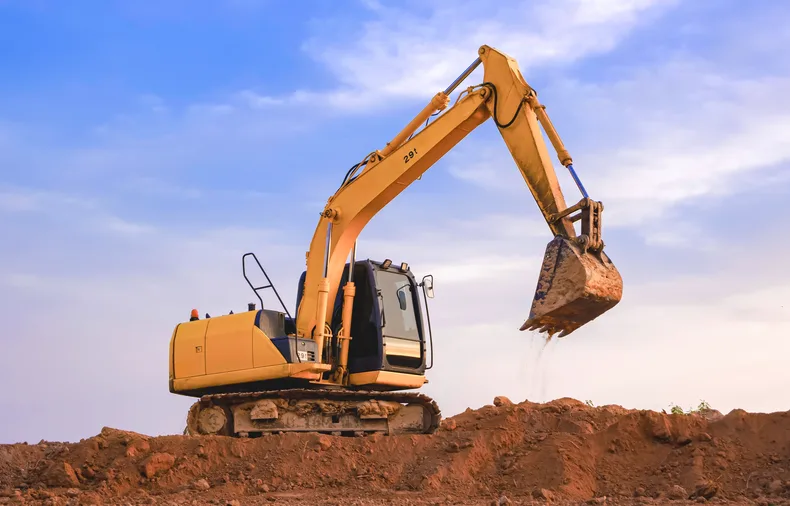

An articulated hauler is usually the machine that forces an equipment policy’s structural questions into the open. How values are stated, which settlement basis applies, where the deductible sits and how much iron a single event could reach are decisions that live quietly for years on a small fleet and turn expensive the moment a large unit is involved.
The line item that changes the arithmetic
Most equipment schedules are made of machines whose individual loss would be inconvenient. A hauler is generally not one of those. It sits at or near the top of the value column, and once a single machine represents a substantial share of the whole schedule, the decisions that govern how that value is expressed stop being administrative.
That is the useful thing about writing this class. The questions were always there — a compact fleet simply never had to answer them precisely. The articulated hauler overview covers the machine class itself; what follows is about the shape of the limit around it, which is where the price actually comes from.
Scheduled values or a blanket limit
The first structural fork is whether machines are listed individually with values attached or covered by a single limit applying across the fleet.
Scheduling gives certainty. Each machine has a serial number, a year and a value, and there is no argument at a claim about whether a unit was covered or for how much. It also makes the schedule auditable against the yard, which is the single most useful property a schedule can have.
A blanket limit gives flexibility. Units come and go without an endorsement each time, which suits fleets of small, similar, frequently-traded equipment. What it does not do is protect you from having set the total too low, because a blanket limit is only as good as the aggregate behind it.
Mixed fleets usually end up with both — the large units scheduled by serial number where certainty matters most, the support equipment inside a blanket where flexibility does. The equipment floater is where that structure is expressed, and it is a decision made at binding rather than a default to inherit.
The settlement basis you choose is the settlement you get
The second fork decides what a covered loss actually pays. Actual cash value settles net of depreciation, which suits an older machine that has already been written down and will be replaced with something similar. A stated or agreed amount settles against a figure fixed at binding, which removes the depreciation argument entirely and puts the burden on getting that figure right. Replacement cost is available on newer units in some markets and behaves differently again.
None of the three is universally correct, and a fleet with machines of different ages usually wants more than one of them. The failure mode is uniformity applied without thought: an entire schedule written on one basis because that was the basis on the first policy anyone bought.
The related discipline is keeping values current. A machine bought several seasons ago and carried at its purchase figure ever since is not describing today’s replacement market in either direction, and neither error is comfortable.
Deductibles do more work than owners expect
A deductible on a large machine is doing two jobs. It sets what you retain, obviously. Less obviously, it decides which losses appear in your history at all.
Damage to a hauler clusters at both ends of the range. Minor body and component damage happens continuously on a haul road and is frequently absorbed rather than claimed. Severe losses — overturns, fires, a machine that goes into water — are rare and large. A deductible set with the severe end in mind quietly removes the frequent end from the loss run, and a loss run without frequency reads very differently to the next underwriter who sees it.
It matters where the deductible attaches, too: per item, per occurrence, or per occurrence with an aggregate. On an event that damages several machines at once, the difference between per item and per occurrence is the difference between one retention and several.
There is a reporting consequence as well, and it runs the other way from what most owners assume. A loss below the deductible is still a loss, and most policies require notice of an occurrence regardless of whether a payment is expected. Operations that decide informally not to report small damage because nothing will be recovered are building a habit that eventually catches a claim which turns out to be larger than it first looked. Reporting and claiming are different acts, and only one of them affects a loss run.
Accumulation: the number nobody writes down
The question an underwriter asks that owners are least prepared for is not what the fleet is worth. It is how much of it is in one place at one time.
Real-World Scenario: A quarry contractor parks the whole haul spread together at the pit through a seasonal shutdown, because it is the securest ground available and the machines are needed there in the spring. A fire that starts in one unit spreads across a tight row before anyone reaches the site, and the loss is not one machine but most of a fleet. Every unit was correctly scheduled at a defensible value, and the total still exceeded what anyone had considered a plausible single event — because nobody had ever added up what a single event could reach.
Fire, windstorm, flood and theft all scale with concentration. A fleet spread across four sites and the same fleet parked in one row represent identical insured value and completely different exposures, and only one of them is visible on a schedule sorted by serial number. This is why the storage question is asked machine by machine rather than as a single answer for the fleet.
Underinsurance is arithmetic, not bad luck
Where a coinsurance or reporting condition applies, stated values carry a consequence beyond the total limit. If the values reported fall materially short of what the property is actually worth, the shortfall can reduce what is paid on a partial loss — not only on a total one, which is the part that surprises people.
That means a schedule can be complete, accurate as to which machines exist, and still wrong. Every unit listed, every serial correct, values carried forward from a year when the market was different. The machine list and the values behind it deserve separate reviews, because they fail in different ways.
Rebuilt and remanufactured components complicate the same question in the opposite direction. A machine that has taken a major component overhaul is worth more than its model year suggests and is frequently still carried at the figure it had before the work, which understates it. Recording significant rebuilds against the schedule entry is a small piece of housekeeping that changes what a settlement looks like.
The limits that have to travel
Equipment coverage is written to move — that is the point of an inland marine form and the reason this line exists apart from a property policy. But movement carries its own structure, and the sublimits are where the detail lives.
A machine in transit on a lowboy is a different coverage question from the same machine at work, and it is answered by transit and trailer transport rather than by the working limit. The truck and trailer underneath belong to commercial auto. Units taken on hire for a peak create responsibility from delivery through return that an owned schedule does not touch, which is what rented and leased equipment coverage answers for. Each of those can carry a sublimit lower than the headline number, and reading them against how the fleet actually moves is more useful than reading the headline at all.
The liability side has its own geometry. Haul roads shared with light vehicles, public road crossings and site access points produce the third-party exposure, which sits with general liability, and on operations of any scale an umbrella layer is what keeps a severe event inside the program rather than outside it.
Setting the limit before a loss sets it for you
Every decision above is available while nothing is happening and unavailable afterward. Scheduled or blanket, which settlement basis on which machines, where the deductible attaches, how much iron sleeps in one place, and whether the sublimits match the way the fleet really moves.
If you want those laid out against a real fleet rather than in the abstract, send the machine list, the values and a description of where units are stored through the quote form. The track loader guide works the same program from the calendar side, and the pile driver guide covers what happens when somebody else’s contract sets these decisions for you.