
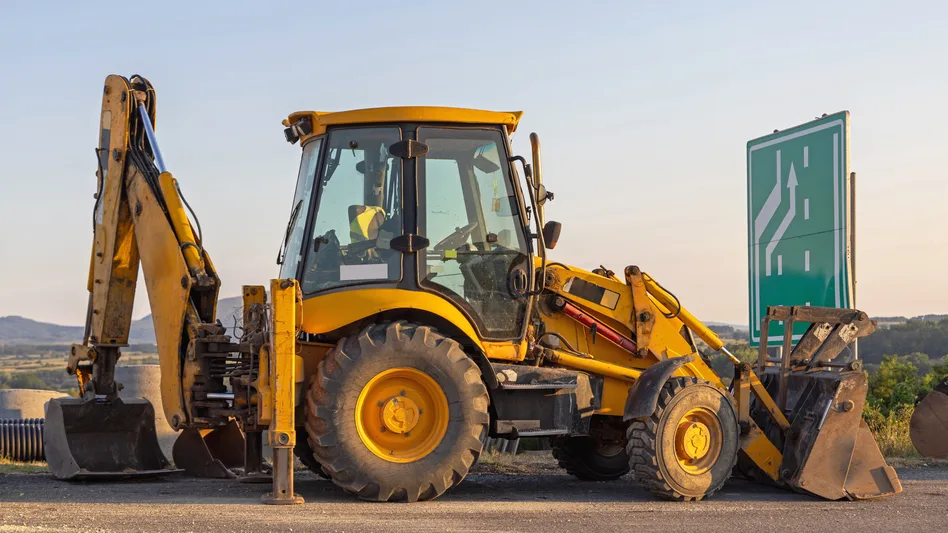
A backhoe loader is a tractor with a loader bucket on the front and an excavating boom on the back, on rubber tires and able to drive itself down a California road at modest speed. It is the most self-sufficient machine most small contractors own, and the only one that routinely leaves a site without a trailer — which is exactly what makes insuring it in California different.
This page is about California road treatment and the exposures that follow. For the dual-role machine physics and the aging-class valuation picture that hold everywhere, see the backhoe insurance pillar.
What backhoe insurance costs in California
No published figure would be honest. On this machine the largest inputs are whether and how much it travels public roads, where it is kept overnight — on the job or behind a gate — the machine value and valuation basis on what is often an older unit, the kind of work (road and utility work in live traffic prices differently from contained site work), and loss history.
California backhoe regulations: road operation
California classifies a backhoe as "special construction equipment" under Vehicle Code § 565 — equipment designed and used primarily off-highway for construction and only incidentally operated over highways, and not operated laden except within the boundaries of a jobsite. The section names bucket loaders, skip loaders and self-propelled earth-moving equipment among its examples, so a backhoe traveling a public road does so as special construction equipment rather than as a registered commercial vehicle.
That classification — California Vehicle Code § 565 — is the fact the whole account turns on. Because a backhoe is built for the jobsite but legal to move between jobs, part of its exposure sits in the equipment world and part in the vehicle world: damage to the machine stays on the equipment floater, while liability to other road users belongs on commercial auto. A slow, wide machine sharing a California road with traffic moving three or four times faster is a closing-speed problem, and rear-end contact with equipment is a recognized pattern rather than bad luck. Getting the split right before it becomes a claim is most of what we do on this class.
Common backhoe risks in California
Road travel is the defining California risk — the machine on a public road, marked and lit for travel well below traffic speed, is exposed in a way a trailered machine is not. Beside it sit the stabilizer claims: pads set on California pavement, sidewalks or over shallow utility boxes in established streets, a frequent and avoidable liability loss. The dual-role transitions — moving off with a stabilizer down, swinging the boom into something behind — round out the pattern, along with the buried-utility strike the machine shares with an excavator.
Common California backhoe claims we see
- Struck while traveling a public road. The closing-speed problem, and the reason road use is asked about first on a California account.
- Stabilizer damage to pavement or a buried box. Small, frequent and entirely a liability matter, common on utility and municipal work.
- Rear boom contact during a swing. Usually a vehicle or a structure that arrived after work started on a tight California street.
- Buried service struck while trenching. The excavator exposure on a machine people think of as a loader — the § 4216 dig-notice record matters here too.
Why California backhoe owners choose Equipment Guard Insurance
A backhoe account needs someone who asks the road question before it becomes a claim question, and who can place the equipment on its own without requiring the auto policy to move with it. That is the whole shape of what we do. We write the iron monoline and place through markets named on our homepage that will look at a California equipment schedule on its own merits.
Major California backhoe markets
- Central Valley. Water, sewer and agricultural infrastructure across Fresno, Sacramento and the SR-99 corridor, where backhoes drive between dispersed rural jobs and road travel is routine.
- Inland Empire. Municipal and utility crews serving the logistics build-out, with machines moving between adjacent sites on public roads.
- Los Angeles basin. Dense utility and street work in live traffic, where the stabilizer-damage and closing-speed exposures concentrate.
- San Diego. Cemetery, grounds, septic and small-contractor work across a spread-out county with regular road moves.
- Sacramento region. State-capital public-works and utility activity, where municipal fleets run backhoes on and beside the road year-round.
Related
- Backhoe insurance — the machine physics that hold in every state.
- Excavator insurance in California — the specialist that took half this machine’s job.
- All equipment insurance in California — the state hub.
- Commercial auto · Equipment floater
Primary sources
- California Vehicle Code § 565 — special construction equipment — California Legislative Information
California backhoe insurance FAQs
How does California treat a backhoe driven on a public road?
California classifies a backhoe as "special construction equipment" under Vehicle Code § 565 — equipment designed and used primarily off-highway for construction and only incidentally operated over highways, and not operated laden except within the boundaries of a jobsite. The section names bucket loaders, skip loaders and self-propelled earth-moving equipment among its examples, so a backhoe traveling a public road does so as special construction equipment rather than as a registered commercial vehicle.
Does my California backhoe need commercial auto coverage?
It depends on how it travels. Damage to the machine itself normally stays on the equipment floater whether it is on a site or driving between jobs. Liability arising from operating it on a public road is where the commercial auto question arises, and the two do not substitute for each other. If your backhoe routinely drives California roads, that exposure needs looking at directly.
What is the stabilizer-damage exposure on a California backhoe?
Working the rear boom means putting stabilizers down, and where they land is a recurring source of small liability claims — pads set on pavement, on a sidewalk, or over a buried service box cause damage that is entirely a liability matter rather than an equipment one. On California utility and municipal work in established streets, it is a frequent, avoidable claim.
Is the backhoe covered doing both loader and excavator work?
Yes — the equipment floater covers the machine regardless of which end is working. What changes is the claim pattern: incidents cluster at the transitions between the loader front and the boom back, such as moving off with a stabilizer still down or swinging the rear boom into something that arrived after work started.
How is a financed backhoe secured in California?
Like other construction equipment, a backhoe is not issued a DMV certificate of title — a lender perfects its interest by filing a UCC financing statement with the California Secretary of State, and is added to the policy as a loss payee against the scheduled machine. The skid steer page covers the title-and-lien picture in more depth.
Can I write just the backhoe, without a package?
Yes. Equipment Guard Insurance writes equipment monoline in California. A backhoe can be scheduled on its own; the road-use exposure is handled alongside it without requiring the rest of your program to move.