
An excavator is a counterweighted upper structure that rotates a heavy arm through a full circle while working next to things nobody can see. In California, the second half of that — the buried services under the bucket — is governed by a statutory notice regime that reaches almost every machine on almost every site.
This page is about California specifically: the dig-notice law, the strike exposure it manages, and how the size range plays out in this state. For the slew geometry, the coupler and the machine physics that hold everywhere, see the excavator insurance pillar.
What excavator insurance costs in California
No published figure would be honest. On this class the number moves with the size mix of the fleet — minis and full-size units price differently — the total insured value and valuation basis, where the machines are kept overnight (weighted toward the small end for theft), the depth and proximity of the digging you do, and loss history, particularly any utility-strike history and what changed after it.
California excavator regulations: the dig-notice regime
Government Code § 4216 defines "excavation" broadly — grading, trenching, digging, ditching, drilling, augering, tunneling, scraping and cable or pipe plowing — and the Article 2 regional-notification-center system sets a legal excavation start date of generally two working days after notification, with the operator required to locate and mark its subsurface installations.
That statutory framework is the reason the strike exposure is the defining feature of a California excavator account. When a bore or a trench crosses something that was mismarked or unmarked, the restoration cost is set by the utility and the consequential losses reach parties you never contracted with — a modest hole in a modest pipe can produce a claim far larger than the machine could ever sustain. Following the California Government Code § 4216 et seq. process and documenting the marks and the tolerance zone is what turns that from an open-ended liability into a defensible position, which is why we treat the dig-notice record as part of the account rather than as compliance overhead.
Common excavator risks in California
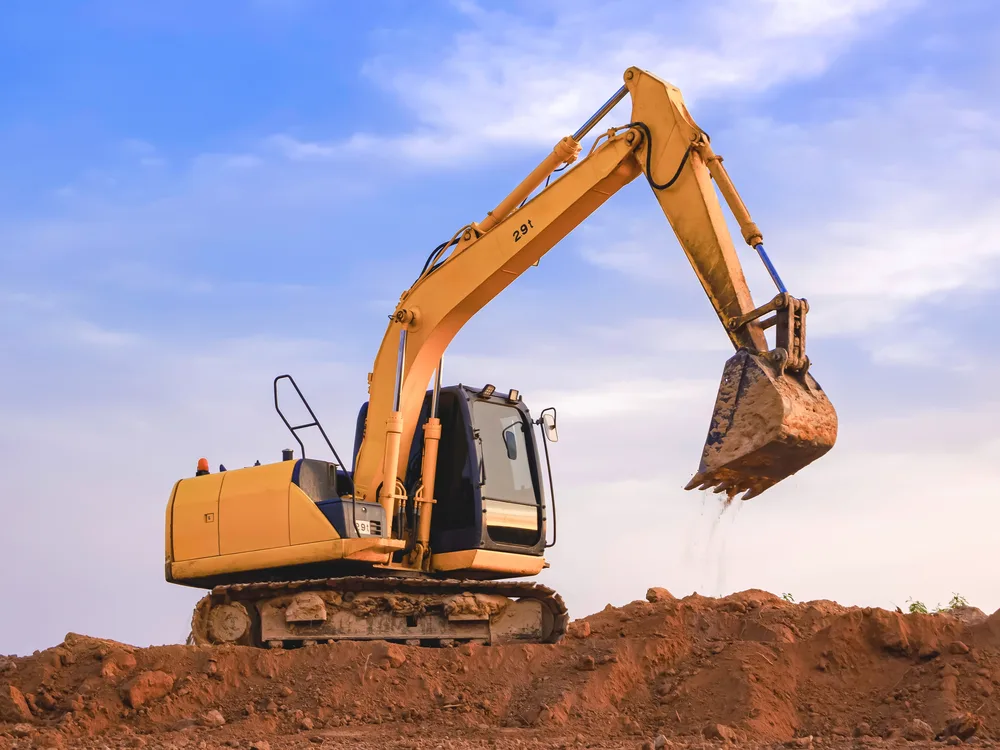
Two risks define the class here. The first is the strike — buried power, gas, water, sewer and fiber under a bucket committed into ground whose contents are inferred rather than seen, in a state with a dense and aging underground network. The second is the slew: the counterweight sweeping a circle the operator cannot fully see, meeting a wall, a vehicle or a scaffold in California’s tight urban lots. On the compact end, theft joins them — a mini on an open metro site is exposed the way a skid steer is, not the way a large tracked machine is.
Common California excavator claims we see
- Buried service struck during a dig. Restoration billed by the utility plus downstream outage losses — the claim the dig-notice record either defends or does not.
- Counterweight contact during a slew. A wall, a parked vehicle or scaffolding inside the tail-swing circle on a confined California site.
- Mini taken overnight from an open site. The compact-machine theft claim, frequently with the trailer.
- Sudden undercarriage damage from an obstruction. Distinct from the wear the policy will not pay for — a live risk on brownfield ground.
Why California excavator owners choose Equipment Guard Insurance
An excavator account needs someone who reads the liability question and the equipment question as genuinely separate — the strike sits on liability, the machine on the floater — and who treats the California dig-notice picture as real underwriting information rather than boilerplate. We write the iron monoline, so scheduling your machines does not require moving your liability, and we place through markets named on our homepage that will look at a California equipment schedule on its own.
Major California excavator markets
- Los Angeles basin. Dense urban excavation among aging buried utilities, where the dig-notice record and the slew envelope on confined lots drive the liability claims.
- San Francisco Bay Area. Infill and seismic-retrofit work in tight sites, with high machine values and the strike exposure of a mature underground network.
- Inland Empire. Site preparation for the logistics build-out, running full-size machines that load highway trucks alongside the compact units that go missing.
- Central Valley. Agricultural drainage, water infrastructure and the SR-99 corridor, where dispersed jobs and open storage shape the fleet’s exposure.
- San Diego. Coastal and canyon construction with steep-ground digging, where undercarriage and slope work join the strike question.
Related
- Excavator insurance — the machine physics that hold in every state.
- Backhoe insurance in California — digging plus a loader, on the road.
- All equipment insurance in California — the state hub.
- General liability · Equipment floater
Primary sources
- California Government Code § 4216 — excavation and regional notification centers — California Legislative Information
California excavator insurance FAQs
What does California require before I dig with an excavator?
California California Government Code § 4216 et seq. establishes the regional notification center system (USA North 811 and DigAlert / Underground Service Alert of Southern California). The legal excavation start date is generally two working days after notification, and operators must locate and mark their subsurface installations before you break ground.
What counts as excavation under the California dig-notice law?
The Government Code defines it broadly — grading, trenching, digging, ditching, drilling, augering, tunneling, scraping and cable or pipe plowing all fall within it. That reach is why the notice requirement is not just a pipeline-crew concern; almost any real excavator work in California triggers it.
If I strike a utility line after following the California notice process, am I covered?
Damage to a struck line and the losses of everyone downstream of an outage are a general liability question rather than an equipment one, and how a policy treats work below the surface varies. Following the notice process and documenting the marks changes the liability conversation entirely, which is why we treat the dig-notice record as part of the risk picture, not paperwork.
Does a mini-excavator raise the same California issues as a full-size machine?
The dig-notice law applies regardless of size, but the theft picture inverts: a mini rides the same small trailer as a skid steer and is taken far more often than a large tracked unit. On a mixed California fleet the small machines carry the theft exposure and the large ones carry the strike exposure.
Is excavator undercarriage wear covered in California?
No. Tracks, rollers, idlers and sprockets are wear items, and every floater excludes wear and gradual deterioration — it is maintenance, not loss. What is covered is sudden accidental damage, such as a final drive holed by a buried obstruction, which on a California brownfield or infill site is a live possibility.
Can I insure just the excavator, without a package?
Yes. Equipment Guard Insurance writes equipment monoline in California. An excavator schedule can be placed on its own; if you carry general liability you are content with, we leave it alone.