

The backhoe survives on Colorado jobs because it refuses to specialize. It opens the trench, handles the pipe, moves the spoil, closes the ground and then repositions itself without anybody sending a truck — which is why it outlives newer, faster machines on small crews that cannot carry a specialist.
What follows is Colorado-specific, and here that is more than a formality: this state does something with the machine that almost no other state does. Below are the classification, the licensing patchwork that sits above it, and the terrain that makes moving the unit an event rather than an errand. The parts of the story that hold in every state live on the backhoe insurance pillar.
What backhoe insurance costs in Colorado
This page prints no rate, and any rate it did print would describe a machine nobody has looked at. The Colorado inputs that decide it are the terrain the machine works and crosses — Front Range corridor work against jobs that need the unit taken over a pass — how much of the movement is driven and how much is hauled, whether the machine is secured overnight or left on an open site at elevation, the valuation basis against the age of the unit, and your own losses. Distance is a poor proxy for exposure in this state. Grade, weather and remoteness are the better ones, and they are what we actually ask about.
Colorado backhoe regulations: road operation
A self-propelled backhoe is ‘special mobile machinery’ (SMM) — equipment not designed primarily to transport persons or cargo over highways — which Colorado registers as a distinct SMM class, carrying its own ownership tax, rather than exempting it outright.
The reference on record for that is C.R.S. 42-1-102(93.5), and this page names it without linking it: the text has not been fetched and read to the standard our citations meet, and describing a document nobody here has opened is a line we do not cross. The substance is unaffected, and it is genuinely unusual. Where most states answer the question by taking the machine out of the vehicle system, Colorado answers it by building a category for the machine inside that system — so there is a state-side record of the unit rather than a silence where one would be. That helps at exactly the moments an owner needs corroboration: proof of ownership after a theft, a lender’s interest against an identified machine, a total loss that has to be evidenced rather than asserted. What it does not do is any of the work people hope it does on the road. Being registered is not being insured, and a backhoe that damages another vehicle while repositioning has raised a liability question the equipment floater does not answer. Above all of it sits the licensing patchwork: general contractors here are licensed by cities and counties rather than by the state, with electrical and plumbing trades licensed statewide, so a business working the corridor satisfies several local authorities and no single one of them.
Common backhoe risks in Colorado
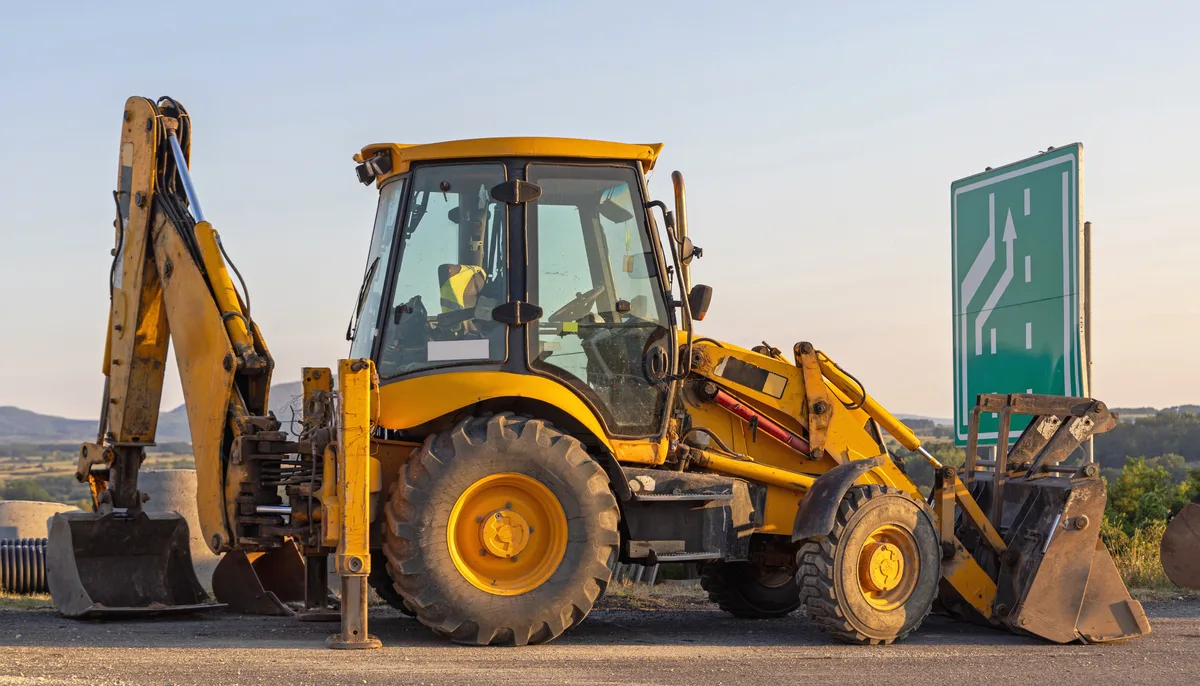
Colorado moves this machine through more vertical change than almost anywhere else it works, and the transit exposure reflects it. Sustained climb loads the drivetrain and the cooling; sustained descent loads the brakes of whatever is carrying it; and the weather at the top of a route can be a different season from the weather at the bottom. A closure does not merely delay a job — it strands a loaded deck or leaves a machine parked overnight somewhere nobody selected, which is how a straightforward delivery turns into a theft or vandalism claim.
On the job the pattern is more familiar but still locally flavored. Rock arrives close to the surface against the foothills, which is hard on teeth, pins and tires and hard on the operator’s temper; out on the plains and in the river bottoms the ground gives instead, and a stabilizer finds that out first. The two constants follow the machine everywhere: the boom swinging into something behind the operator, and a slow wide unit sharing a corridor with traffic doing several times its speed.
Common Colorado backhoe claims we see
- Transit damage on a pass route. Grade, weather and a long way between places to stop safely, on the moves this state cannot avoid making.
- Struck-object contact while repositioning on a corridor road. The Front Range runs heavy traffic through the same ground the work is on.
- Stabilizer subsidence on river-bottom or filled ground. Takes the level, the trench edge, and occasionally something buried and shallow.
- Rock damage to teeth, pins and tires near the foothills. Not always a covered peril, and worth separating from impact damage early.
- Theft or vandalism from an unplanned overnight stop. The claim a road closure generates, and the one nobody underwrote for.
Why Colorado backhoe owners choose Equipment Guard Insurance
Writing the equipment on its own suits a state where the credentials sit in several local offices rather than in one state file. Nothing is gained by reshuffling a whole program to schedule one machine, and we do not propose it. We ask where the unit goes rather than how far, because grade and remoteness price this class better than mileage does; we make sure the registration, the serial numbers and the schedule agree with each other while that is still an administrative task; and we place through markets — named on our homepage — willing to underwrite a Colorado equipment schedule on its own merits.
Major Colorado backhoe markets
- Denver. The state’s deepest utility and redevelopment market, where the machine works inside live traffic more weeks than not.
- Colorado Springs. Sustained residential and institutional expansion against the foothills, with rock closer to grade than the plans suggest.
- Aurora. Large-scale suburban site development and service work, and the shortest, most frequent driven moves in the metro.
- Fort Collins. Northern corridor growth and irrigation-adjacent earthwork, with river-bottom ground that rewards careful pad placement.
- Pueblo. Industrial, rail and municipal replacement work in older infrastructure, where what is buried predates the record of it.
- Grand Junction. Western Slope work reached over the divide, with the longest hauls, the thinnest support and the slowest recovery in the state.
Related
- Backhoe insurance — the machine physics that hold in every state.
- Skid Steer insurance in Colorado — the compact machine that shares this state’s odd registered class.
- All equipment insurance in Colorado — the state hub.
- Equipment floater · Rented & leased equipment
Primary sources
We do not link a Colorado vehicle-code section here. The road-use treatment described above follows how Colorado classifies self-propelled construction equipment; where the state publishes a section that states it directly, this page links it.
Colorado backhoe insurance FAQs
Is a Colorado backhoe exempt from registration like it is elsewhere?
No, and this is the fact that makes the state unusual on this machine. Rather than lifting construction equipment out of the vehicle system, Colorado puts it into a class of its own — special mobile machinery — which is registered and treated separately instead of ignored. Owners who arrive from a neighboring state expecting an exemption are looking for the wrong thing. The machine is inside the system here; it is simply inside a different part of it.
Why is a section named on this page but not linked?
Because naming and vouching are different acts. The section reference belongs to this state in our own data, so we are content to name it. What we have not done is fetch that text, read it and confirm it still says what it is recorded as saying, which is the bar every link on this site has to clear. Until a document passes that check it gets named and not linked, and we would rather show you the gap than paper over it with a plausible-looking citation.
What does a registered class mean if the machine is stolen or destroyed?
It means there is a state-side record that the machine exists and is associated with your business, which is more than an owner has in most states. Construction equipment normally lives in a documentary world made entirely of private paper — a bill of sale, a finance agreement, a schedule and a photograph. Here there is an additional external reference point, and it is worth having your serial numbers, your schedule and that registration all describing the same machine before you need any of them to agree in a hurry.
Who licenses a Colorado contractor operating this machine?
Not the state, for general contracting. Colorado leaves general contractor licensing to city and county building departments while licensing electricians and plumbers statewide through boards under the Department of Regulatory Agencies. For an equipment business working the Front Range that means several sets of local requirements rather than one credential, and since the backhoe is the machine most likely to drive itself across a jurisdiction line, the patchwork lands on this unit more than on any other in the yard.
What does taking the machine over a pass actually cost you in risk?
A great deal more than the same distance on flat ground. Sustained grade works the drivetrain and the cooling on the way up and the brakes on the way down, weather at elevation can change inside an hour, and a closure turns a delivery into an overnight with the machine parked somewhere nobody chose. Then there is recovery: a breakdown on the far side of the divide is not a same-day fix. We would rather size that into the coverage than have you discover it with a loaded deck and a closed road.
Can I insure just the backhoe?
Yes — Equipment Guard Insurance writes equipment monoline in Colorado. One machine can be scheduled properly without disturbing your liability, your work comp or any local licensing arrangement you have already satisfied, and in a state with several of those to satisfy that is worth more than it sounds.