

The backhoe is the machine that lets a small Idaho contractor say yes to a job in the next county. It digs, loads, backfills and lifts, and then it moves itself down the road without a call to a hauler — which is exactly why it is the machine most likely to be somewhere unexpected when something goes wrong.
What follows deals with the Idaho-specific half of that: how the state treats the machine on a public road and how much of that treatment we can actually document, what registering rather than licensing contractors changes about your file, and what a state divided by mountains does to transit. Reach, swing and loader-end wear behave the same everywhere and live on the backhoe insurance pillar.
What backhoe insurance costs in Idaho
We do not publish premiums, because a premium assembled without your details would be an invention with a decimal in it. The Idaho variables that actually matter are how many long trailer legs the year contains, how much of the work is tight valley build-out versus open agricultural and canal ground, where the machine is kept overnight, the valuation basis, and your claims history. A backhoe that never leaves the Boise area and one that works both sides of the mountains are separate risks, and pricing them alike would only be unfair to the first one.
Idaho backhoe regulations: road operation
A self-propelled backhoe is ‘special mobile equipment’ — a vehicle not designed or used primarily for transporting persons or property and only incidentally operated over a highway.
Our record places that definition at Idaho Code § 49-120. We are naming the section without linking it, and the reason is worth stating: the reference is in our data, but the text behind it has not been opened and checked at first hand, and this page keeps links for documents that have been. Naming what we hold while linking only what we have verified seemed better than either pretending or staying silent. The practical effect is not in question either way. Keeping the machine out of ordinary registration settles plates and titles, and it settles nothing about responsibility — a backhoe under its own power on an Idaho highway is in traffic, and the damage it does out there is answered by liability coverage rather than by the floater that repairs it. Above that sits the contractor question, where Idaho is firmly a registration state: contractors register with the Idaho Contractors Board through the Division of Occupational and Professional Licenses, with no general competency examination behind it, while the electrical, plumbing and HVAC trades hold separate licenses. That is the opposite arrangement from Utah across the southern border, and a crew that works both states is living under two very different assumptions about what a credential proves.
Common backhoe risks in Idaho
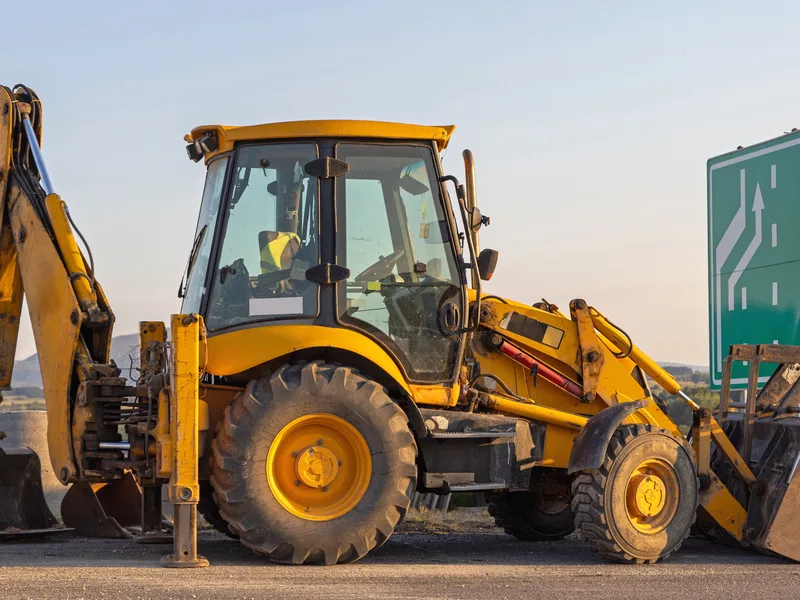
Distance and growth split the Idaho exposure between them. The panhandle and the southern corridor are separated by mountain routes, so a contractor working statewide accumulates long trailer legs, and loading, tie-down and the ramp are where this class loses its largest single amounts. In the Treasure Valley the problem inverts: everything is close, the build-out is fast, and the machine works within swing distance of new curb, new pavement and new utility runs that were finished last month. Canal and irrigation work adds soft, saturated bank ground that takes a stabilizer leg without warning, usually somewhere a recovery vehicle cannot easily reach. Winter in the north then lengthens every one of those timelines.
Common Idaho backhoe claims we see
- Tie-down and ramp damage on a cross-state haul. The single largest recurring loss for anyone working both halves of Idaho.
- Boom or bucket contact with new finished work. Fast subdivision build-out puts expensive surfaces inside the swing radius early.
- Stabilizer subsidence on a canal or ditch bank. Saturated ground, a slope, and no easy approach for whatever comes to lift the machine out.
- Struck-object damage on a rural highway move. Legal to be there, still a collision when it happens.
- Recovery and downtime cost after a loss on a remote job. Routinely larger than the repair, and routinely unplanned for.
Why Idaho backhoe owners choose Equipment Guard Insurance
Where a state registers contractors rather than examining them, the documents you hand over are doing the work a license would otherwise do, and an equipment schedule buried inside a package is not a strong document. We write equipment on its own so the backhoe is described accurately — machine, attachments, serial numbers, where it sleeps and how far it travels — without anything else having to move. We ask about the mountain legs before we quote rather than after a claim, and we place through markets named on our homepage that will read an Idaho equipment schedule on its own.
Major Idaho backhoe markets
- Boise. The largest market in the state and the base for crews whose work spreads well beyond it.
- Meridian. Subdivision and commercial build-out at speed, with finished surfaces arriving before the site work is finished with them.
- Nampa. Agricultural, industrial and residential work mixed together, and the irrigation infrastructure that runs under all of it.
- Idaho Falls. Eastern corridor utility and institutional work, with long approaches to the jobs around it.
- Pocatello. Rail and industrial ground, where reconstruction runs through older buried services.
- Coeur d’Alene. The panhandle market, a mountain drive from everything else in the state and the slowest place to recover a stopped machine.
Related
- Backhoe insurance — the machine physics that hold in every state.
- Skid Steer insurance in Idaho — the machine that gets rented into the same Treasure Valley subdivisions and stolen out of them.
- All equipment insurance in Idaho — the state hub.
- Equipment floater · Rented & leased equipment
Primary sources
- Idaho Code Title 54, Chapter 52 — Idaho Contractor Registration Act — Idaho Division of Occupational and Professional Licenses (DOPL), Idaho Contractors Board (contractor licensing)
We do not link an Idaho vehicle-code section here. The road-use treatment described above follows how Idaho classifies self-propelled construction equipment; where the state publishes a section that states it directly, this page links it.
Idaho backhoe insurance FAQs
Is an Idaho backhoe registered like a highway vehicle?
No. It is special mobile equipment — built for work rather than for carrying people or goods, and taken onto a highway only incidentally — so it stays outside ordinary vehicle registration. Our record puts the definition at Idaho Code § 49-120. We name that section and do not link it, because nothing in our file shows the text itself was opened and confirmed, and a link implies a confirmation we cannot honestly offer.
Does Idaho license contractors, or only register them?
Registration, not competency, and the distinction matters when someone is assessing your business. Idaho has no statewide general contractor competency license; contractors register with the Idaho Contractors Board through the Division of Occupational and Professional Licenses, while electrical, plumbing and HVAC trades hold their own state licenses. Nobody sits an exam for the general registration. Utah, immediately to the south, runs the opposite system — which is worth knowing if you work both.
What does the split between north and south do to a schedule?
It makes Idaho behave like two states that share a legislature. The Treasure Valley and the eastern corridor are one working market; the panhandle around Coeur d’Alene is another, and the drive between them crosses mountains rather than plains. A contractor who works both is running long trailer legs several times a season, and transit is where this class concentrates its serious losses. A contractor who works one is not, and should not be rated as though he were.
How does Treasure Valley growth change the exposure?
It puts the machine closer to things that are new and expensive. Rapid build-out around Boise, Meridian and Nampa means working on tight lots where finished curb, pavement, irrigation and utility work are all in place before the last machine has left. Boom swing and stabilizer placement have less margin than they did on the same ground a few years earlier, and the surfaces being damaged are somebody’s recent investment rather than an old road.
What about irrigation and agricultural work?
It is a real part of the backhoe’s year here and it has its own pattern. Canal, ditch and headgate work puts the machine on saturated ground near water, on banks that are steeper and softer than they look, and often a long way from anyone who could help. Subsidence and machine-recovery costs, rather than impact damage, drive those claims — and recovery cost is the part owners almost never budget for.
Can the machine go on its own policy?
Yes. Equipment Guard Insurance places equipment monoline in Idaho, so the backhoe is scheduled by itself and your liability and workers compensation stay where they are — which in a registration state means the certificates other people rely on do not have to be reissued.