
A skid steer is the machine an Idaho crew buys when it wants to stop renting. It preps pads and drives on subdivision lots, cleans up demolition, moves material around a food-processing site, digs and backfills utility repairs, handles irrigation and ditch work, and pushes snow when the season turns. It fits through a residential gate and travels behind a truck that was going that way anyway. Every one of those virtues also makes it the most stealable serious machine on any site it works.
What follows is specific to Idaho: a credential system where a registry and real trade licenses sit side by side and are easy to confuse, and a geography that is not one market but three, with mountains and long drives between them. For the machine itself — how attachments change what it is, why the steering method is rough on finished surfaces, what puts it on its nose — that is the skid steer insurance pillar’s job.
What skid steer insurance costs in Idaho
We publish no premium, because a number that means anything comes out of the specific machine and the way it is kept. In Idaho the biggest single lever is which market the loader works in, because the answer sets almost everything else: valley infill work means tight lots, high-value neighbors and open unfenced sites; eastern agricultural work means long hauls and nights spent where the job is; the northern markets mean distance from everything and a longer hard season. After that come the attachment list and its real replacement values, the valuation basis you choose, whether a tracking unit is fitted, and your own loss history. Two identical loaders working two of those regions do not price alike.
Idaho skid steer regulations: title, lien and ownership
A skid steer is untitled construction equipment; a lender perfects its lien by filing a UCC-1 financing statement with the Idaho Secretary of State.
The consequence for the machine is straightforward: because no certificate of ownership exists, the financing statement and the serial number together are the ownership record, so a lender on a financed loader is added to the policy as a loss payee against the scheduled unit and a loss payment is issued jointly. Keep the two in step — a lienholder still named against a machine you paid off or traded is the clearest sign a schedule needs review. One layer up is where Idaho asks for attention. There is no general-contractor competency license in this state; above a statutory threshold a contractor registers with the Idaho Contractors Board through the Division of Occupational and Professional Licenses, and registration records a business rather than certifying a skill. In the same division sit genuine state licenses for electrical, plumbing and HVAC work, held by tested individuals. Two very different documents, one agency, and a real chance of a mismatch when a general contractor lines your certificate of insurance up against whichever credential it actually asked for.
Common skid steer risks in Idaho
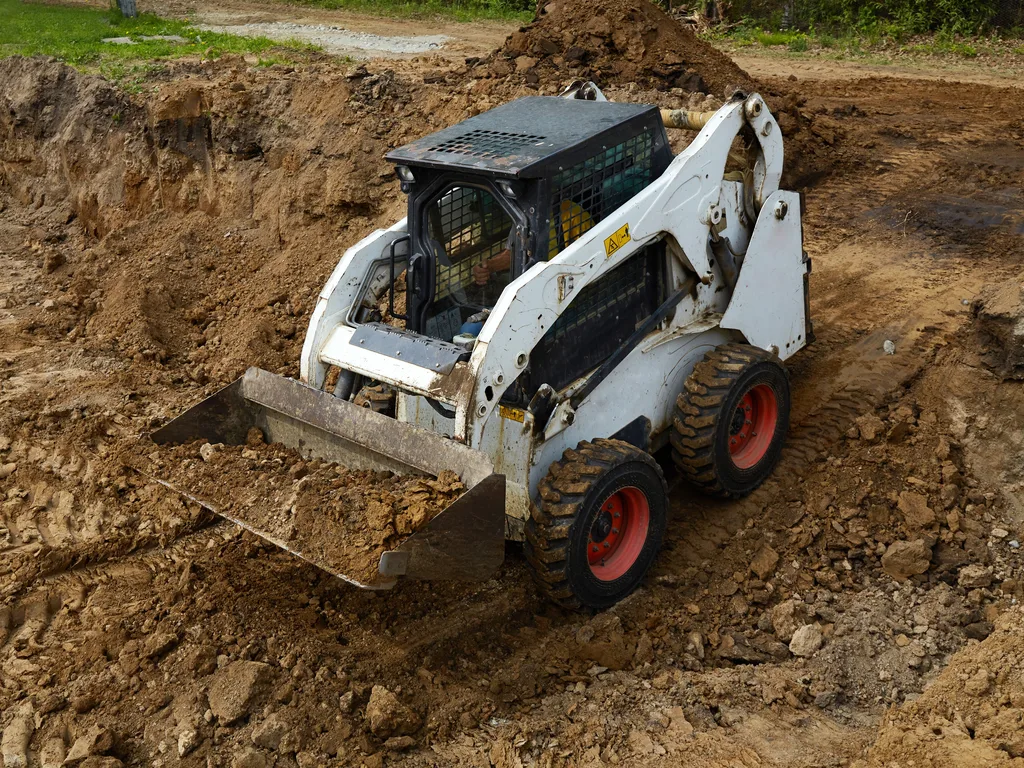
Theft is the exposure that shapes this class in Idaho, and the state contributes two separate versions of it. In the valley the driver is opportunity and density: many contractors on unfenced sites at once, high machine turnover, and a compact loader that one person can put on a trailer among a dozen other trailers. Outside the valley the driver is isolation, with sites nobody visits overnight and long distances to the nearest response. Weather is the second exposure and it is genuinely seasonal here rather than a storm story: freeze-thaw cycles, hard cold on hydraulics and hoses, and a high-desert summer that is hard on tires, glass seals and cooling. Irrigation-season saturated ground supplies a third group, the recovery-and-repair kind. The forward tip and loading damage account for most of the rest.
Common Idaho skid steer claims we see
- Theft from an unfenced subdivision site. The defining valley claim, frequently taking the trailer and rack attachments as well, and settled off the serial record because no ownership certificate exists.
- Theft from a remote agricultural or processing site. The same loss with a different clock — discovered later, colder trail, and far more dependent on a tracking unit having been fitted beforehand.
- Attachment taken on its own. A trencher, grapple or breaker lifted from a yard rack while the loader stays put, then found to sit under a blanket per-item sublimit rather than scheduled by name.
- Machine bogged in irrigated ground. A recovery and repair claim on ground that was firm before the water came on.
- Finished-surface and adjacent-work damage. Not a theft and not weather, but the most common valley claim that is neither: a loader on a tight infill lot in contact with work someone else has just placed.
Why Idaho skid steer owners choose Equipment Guard Insurance
We write equipment monoline, which fits how Idaho accounts are actually assembled: a crew often holds general liability arranged around a builder relationship and a registration it does not want to disturb, and being told to move the whole program to get one loader scheduled properly is why so many loaders here are carried on nothing at all. We do not ask for that. We schedule attachments by name as a matter of course, and we place through markets named on our homepage that will read an Idaho equipment schedule on its own merits.
Major Idaho skid steer markets
- Boise. The largest jobsite market in the state, with the densest infill work, the highest machine values and the deepest rental market — so rented-in loaders and rental-house certificates are routine here.
- Meridian. Continuous subdivision and commercial build-out at speed, where loaders overnight on open unfenced ground through an entire phase rather than returning to a yard.
- Nampa. A mix of residential build-out and agricultural-processing site work, so one machine crosses between two very different duty cycles in the same week.
- Caldwell. Irrigation, ditch and rural utility work alongside new residential ground — the market where saturated-ground recovery claims cluster.
- Idaho Falls. Eastern agricultural and institutional site work with long hauls between jobs and machines parked where the work is rather than behind a fence.
- Coeur d’Alene. The northern market, cut off from the rest of the state by mountains and oriented outward, with resort-grade residential work, high machine values and the longest winter conditions.
Related
- Skid steer insurance — the machine physics that hold in every state.
- Dozer insurance in Idaho — the machine the state’s newly assumed stormwater program reaches.
- All equipment insurance in Idaho — the state hub.
- Equipment floater · Rented & leased equipment
Primary sources
- Idaho Code Title 54, Chapter 52 — Idaho Contractor Registration Act — Idaho Division of Occupational and Professional Licenses (DOPL), Idaho Contractors Board (contractor licensing)
We do not link an Idaho filing document here. The ownership and lien rules described above follow Article 9 as Idaho has adopted it; where a state publishes a document that states the rule directly, this page links it.
Idaho skid steer insurance FAQs
Is a skid steer titled or registered in Idaho?
No. It is untitled construction equipment rather than a titled vehicle, so no certificate is issued for it and none is signed over at a DMV counter when the machine sells. The serial plate, the bill of sale and the financing record are what identify it. That set of documents is also the only thing that follows a loader out of the state, which in Idaho means it may follow the machine to any of several neighboring markets within a few hours of the theft.
Is contractor registration the same as a license in Idaho?
No, and the difference is the whole point. Idaho has no general-contractor competency license: a contractor working above a statutory threshold registers with the Idaho Contractors Board through the Division of Occupational and Professional Licenses, which records who you are and confirms you meet the entry conditions rather than testing you on the trade. Electrical, plumbing and HVAC work is different — those are real state licenses held by tested individuals, administered through the same division. So on one site you can find a credential that certifies a skill and another that simply records a business, and it pays to know which one is being asked for.
Does it matter which part of Idaho the machine works in?
A great deal, because the state is not one market. The Treasure Valley in the southwest is a continuous residential and commercial build-out where machines work tight lots and go home most nights. The eastern markets run on agriculture and food processing, with jobs spread across open country. The northern panhandle is separated by mountains and oriented toward markets outside the state, so a crew based there works and buys differently. Storage, travel distance and attachment mix all differ by region, and all three drive the price of a schedule.
How does the growth in the Treasure Valley change the exposure?
It puts a lot of expensive iron on open, unfinished ground at once. Continuous build-out means loaders staged on sites with no fence yet, working alongside other contractors, with machines from several companies in the same place overnight. That raises theft frequency and the ordinary damage claims alike — finished-surface scarring, contact with newly placed work, confined-site loading.
Are attachments covered on an Idaho skid steer policy?
Only the ones that are scheduled. Buckets, augers, grapples, breakers, trenchers and snow pushers commonly sit under a blanket limit with a per-item sublimit, and the heads worth real money exceed it. The mix here follows the region — irrigation and agricultural work in the east, hardscape and utility work in the valley — so a list assembled once and never revisited understates what is on the trailer. Anything above the sublimit belongs on the schedule by name.
Can I insure just the skid steer, without a package policy?
Yes. Equipment Guard Insurance writes equipment monoline in Idaho, so a loader and the heads on the trailer with it can be scheduled alone. A general liability policy already in force does not have to move for us.