

Ask a Minnesota excavating crew which machine they would keep if they had to choose one, and the backhoe wins on versatility rather than on capability. It is the unit that digs, loads, backfills, lifts a length of pipe into place and then drives itself to the next address, which is four trades and a haul in one purchase.
This page deals with the Minnesota-specific consequences of owning that machine: what the vehicle code does with it once it is on the road, which side of a sharp residential-versus-commercial licensing line your work falls on, and what a season bounded by frost does to hours, valuation and transit. The physics that hold in every state sit on the backhoe insurance pillar.
What backhoe insurance costs in Minnesota
We do not publish a rate, and one published without your schedule in front of it would be decoration rather than information. In Minnesota the inputs that carry real weight are the shape of the season and the shape of the work: how many operating hours the open months put on the machine, how much of the travel between jobs is under its own power against how much is on a deck, whether the customer is a homeowner or a general contractor, where the unit is kept when the ground is closed, the valuation basis, and your loss history. A backhoe on residential service work in an inner-ring suburb and one running agricultural drainage in the southwest are quoted from different facts.
Minnesota backhoe regulations: road operation
Self-propelled construction equipment is ‘special mobile equipment’ — every vehicle not designed or used to transport persons or property and only incidentally moved over a highway, expressly including ditch-digging apparatuses and road construction/maintenance machinery.
That definition — Minn. Stat. § 168.002, subd. 31 — is unusually explicit, and the explicitness is worth something: there is little room to argue about whether the machine belongs in the class when the class names ditch-digging apparatus by name. What it does not do is settle the interesting question. Sitting outside motor-vehicle registration is a recording rule. It leaves entirely open who answers when a backhoe under its own power damages another vehicle, a curb line or a mailbox, and that answer comes from liability terms rather than from the vehicle code. Layered above it is the licensing split, which in Minnesota is genuinely consequential. Residential building contractors and remodelers are licensed through the Department of Labor and Industry when they contract with a homeowner and offer more than one skilled trade; commercial general contracting carries no statewide license and is governed through code and permitting instead. An excavating business that digs footings for builders on Monday and sells a homeowner a driveway and a drain on Thursday has crossed a regulatory boundary with the same machine, and the paperwork behind the machine ought to reflect that it did.
Common backhoe risks in Minnesota
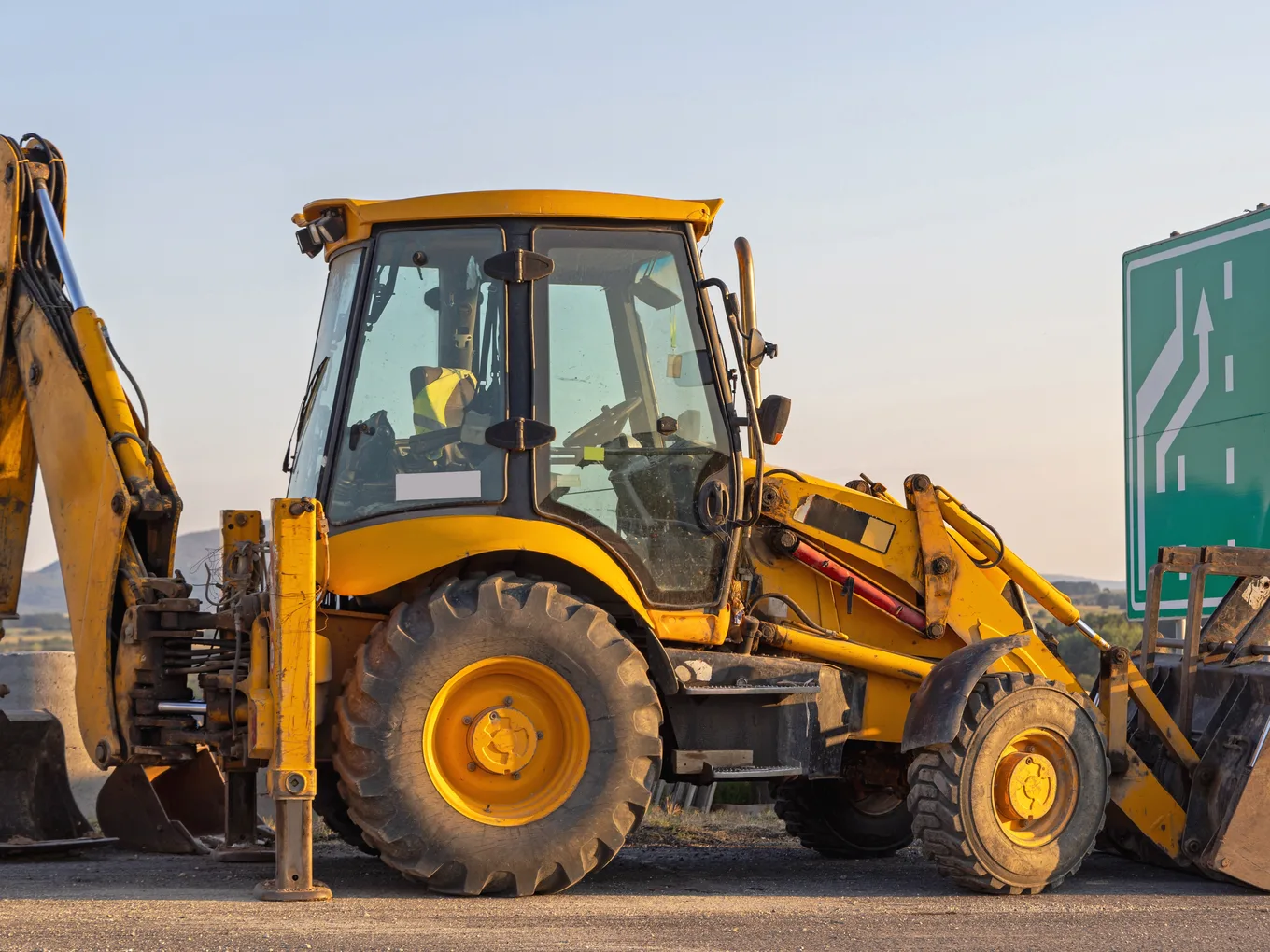
The defining Minnesota pressure on this class is compression rather than cold. Frost removes the ground from service for a long stretch, so a year of trenching, footing and service work is forced into the open months. The machine runs at a higher intensity than the same unit would somewhere temperate, hours pile onto a valuation set at the start of the season, and the road moves bunch together instead of spreading evenly — which loads the transit exposure into the same weeks that are already the busiest.
Ground behavior does the rest. Late in the season the machine is working into soil that is beginning to set up, which punishes bucket teeth, the boom and the loader arms; early in the season it is working ground still giving up water, which is when a stabilizer pad finds soft fill under a surface that carried it perfectly well in autumn. Between those, the ordinary two apply as they do anywhere: the rear boom swinging into what the operator cannot see, and a machine on a public road that is far slower and far wider than everything else using it.
Common Minnesota backhoe claims we see
- Road contact during a self-powered move between jobs. Clustered into the open season, because that is when the moves happen at all.
- Stabilizer pad through thawing or backfilled ground. The spring version of a set-up that was sound in October, and it takes the level and the trench wall with it.
- Boom or counterweight contact behind the operator. Tight suburban service work with fences, meters and vehicles inside the swing.
- Frozen-ground damage read as a covered failure. Worth separating early, because wear and abuse are not perils and the distinction decides the outcome.
- Loading and tie-down damage on the runs to outstate jobs. Long approaches, short daylight, and a ramp at each end of them.
Why Minnesota backhoe owners choose Equipment Guard Insurance
Equipment-only placement suits a Minnesota excavating business better than it suits almost anyone, because the licensing picture here already forces an owner to keep clean, unchanging paperwork on the residential side of the book. Rebuilding a whole program to get one machine scheduled properly is the opposite of that, so we do not suggest it. We ask about the season honestly — hours, storage, when the machine actually moves — rather than pricing it as though the calendar were flat, and we place through markets — named on our homepage — that will read a Minnesota equipment schedule without demanding the rest of the account come with it.
Major Minnesota backhoe markets
- Minneapolis. The largest service and redevelopment market in the state, with short, frequent moves through streets that are fully parked.
- Saint Paul. Older utility and municipal replacement work where what is buried predates most of the drawings describing it.
- Rochester. Sustained medical-campus and residential expansion, with finished surfaces close to the machine on nearly every job.
- Duluth. Steep grades, rock near surface and port-adjacent industrial work — the hardest ground in the state on tires and undercarriage.
- St. Cloud. Granite country and central-corridor site development, a market where the machine meets rock sooner than the operator expects.
- Mankato. Agricultural drainage and small-municipal utility work, with the longest routine approaches and the thinnest local support.
Related
- Backhoe insurance — the machine physics that hold in every state.
- Skid Steer insurance in Minnesota — the machine that keeps working after frost stops this one.
- All equipment insurance in Minnesota — the state hub.
- Equipment floater · Rented & leased equipment
Primary sources
- Minnesota Statutes § 168.002 — Minnesota Office of the Revisor of Statutes (road use and registration)
- Residential contractor licensing | Minnesota Department of Labor and Industry — Minnesota Department of Labor and Industry (DLI) (contractor licensing)
Minnesota backhoe insurance FAQs
Does the Minnesota definition actually name a machine like this?
It comes closer than most states do. The special mobile equipment definition covers vehicles neither designed nor used to carry people or property and moved along a highway only incidentally, and it goes on to name ditch-digging apparatuses and road construction and maintenance machinery expressly. A backhoe answers to that description on both counts, which is why the classification question here is rarely the argument. The argument is about what the classification does not reach.
Do I need a Minnesota contractor license to operate a backhoe?
That depends entirely on who you are contracting with. Minnesota licenses residential building contractors, remodelers and roofers through the Department of Labor and Industry, and the licensing trigger is contracting directly with a homeowner while offering more than one skilled trade — which is a fair description of a backhoe outfit that digs a footing and also lays the drainage. For commercial and other non-residential building work there is no statewide license at all; the controls are code and permits. The same machine, on the same week, can sit either side of that line.
If the machine is registration-exempt, is the road exposure handled?
No, and the two questions are not even about the same thing. Registration status decides how a machine is recorded and taxed. Responsibility for damage on a public road is decided by liability terms, and a backhoe is a slow, wide, poorly sighted object sharing a road with traffic that is none of those things. The floater repairs your machine. It is not what answers for the vehicle your machine reached on the way past, so we size the road side against the moves you actually make.
What does the Minnesota season do to a backhoe account?
It compresses it. Frost takes the ground out of play for a long stretch, so the year’s trenching, footing and utility work is packed into the open months and the machine works harder per calendar month than an identical unit somewhere temperate. Two consequences follow: hours accumulate fast against a valuation basis set in spring, and the road moves cluster instead of spreading out, which puts more of the transit exposure into fewer weeks. Late in the season the machine is also digging into ground that is beginning to set up, which is hard on the boom, the bucket teeth and the operator’s patience.
Is a machine working outside the metro exposed differently?
Yes, mostly through time. In the Twin Cities a backhoe that goes down is back in service quickly because parts, hire and a service truck are all close. On a job north toward the lake country or out on the western prairie, the same failure becomes a stalled crew, a rented substitute and a recovery run of real length. That gap is not a hazard so much as a multiplier, and it belongs in the coverage conversation before the job is booked rather than after the machine stops.
Can I insure the backhoe by itself?
Yes — Equipment Guard Insurance writes equipment monoline in Minnesota. The machine can be scheduled without reopening your liability or your work comp, which is worth having when a residential license renewal is already asking you to keep a tidy, unchanged set of certificates on file.