

In Minnesota a compact loader is not a summer machine with a winter off — it is a summer machine with a second job. Between thaw and freeze it grades, digs, hauls and lifts on sites too tight for anything larger; after freeze it pushes and blows snow for the same crew on the same lots. Two working lives on one chassis, and two entirely different attachment sets bolted to the front of it.
Two facts about this state actually drive the account. Minnesota decides who needs a contractor license by looking at the customer rather than at the trade or the contract size, so the same crew moves in and out of licensure as its work changes; and the calendar compresses everything, giving a short window of intense use followed by months of dormancy. For the machine physics that hold in every state — skid steering, attachment mechanics, the forward-tip pattern — see the skid steer insurance pillar.
What skid steer insurance costs in Minnesota
There is no premium to quote in the abstract, because the number is built from your own machines and how they are kept. In Minnesota the first question is always the winter: a loader stored indoors or under cover for the cold months is a materially different risk from one left in an open yard under snow, and the answer moves the figure more than anything else on the account. Next comes the attachment schedule, and here it is the count that catches people — two seasonal sets means twice the items to value. Then the valuation basis, whether telematics are fitted, the deductible, the volume of rented-in equipment during the short season, and your own loss record.
Minnesota skid steer regulations: title, lien and ownership
A skid steer is untitled construction equipment; a lender perfects its security interest by filing a UCC-1 financing statement with the Minnesota Secretary of State.
Because there is no certificate of title in the chain, the financing statement and the serial number together are the ownership record, and the policy has to agree with both. A lender on a financed loader is added as loss payee against the scheduled unit so a settlement is issued jointly; when a machine is paid off, sold or traded out of the fleet and the lienholder remains on the schedule, that mismatch is the clearest evidence the account has not been reviewed since the last renewal. Minnesota then adds a wrinkle one layer up that is worth handling deliberately: because licensure follows the customer, a crew that moves between residential and commercial work may hold a state license for part of what it does and none for the rest — so the certificate of insurance often has to answer to a homeowner, a general contractor and a permit office reading it for three different reasons.
Common skid steer risks in Minnesota
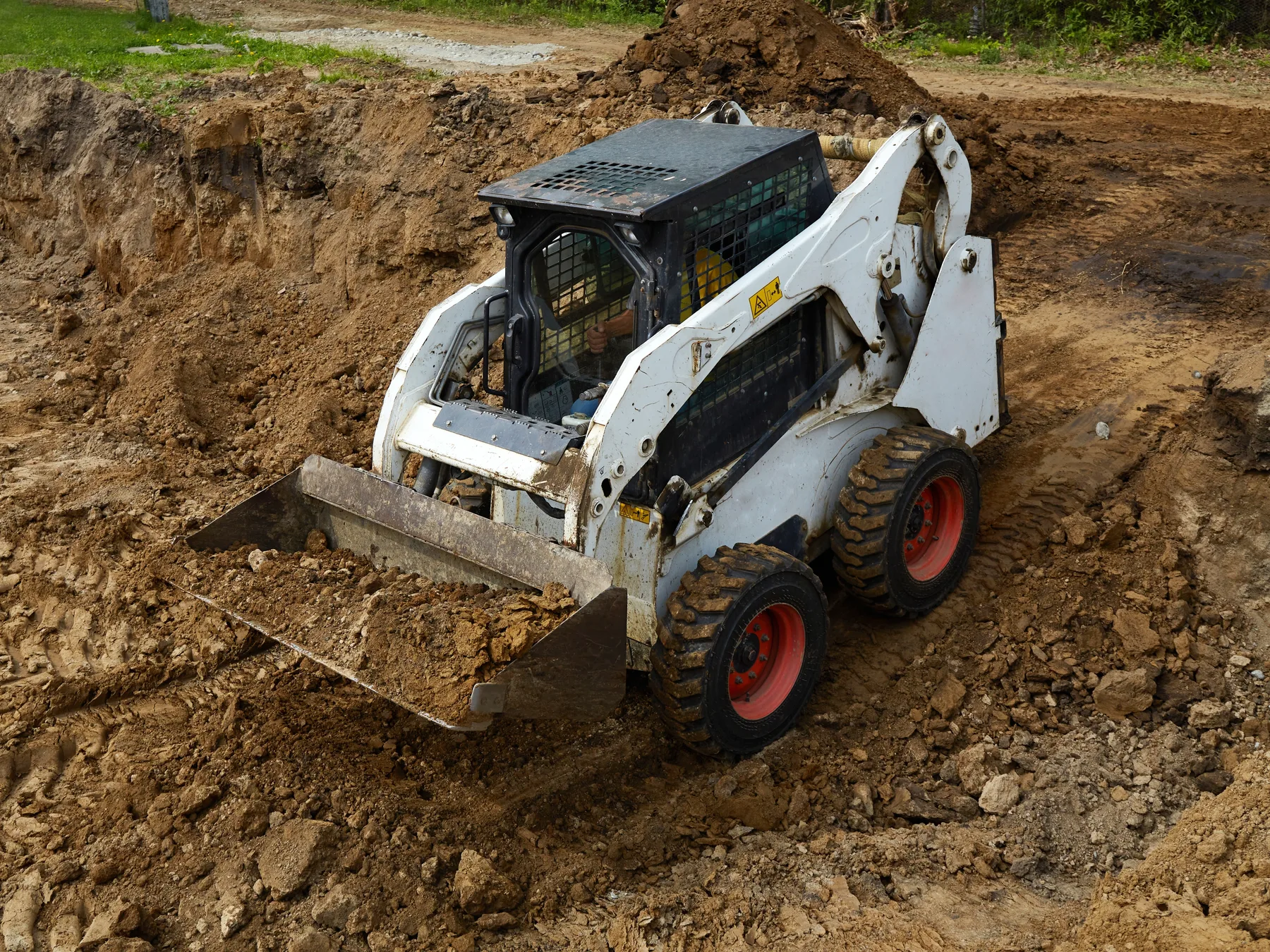
Two exposures dominate a Minnesota loader and the season decides which one you are living with. During the working window it is theft: machines are on sites continuously, crews are moving between jobs at speed, and a compact loader on a trailer is ordinary traffic on any highway out of the metro. During the dormant months it is cold and standing damage — split hoses, hardened seals, cracked glass, dead batteries, and snow load bearing down on cabs and on attachments left racked outdoors — compounded by the simple fact that nobody is visiting the yard to notice. Salt and slush from snow work corrode fittings and electrics year after year. The remainder is the machine itself: a forward tip with the arms up and loaded, and the damage a loader takes on and off a trailer in poor footing.
Common Minnesota skid steer claims we see
- Loader taken during the short season. Removed overnight from a site that was active that day, because in a compressed window nothing goes home between jobs.
- Winter theft discovered weeks later. A dormant yard nobody had reason to visit, so the report is filed long after the trail went cold — and the serial record is all that remains.
- Freeze damage to a machine left out. Burst hoses, split cylinders and a cracked cab from cold and accumulated snow load on iron that never came inside.
- Snow attachment lost or damaged and never scheduled. A pusher or blower with a real replacement value, absent from a schedule that was written in summer.
- Tip or slide on frozen and then softening ground. Footing that held all winter and did not hold in the first week of thaw.
Why Minnesota skid steer owners choose Equipment Guard Insurance
Equipment-only writing fits Minnesota crews for a specific reason: many of them carry liability arranged around residential licensing and a homeowner-facing contract, and there is no appetite for rebuilding that to get a loader scheduled correctly. We do not ask for it. The iron goes on its own schedule, both seasonal attachment sets are named individually with their own values, and rented-in machines from the busy months are accounted for rather than assumed. The markets we place through — named on our homepage — will underwrite a Minnesota equipment schedule on the strength of the schedule alone.
Major Minnesota skid steer markets
- Minneapolis. The deepest jobsite market in the state and the one that runs both seasons hardest — infill grading through the window, commercial snow contracts after it.
- Saint Paul. Older-fabric rehabilitation and public work on narrow lots, where access decides the machine and there is nowhere secure to leave it overnight.
- Rochester. Medical-campus and institutional construction on long programs, meaning extended periods with iron staged on site and little happening on it.
- Duluth. Industrial and dockside work on hill ground with the harshest winter exposure in the state, where storage is the whole underwriting conversation.
- St. Cloud. A regional hub serving dispersed work in every direction, so machines are trailered long distances and overnight away from base routinely.
- Mankato. Agricultural and small-municipal work on open sites with no fencing, where a loader stands unattended between visits.
Related
- Skid steer insurance — the machine physics that hold in every state.
- Forklift insurance in Minnesota — the machine whose operator training runs through the state’s own safety program.
- All equipment insurance in Minnesota — the state hub.
- Equipment floater · Rented & leased equipment
Primary sources
- Residential contractor licensing | Minnesota Department of Labor and Industry — Minnesota Department of Labor and Industry (DLI) (contractor licensing)
We do not link a Minnesota filing document here. The ownership and lien rules described above follow Article 9 as Minnesota has adopted it; where a state publishes a document that states the rule directly, this page links it.
Minnesota skid steer insurance FAQs
Does Minnesota issue a title for a skid steer?
It does not. The machine sits outside the vehicle system as untitled construction equipment, so no title travels with a sale and no title exists to show after a theft. The serial number carries the identity instead, backed by the purchase paperwork and any financing record — which is why the most valuable line on a Minnesota schedule is the one nobody reads until something goes wrong.
Which side of the Minnesota licensing line am I on?
It depends on who your customer is, not on how big the job is. The Department of Labor and Industry licenses residential building contractors, remodelers and roofers — the test is whether you contract directly with a homeowner while offering more than one skilled trade — while commercial and general non-residential contracting has no statewide license at all and is handled through building code and permitting. One crew with one loader can therefore be a licensed residential contractor on a house and hold no state license for the commercial pad next door, and the certificate of insurance is the document that has to satisfy both worlds.
How does a Minnesota winter change the exposure on a loader?
It moves the risk from the operating half of the file to the standing half. Cold splits hoses, hardens seals, cracks glass and takes batteries, and accumulated snow load does real damage to a cab and to attachments left on a rack. The larger issue is time: a machine that is not working for months is a machine nobody is looking at for months, so a theft or a freeze loss can go unnoticed until spring. Where the loader spends the winter — inside, under cover, or in the open behind a fence — is the single most consequential fact on the submission.
Are snow attachments treated the same as summer attachments?
They are attachments and they need the same treatment, which owners here routinely miss. Pushers, buckets, blowers and brooms have real replacement values, they are mounted and dismounted more often than any summer tool, and they spend their working lives outdoors in salt and slush. A schedule built in July with the summer heads on it and the winter set left off is a schedule that is wrong for half the year.
Does a short season mean less theft risk?
No — it redistributes it. Compact loaders here are stolen out of the compressed working window, when machines are on sites around the clock and crews are moving between jobs faster than paperwork keeps up, and out of the long dormant stretch, when nobody is on site to notice. The controls are the same either way: keys out, a tracking unit fitted, a secured overnight location, and every serial number on the schedule so a police report can actually be acted on.
Can the equipment stand alone on a policy?
Yes. Equipment Guard Insurance places equipment as its own monoline account — owned loaders, summer and winter attachments and rented-in units on one schedule — while the liability and workers’ compensation you already hold stay untouched.