
The backhoe is the machine that keeps a small Oregon crew billable through a long wet season. It digs the service, sets the pipe, backfills and cleans up, and on a good day it moves itself down the street to the next address instead of waiting on a lowboy.
What follows is about the Oregon frame around that: a licensing regime with no small-job exit and an insurance obligation attached to every endorsement, a road-use classification recorded but not linked, and ground that spends months of the year holding water. Machine behavior that is the same everywhere — boom reach, swing radius, stabilizer loading — belongs on the backhoe insurance pillar instead of here.
What backhoe insurance costs in Oregon
A figure on this page would be invention, so there is not one. What genuinely moves an Oregon backhoe premium is the mix of your work between the valley and the interior, how much of the year the machine works saturated ground, how it travels between jobs and over which passes, its age and attachment list, where it is stored, the valuation basis you select and your loss record. Two identical machines — one on infill utility work inside a single city, one running contracts either side of the Cascades — are not comparable, and pricing them the same would be a shortcut at the owner’s expense.
Oregon backhoe regulations: road operation
A self-propelled backhoe falls under ‘special mobile equipment’ in the Oregon Vehicle Code — a vehicle not designed primarily to transport persons or property and only incidentally moved over highways — and is exempt from general registration.
This build holds that definition at ORS 801.495 and the exemption at ORS 803.305, and it links neither: a citation on this site asserts that we opened the document, and these have not been opened. The practical consequence stands without them. Sitting outside general registration is a plating and fee outcome, not a liability one — a backhoe traveling under its own power is slow, wide traffic, and what it damages out there is settled by liability coverage rather than by the floater that repairs the machine. The layer above is where Oregon genuinely differs from its neighbors. A Construction Contractors Board license is required of anyone working for compensation on real-property improvements, with no cost threshold to fall below, and the residential and commercial endorsements beneath it each carry their own bond and their own insurance requirement. That is the point most owners miss: in this state a change of endorsement is a change of insurance obligation, so the licensing decision and the coverage decision are the same decision taken twice. What the endorsement does not do is protect the iron — the bond and the liability obligations answer to the people you work for, and the machine still needs a policy of its own.
Common backhoe risks in Oregon
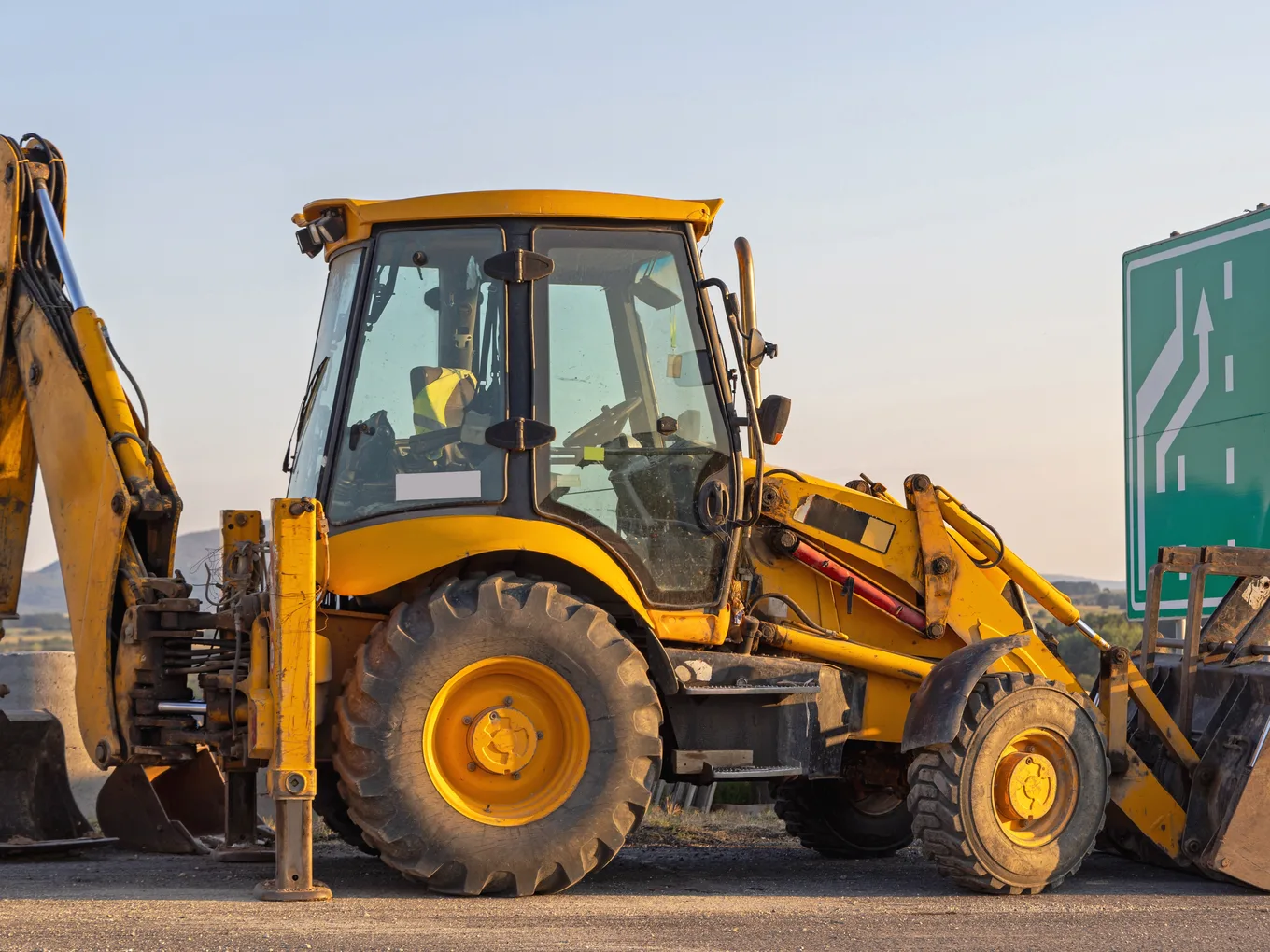
Water organizes the risk west of the Cascades, and distance organizes it to the east. In the valley the exposure is ground behavior: saturated subgrade under a stabilizer, trench walls that do not stand the way they did in summer, and slick approaches where a machine loading onto a deck has the least grip it will have all year. Over the passes the exposure becomes transit — grade, weather and restraint on a haul that can start in rain and finish in snow. Common to both are the two structural habits of the class, swing contact behind the operator and a leg through ground that looked firmer than it was.
Common Oregon backhoe claims we see
- Stabilizer subsidence in saturated subgrade. The valley’s signature loss, and it takes the surface, the level of the machine and sometimes a shallow service.
- Slip or roll during loading on a wet approach. The ramp is where this class concentrates damage, and rain removes the margin.
- Boom or bucket contact on a tight infill lot. Swing radius against a structure, a fence line or a parked vehicle where there is no room to be wrong.
- Restraint failure on a Cascade crossing. Grade, wind and changing surface on one haul is harder on tie-downs than a whole month in the valley.
- Trench collapse damaging the machine or what it was working around. Wet ground behaves differently from the ground the job was planned in.
Why Oregon backhoe owners choose Equipment Guard Insurance
Equipment-only placement matters more in Oregon than in most states, precisely because the license already reaches into the insurance program. When a bond and a coverage obligation ride on your endorsement, the last thing a contractor wants is a market that will only look at the backhoe if the whole structure moves with it. We do not ask for that. We take the wet-season ground conditions seriously rather than pricing the machine as though every month were August, we treat the pass crossings as the transit exposure they are, and we place through markets — named on our homepage — that will read an Oregon equipment schedule on its own.
Major Oregon backhoe markets
- Portland. The densest work in the state, where infill lots and old buried services leave a backhoe operating inside its own swing radius.
- Hillsboro. Sustained industrial and technology-campus build-out, with large sites and long internal moves rather than street work.
- Salem. State, municipal and institutional contracts that keep the machine in the public right of way through most of a normal week.
- Eugene. Utility and residential work on valley ground that holds water for months, where subgrade is the operating constraint.
- Bend. High-country build-out east of the Cascades, reached over a pass and worked in a shorter, harder season.
- Medford. Southern interior site work with long approaches, hot dry summers and the slowest support in the state when a machine goes down.
Related
- Backhoe insurance — the machine physics that hold in every state.
- Skid Steer insurance in Oregon — the machine most Oregon crews add second, and the one the endorsement question follows onto.
- All equipment insurance in Oregon — the state hub.
- Equipment floater · Rented & leased equipment
Primary sources
- CCB License — Oregon Construction Contractors Board (contractor licensing)
We do not link an Oregon vehicle-code section here. The road-use treatment described above follows how Oregon classifies self-propelled construction equipment; where the state publishes a section that states it directly, this page links it.
Oregon backhoe insurance FAQs
Is there a job small enough to work without a CCB license in Oregon?
Not on the basis of size. The Construction Contractors Board requires a license for anyone working for compensation on real-property improvements, and no cost threshold rescues a small job the way a dollar trigger does in other states. That is unusually strict, and it means a backhoe owner doing occasional paid work for someone else is inside the regime rather than adjacent to it.
What is an endorsement, and why does it matter to an equipment policy?
The endorsement is the part of the license that says what kind of work you may do — residential or commercial, at a level tier — and each one carries its own bond and its own insurance requirement. So in Oregon the credential is partly an insurance instrument: change the endorsement and you change what you are obliged to carry. Anyone planning to add commercial work should look at the insurance consequence before the application, not after it.
Does the license requirement replace the equipment policy?
No, and conflating them is the expensive mistake. The bond and the liability obligations attached to an endorsement are about the people you work for; the floater is about the machine you own. Nothing in the licensing regime repairs a backhoe, replaces one, or answers for the damage it does on a public road. The two sit alongside each other, and a crew can be perfectly compliant and still uninsured for the iron.
How does Oregon treat the machine when it is on the highway?
It sits in the vehicle code’s class of equipment that is worked rather than driven — moved over highways only incidentally — and is exempt from general registration. This build records the definition and the exemption at ORS 801.495 and ORS 803.305 respectively; we name them and link neither, because a citation here means the document was fetched and read, and these were not.
What does a wet season do to this machine?
It changes the ground under it for months at a time. Saturated subgrade west of the Cascades means a stabilizer foot that was adequate in August is marginal in January, trench walls behave differently, and spoil that was a pile becomes a load. The machine itself suffers less from rain than from what rain does to the ground, which is why the seasonal working pattern is a better underwriting question than the annual rainfall is.
Can the backhoe be written on its own here?
Yes. Equipment Guard Insurance places equipment monoline in Oregon, which is worth something specific in this state: your endorsement already ties a bond and an insurance obligation to your license, and nobody wants to disturb that structure to get a single machine scheduled. The floater can be arranged around it rather than through it.