

On a Texas crew the backhoe is the machine that keeps the day moving. It cuts the trench, swings the spoil, sets the pipe, pushes the ground back and then takes itself across town to whatever is booked next — no truck, no trailer, no waiting on a driver.
This page is about what that costs in Texas specifically: a state that leaves general construction to cities rather than to a licensing board, a road classification recorded but not linkable, and soils that change shape with the season underneath the machine. Anything true of a backhoe no matter where it works belongs on the backhoe insurance pillar rather than here.
What backhoe insurance costs in Texas
We publish no rate for this machine, and a rate published without your details would be a shape with no content. In Texas the facts that move it are the two travel patterns — how many driven moves a week inside a metro, and how many hauled legs a year between them — plus which soils the machine habitually works, whether the site is inside a flood-prone corridor, where the unit stands overnight, the age and valuation basis of the machine, and your record. A backhoe on inner-city utility replacement and one working the coastal plain during storm season are not the same risk and should never be quoted as if they were.
Texas backhoe regulations: road operation
A self-propelled backhoe is classed as ‘special mobile equipment’ — a vehicle not designed or used primarily to transport persons or property and only incidentally operated on a highway — which is not issued standard registration.
Texas records that at Tex. Transp. Code § 541.201 (special mobile equipment); § 502.146, and this page names those sections without offering a link. What sits on record as a source here is a code portal rather than a document anyone has fetched and read, and a portal is not a citation — so we name what our data holds and decline to imply more than we have checked. The rule itself lands where every version of it lands: staying out of standard registration is an administrative outcome, and it does nothing about the moment the machine, under its own power, meets a passing vehicle or somebody’s streetside property. That is liability, answered by a different form than the one repairing the backhoe. The distinctly Texan layer is what sits above it. There is no statewide general contractor license at all — the state licenses named trades through the Department of Licensing and Regulation and the State Board of Plumbing Examiners, and leaves general building work to municipal registration and permitting. So an equipment business here answers to several city halls rather than to one state office, and the backhoe is the machine most likely to cross between them on its own wheels. Knowing which jurisdictions your machine actually works in is not paperwork trivia; it is a description of your operating footprint, and it belongs on the application.
Common backhoe risks in Texas
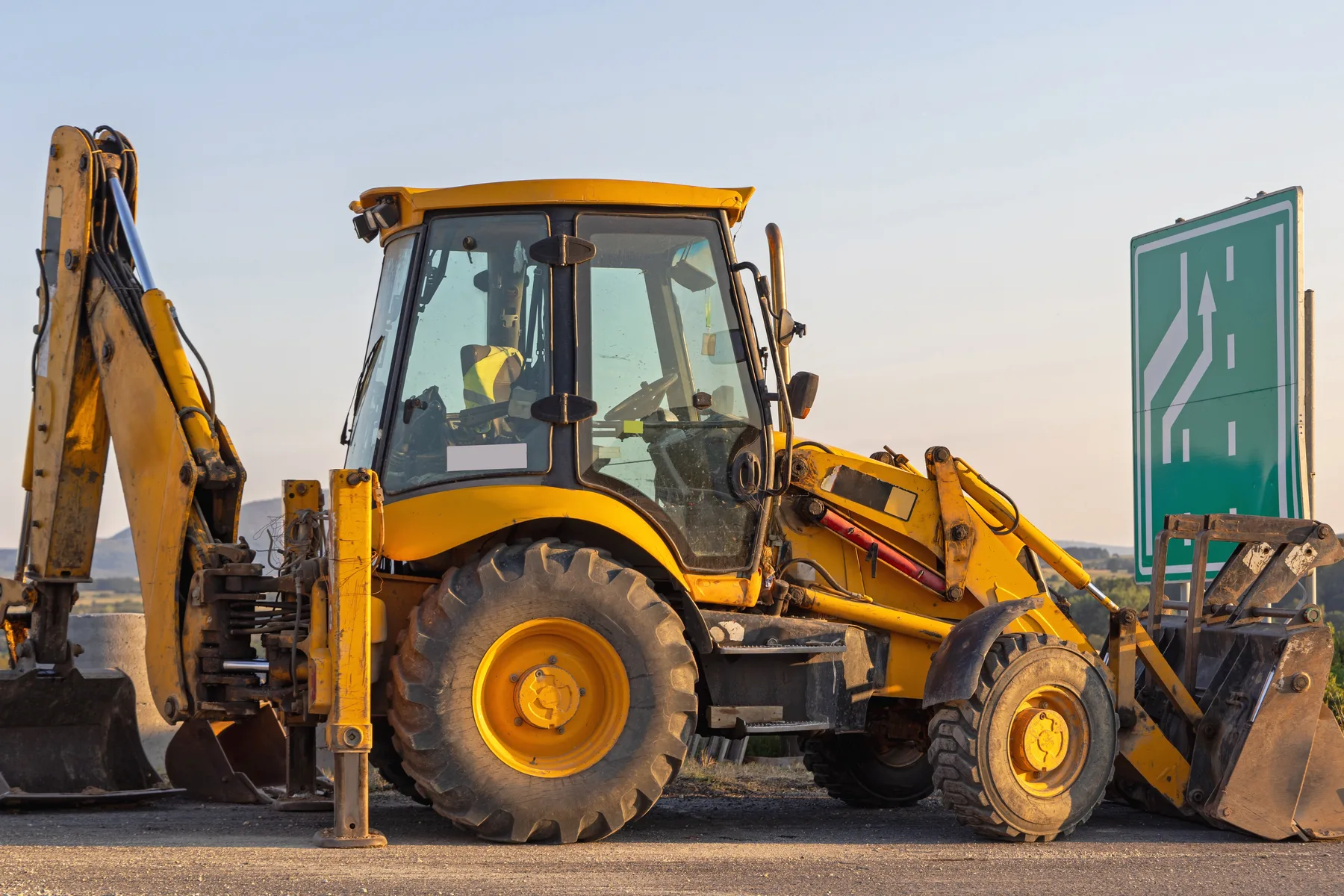
Ground movement is the Texas signature on this class. Across the belt running through the eastern and central metros the soils swell with water and shrink hard without it, so a surface that carried a stabilizer pad comfortably in spring can be a different surface by late summer, cracked, dropped and unreliable. It produces a subsidence claim that looks like carelessness and is really seasonality, and it is the reason experienced operators here mat a pad on ground they have already worked. The same movement is what keeps the state’s utility and slab-repair work coming, which is a large part of why these machines stay busy.
Water then supplies the other half. The coastal plain and the flood corridors that reach well inland put machines on sites that can go from working to submerged inside a day during storm season, and a backhoe left where it finished the shift is a machine nobody moved in time. Road exposure runs alongside all of it in two distinct forms: constant short driven moves within a metro, and long hauled legs between metros where the loading, the straps and the ramp do the damage rather than the highway.
Common Texas backhoe claims we see
- Stabilizer subsidence into shrink-swell clay. The Texas seasonal loss — the pad was fine last month, and the ground has changed shape since.
- Struck-object contact on a short cross-town move. Frequent driven repositioning through heavy metro traffic, with poor sightlines behind the machine.
- Flood damage to a machine left on a low-lying site. Storm-season losses on the coastal plain and the inland flood corridors, where the warning was short.
- Loading, strapping and ramp damage on an inter-metro haul. The long legs are all deck work, and deck work is where this class loses machines.
- Buried service struck in an older urban corridor. Reinstated ground and generations of utility, especially in the oldest parts of the big metros.
Why Texas backhoe owners choose Equipment Guard Insurance
Equipment-only placement is the entire premise of how we work, and in Texas it removes a real irritation. Your obligations here are already scattered across permit desks and city registrations; the insurance side should be the part that stays still. So we do not ask you to rearrange a working program to schedule one machine. We ask about both travel patterns rather than assuming one, about which soils the unit habitually sets up on, and about where it stands when a storm is forecast — then we place through markets — named on our homepage — that will read a Texas equipment schedule on its own merits.
Major Texas backhoe markets
- Houston. The deepest utility, drainage and site-development market in the state, on ground that moves and in corridors that flood.
- Dallas. Dense commercial and municipal replacement work with the clay belt directly underneath it.
- Fort Worth. Industrial, rail-adjacent and residential build-out, with rock arriving closer to grade than in the metro alongside it.
- San Antonio. Utility and institutional work over shallow limestone, which is hard on teeth, tires and pins.
- Austin. Sustained growth on constrained hill-country lots, where the swing arc and somebody’s finished property are rarely far apart.
- Corpus Christi. Coastal industrial and drainage work with salt air on the machine and storm staging as an annual routine.
Related
- Backhoe insurance — the machine physics that hold in every state.
- Skid Steer insurance in Texas — the machine that never crosses a city line without a trailer.
- All equipment insurance in Texas — the state hub.
- Equipment floater · Rented & leased equipment
Primary sources
We do not link a Texas vehicle-code section here. The road-use treatment described above follows how Texas classifies self-propelled construction equipment; where the state publishes a section that states it directly, this page links it.
Texas backhoe insurance FAQs
How is a backhoe classed on a Texas highway?
As special mobile equipment — a vehicle not designed or used primarily to move people or property, operated on a highway only incidentally — and machines in that class are not issued standard registration. It is a tidy answer to a narrow question. What it will not tell you is anything about who is responsible when the machine is out there among traffic doing three times its speed, which is the question an owner actually needs settled.
Why are Texas sections named here but not linked?
Because what is on record for this state is a code portal rather than a document we have opened and read. Naming the sections is fair — they are recorded against Texas in our own data — but a link on this site is a statement that somebody fetched the text and checked it, and no one here has done that. Publishing a portal link and letting it look like a citation would be the sort of small dishonesty that turns into a large one, so the page names and stops.
Does Texas license the contractor running the machine?
Not at state level for general construction. Texas licenses specific trades — electrical, air conditioning and refrigeration, and irrigation through the Department of Licensing and Regulation, plumbing through the State Board of Plumbing Examiners — and leaves general building work to municipal registration and permitting. For a machine that repositions itself, that is the whole point: the operating rules, the permit desk and the registration expectations can all change between one job and the next without the business changing at all.
What do Texas clay soils do to a backhoe?
They move, and they move seasonally rather than randomly. Across the belt that runs through the eastern and central metros the soils swell when wet and shrink hard when dry, which opens cracks in a dry summer, lifts and drops the surface across a year, and quietly changes what is under a stabilizer pad between one visit to a site and the next. That is why an experienced Texas operator mats a pad on ground they were standing on last month, and why pad subsidence here is a seasonal claim rather than a careless one.
Do the distances between Texas cities change how the machine travels?
They split the travel into two different problems. Inside a metro the machine drives itself constantly, because the next job is a few minutes away and hooking a trailer for that is absurd. Between metros nothing drives — the distances are long enough that a deck is the only sane option, so those legs become loading, strapping and highway transit exposure instead. Most Texas backhoes therefore carry both patterns at once, and an account that only asks about one of them has asked half the question.
Can the backhoe be scheduled on its own?
Yes. Equipment Guard Insurance places equipment monoline in Texas, so the machine goes on its own schedule while your liability and work comp stay where they are. Given that your compliance obligations here are spread across several city halls rather than one state office, keeping the insurance side stable and simple is worth real money in avoided friction.