

A skid steer is the machine that makes a small Texas crew competitive across a state this large — it loads, grades, digs, breaks and lifts, fits through a residential gate, and travels to the next job on a trailer behind the truck already in the yard. That portability is also the whole underwriting problem.
What follows is specific to Texas: a state that licenses trades but not general contracting, so your paperwork obligations change city by city while the rules reaching the machine do not; and a geography whose distances and corridors shape the theft exposure more than any single metro does. For the machine physics that hold everywhere — the attachment ecosystem, skid steering and the forward-tip pattern — see the skid steer insurance pillar.
What skid steer insurance costs in Texas
We will not put a figure on this page, because a Texas loader is priced off facts a webpage does not know — which unit, which yard, how far it travels. In Texas the levers that move it most are storage, the spread of your work, and weather: a loader that returns to a fenced yard every night prices differently from one that follows the crew between metros and sleeps on site. Behind that sit the attachments you schedule and their value, the valuation basis, whether the machine is fitted with a tracker, and the loss record you bring. A machine working three cities in a quarter is a different risk from one working three streets.
Texas skid steer regulations: title, lien and ownership
A skid steer is not a certificate-of-title vehicle but untitled business equipment, and a security interest is perfected by filing a UCC-1 financing statement centrally with the Texas Secretary of State.
The consequence is procedural rather than exotic, and it is worth being precise about: because no title exists, the financing statement and the serial number are the ownership record. A lender on a financed machine is added to the policy as a loss payee against the scheduled unit, so a loss payment is issued jointly, and the two records have to stay in step — a lienholder still named against a machine you have paid off or traded is the clearest sign a schedule needs review. Where Texas does add something of its own is one layer up: with no statewide general-contractor license, the registration you hold is municipal, so the entity named on a certificate of insurance and the entity registered with the city’s office need to be the same one. Mismatches there surface at the worst possible moment, when a general contractor is checking paperwork before letting the machine on site.
Common skid steer risks in Texas
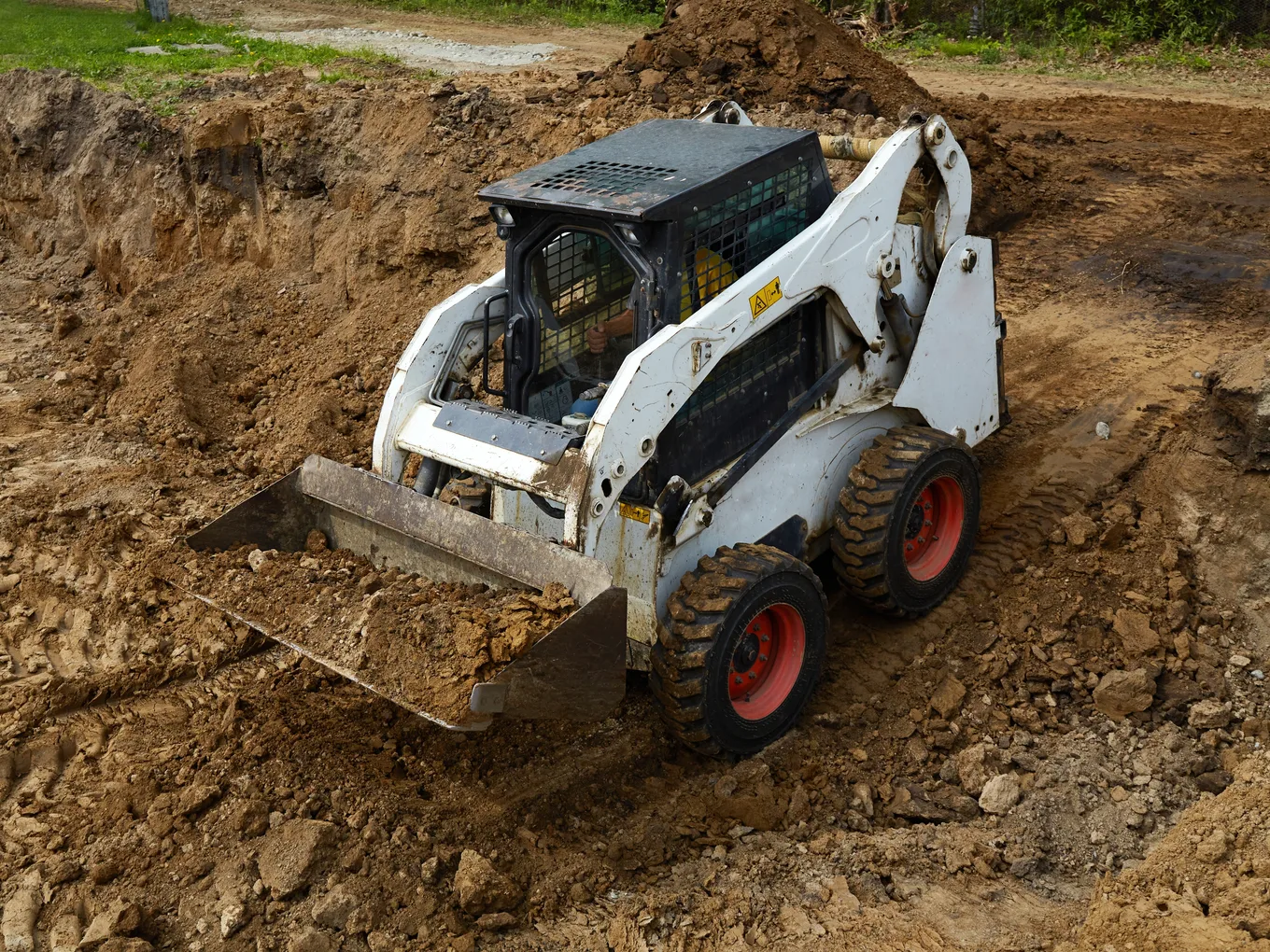
Theft is the risk that defines this class in Texas, and the state amplifies it through geography rather than through any single city. Jobsites are connected by long interstate runs, the Gulf ports and the southern border sit at the end of several of them, and a compact loader on a trailer is unremarkable traffic for hundreds of miles. Weather is the second exposure and it is not one exposure but three: hail through the north and center, coastal wind and water on the Gulf side, and sustained heat on hydraulics and tires statewide. Beyond those, the forward tip with the arms raised and damage during loading account for most of the remainder — both a function of how a skid steer moves rather than of anything about this state.
Common Texas skid steer claims we see
- Overnight theft from an open site between metros. The defining Texas claim, frequently taking the trailer and rack attachments as well, and settled against the serial number because no title exists.
- Hail damage to a loader parked in the open. Glass, lights and cab, on a machine left out through a spring storm line across the north or center of the state.
- Attachment stolen separately. A breaker or mulching head taken from a yard rack while the loader stays put — then found to sit under a blanket per-item sublimit rather than scheduled by name.
- Certificate and registration mismatch stopping work. Not an insured loss, but the most common paperwork failure here: the named entity on the certificate does not match the one registered with the city.
- Forward tip placing a load at height. Usually on ground less level than it looked, on a machine carrying its load out in front.
Why Texas skid steer owners choose Equipment Guard Insurance
We write equipment monoline, which in Texas removes a specific obstacle: a crew here often carries general liability arranged around a municipal registration it does not want to disturb, and being told to move the whole program to get a loader scheduled properly is a non-starter. We do not ask for that. We schedule attachments by name as a matter of course, because on a skid steer the attachments are where the money quietly sits, and we place through markets — named on our homepage — that will read a Texas equipment schedule on its own merits.
Major Texas skid steer markets
- Houston. The largest and most industrial jobsite market in the state, with port-adjacent work, and the combination of open-site storage and corridor access that defines the theft exposure.
- Dallas–Fort Worth. Two registration regimes inside one metro and the deepest rental market in the state, so rented-in loaders and the certificates the rental houses demand are routine on an account here.
- San Antonio. Steady institutional and residential build-out with long hauls to outlying work, where machines spend more nights away from a yard than in one.
- Austin. Dense infill on tight lots and high machine values, where finished-surface damage and confined-site loading drive the claims that are not thefts.
- El Paso and the border corridor. Long-distance dispersal and a genuine cross-border recovery problem — the market where a serial record and telematics do the most work.
- Corpus Christi and the coastal bend. Industrial and port work with wind and water exposure on top of the theft picture, and machines that are hard to move inland ahead of weather.
Related
- Skid steer insurance — the machine physics that hold in every state.
- Excavator insurance in Texas — the machine the dig-notice statute actually reaches.
- All equipment insurance in Texas — the state hub.
- Equipment floater · Rented & leased equipment
Primary sources
We do not link a Texas filing document here. The ownership and lien rules described above follow Article 9 as Texas has adopted it; where a state publishes a document that states the rule directly, this page links it.
Texas skid steer insurance FAQs
Is a skid steer titled or registered in Texas?
No. It is untitled business equipment rather than a certificate-of-title vehicle, so nothing changes hands at the tax office when it sells and there is no title to produce after a theft. The serial number, the bill of sale and the financing record do that work instead — which is why a schedule that names machines by description rather than serial is the weakest document in a Texas claim file.
Do I need a state contractor license to run equipment in Texas?
Not a general one. Texas licenses specific trades at the state level — electrical, HVAC and refrigeration, and irrigation through the Department of Licensing and Regulation, plumbing through the State Board of Plumbing Examiners — but there is no statewide general-contractor license. General building work is handled by municipal registration and permitting, so a crew taking work in Houston, San Antonio and Austin can face three different registration obligations in one quarter while the rules that reach the machine itself stay the same statewide.
What makes theft the defining exposure on a Texas skid steer?
Distance and corridors. This is a large state whose jobsites are connected by long interstate runs and whose southern edge is a port and border economy, so a compact loader on a trailer moves a long way before anyone notices. Compact machines are taken far more often than large tracked ones, and once a loader with no title leaves the yard, recovery depends entirely on the serial record and any telematics fitted to it.
Are attachments covered on a Texas skid steer policy?
Only the ones that are scheduled. Buckets, augers, breakers, grapples and mulching heads usually sit under a blanket limit with a per-item sublimit, and the heads worth real money exceed it. Attachments also go missing on their own, lifted from a rack while the loader stays where it is, so anything above the sublimit belongs on the schedule by name.
Does the Texas climate change how the machine is underwritten?
It changes the non-theft half of the picture. Hail across the north and center of the state, coastal wind and water on the Gulf side, and sustained heat everywhere all reach a machine parked in the open — hydraulics, glass, tires and cab. Where the loader sleeps is already the largest lever on this class for theft reasons, and in this state it counts twice.
Can the loader be scheduled by itself, without disturbing the rest of my program?
Yes. Equipment Guard Insurance writes equipment monoline in Texas, so a loader and its attachments can be placed on their own schedule. If you already carry general liability you are content with, we leave it where it is.