
Utah is one of the very few states where a backhoe owner does not have to argue about what the machine is. Most vehicle codes describe a category — equipment built for work, not for carrying people or goods — and leave everyone to agree that a backhoe belongs in it. Utah writes the machine in by name.
That is a real difference, and this page is about what it buys you and what it does not. It also covers the other two things that shape a Utah equipment account: a licensing system with an examination behind it, and a state whose population sits along one narrow corridor with long climbs out of it. The physics that hold in every state — reach, swing, loader-end wear — belong to the backhoe insurance pillar.
What backhoe insurance costs in Utah
There is no honest number to put here. What a Utah backhoe costs to insure is decided by the machine and attachment list, the valuation basis, how much of the year it spends moving between jobs rather than working inside one, whether the work is Wasatch Front infill or a long approach into the southwest, and what your loss history looks like. A figure printed without any of that would be invention. Send the list and the addresses and you get a real answer instead.
Utah backhoe regulations: road operation
A self-propelled backhoe is expressly ‘special mobile equipment’ — off-road motorized construction equipment not designed primarily to transport persons or property or to operate in traffic, only incidentally moved over highways.
Utah names the machine, and that is worth pausing on. In most states a backhoe is brought inside a general description of self-propelled construction equipment by inference; here the motor-vehicle definition of special mobile equipment lists backhoes explicitly, alongside bulldozers. We state that as a fact and cite no document for it — every version of the section we could reach is stamped superseded, so we link nothing, quote nothing and make no claim about the wording currently in force. The classification is solid; the citation is not, and saying so is more useful than a link that pretends otherwise. What being named settles is narrow anyway. It ends the registration argument and it does nothing else: the machine is still on the road, still in traffic, and still capable of reaching a parked car, a light standard or a curb line with a boom or a tire, and none of that is repaired by the floater that covers the backhoe itself. Above the vehicle question, Utah licenses contractors through the Division of Professional Licensing across general building, general engineering and specialty classifications, with coursework and an examination rather than a registration form — so the license a Utah owner holds is a statement about capability, and the equipment schedule ought to tell the same story about scale.
Common backhoe risks in Utah
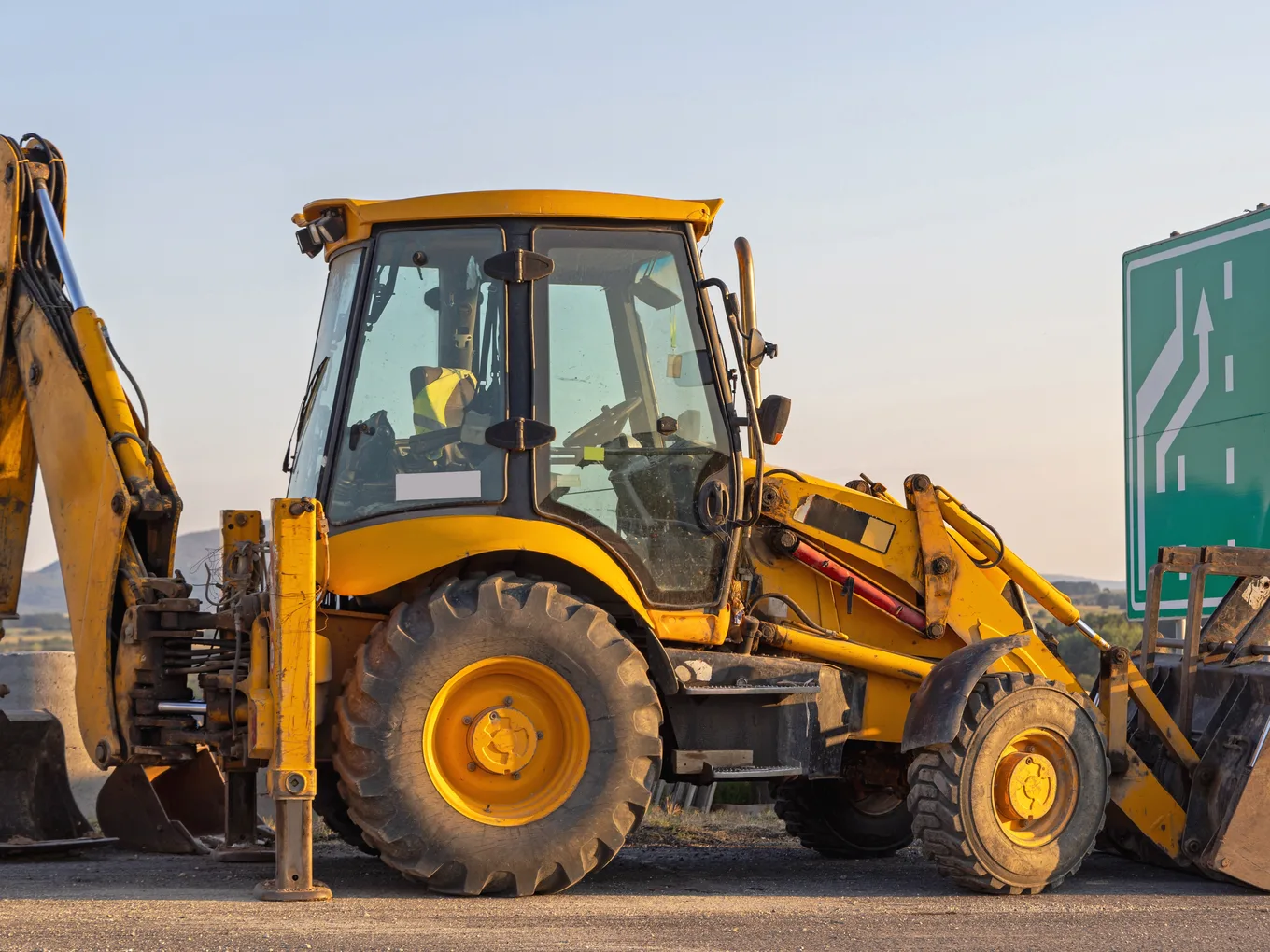
Terrain and corridor density between them account for most of what goes wrong here. The Wasatch Front packs a large share of the state’s work into a narrow strip, so machines make short frequent road moves through congested traffic and work close to finished surfaces, which is the profile that generates boom-swing and struck-object claims. Getting out of that strip means grades, and grades mean the machine rides a trailer — moving the exposure onto the ramp and the tie-down. The southwest then supplies the wear story: sustained heat and abrasive grit that shorten the life of hydraulics, seals, pins and stabilizer feet, and that leave an adjuster looking at a machine whose condition is doing half the talking.
Common Utah backhoe claims we see
- Struck-object contact on a short urban road move. The signature loss along a corridor where jobs are close together and traffic is not.
- Ramp and tie-down damage on a grade. What replaces road exposure once a machine stops driving itself uphill.
- Boom or counterweight into something behind the operator. Tight infill lots with finished work on three sides.
- Stabilizer punch-through on disturbed or backfilled ground. Takes the surface, the level, and occasionally what is buried under it.
- Heat and grit failure in the southwest presented as sudden damage. Worth separating from a covered loss at the outset rather than at the claim.
Why Utah backhoe owners choose Equipment Guard Insurance
A licensed Utah contractor has usually built its liability and workers compensation around a classification it does not want reopened, and a broker who answers “move everything to me” is not solving the problem in front of you. We write equipment on its own, so the backhoe gets scheduled properly and everything else stays where it is. We also ask the Utah-shaped questions — how much of the year is spent on a trailer, how far south the work reaches, what the corridor traffic is actually like — and place through markets named on our homepage that will read a Utah equipment schedule on its own terms.
Major Utah backhoe markets
- Salt Lake City. The densest work in the state, on constrained lots with finished surfaces and traffic on every approach.
- West Valley City. Industrial and distribution ground, where the machine spends more of its week loading than digging.
- Provo and Orem. University-adjacent build-out and utility replacement running through older streets and their old services.
- Ogden. Rail, industrial and reconstruction work at the northern end of the corridor, with the longest ordinary road moves in it.
- Lehi. Fast greenfield and campus construction, where new finished surfaces sit close to working iron almost immediately.
- St. George. Desert heat, abrasive ground and long approaches, with the slowest recovery in the state when a machine stops.
Related
- Backhoe insurance — the machine physics that hold in every state.
- Skid Steer insurance in Utah — the other Utah machine the vehicle code keeps off the title rolls, for a different reason.
- All equipment insurance in Utah — the state hub.
- Equipment floater · Rented & leased equipment
Primary sources
- Utah Code § 41-1a-102 — Definitions (Effective 7/1/2026; superseded 10/1/2026) — Utah State Legislature (Utah Code) (road use and registration)
- Utah Code Chapter 55, Utah Construction Trades Licensing Act (58-55-301 License required) — Utah Department of Commerce, Division of Professional Licensing (DOPL) (contractor licensing)
Utah backhoe insurance FAQs
Does Utah law really name backhoes?
It does, and that is unusual enough to be worth saying plainly. The state’s special mobile equipment definition names backhoes outright, alongside bulldozers, rather than leaving the machine to be reasoned into a general class of self-propelled construction equipment. We deliberately link no section for it: every version of that section we were able to reach carries a superseded stamp, and this page links only text we can confirm is the one in force. The classification itself is not in doubt; the document we would point you at is.
Being named in the definition — does that improve my position on a claim?
It removes an argument, which is not nothing, but it does not move a dollar. What being named settles is whether the machine is registered like an ordinary vehicle. It leaves entirely open who answers when the backhoe damages something on a public street, and that second question is the expensive one. The floater repairs your machine. Liability coverage deals with what your machine reached.
How does Utah licensing affect an equipment account?
Utah is a competency state, which changes the tone of the file. Contractors are licensed through the Division of Professional Licensing at the Department of Commerce, in general building, general engineering and specialty classes, with coursework and examination behind the license rather than a form and a fee. An underwriter reading a Utah account is therefore looking at a business that has already been assessed by somebody, and an equipment schedule that matches the class of work the license permits reads better than one that does not.
What do the grades do to a machine that drives itself?
They set the practical limit on self-transport. A backhoe is geared for work rather than for a sustained climb or a long descent, and the canyon and bench roads that reach a lot of Utah work are neither short nor flat. Owners who would happily drive a machine across a flat valley floor put it on a trailer for the same distance uphill, and they are right to. The exposure simply moves from the road to the ramp and the tie-down, which is where this class already loses most of its money.
Is the risk the same in Salt Lake City and in St. George?
No, and pricing them alike would be lazy. The northern corridor is dense, congested and cold in winter, so the machine works close to finished surfaces and makes short road moves through traffic. The southwest is desert heat and abrasive grit — hard on hydraulics, seals, pins and stabilizer feet — with longer approaches to work. Same machine, different failure modes, and the schedule should know which one it is living with.
Can I insure the backhoe without disturbing anything else?
Yes. Equipment Guard Insurance writes equipment monoline in Utah, so the machine is scheduled on its own policy and the liability and workers compensation arranged around your license classification stay untouched.