
A backhoe survives on a Wisconsin crew because it is the machine that can still do something useful in November. It trenches, it loads, it backfills, it lifts pipe, and it puts itself on the road to the next address without waiting for a lowboy — which is where the interesting legal question starts.
This page is about the Wisconsin answer to that question, which is less uniform than most states manage: two separate registration outcomes depending on the machine, a contractor credential that only reaches dwellings, and a winter that changes the exposure profile twice a year. Machine physics that hold everywhere — reach, swing radius, stabilizer loading — belong to the backhoe insurance pillar rather than here.
What backhoe insurance costs in Wisconsin
There is no rate to publish. Anything printed without your machine, your work pattern and your record in front of it would be invention with a decimal point attached. The Wisconsin variables that genuinely move it are how many road moves a normal week carries and on what class of road, whether the machine is stored indoors through winter or left on site, the age and attachment list, the valuation basis you select, and your own loss history. A machine on a single Dane County site all season and one running between lakeshore contracts in February are not comparable risks, and pricing them alike serves nobody.
Wisconsin backhoe regulations: road operation
Self-propelled construction equipment is ‘road machinery’ (ditch-digging apparatus, power shovels, drag lines, earth-moving equipment, graders, loaders) that is exempt from registration; heavier equipment moved on highways is registered as ‘special mobile equipment’ under the fee provisions.
That two-bucket structure is the part worth slowing down for, because it is not how most states handle it. The definition and the exemption sit at Wis. Stat. § 340.01(52) and § 341.05 as this build records them, and we name those sections without linking them — nothing on this page links to a document that has not been fetched and read. What the structure means in practice is that the registration answer for your backhoe is a question about the machine, not a slogan about the category, and an owner who assumes the exemption is automatic may be wrong about a heavier unit. Either way the exposure question is untouched. Registration decides plating and fees; it decides nothing about who answers when a machine on a public road damages something. One layer up, the state credential is narrower than most owners realize: the Dwelling Contractor certification and the Qualifier credential behind it reach one- and two-family dwelling construction, and commercial site work is governed through permits and trade credentials instead. A commercial crew here therefore has no state contractor card to show, which puts a great deal of weight on the certificates it can show. The state publishes the Dwelling Contractor Qualifier requirements directly, and they are worth reading before assuming a credential covers work it was never written for.
Common backhoe risks in Wisconsin
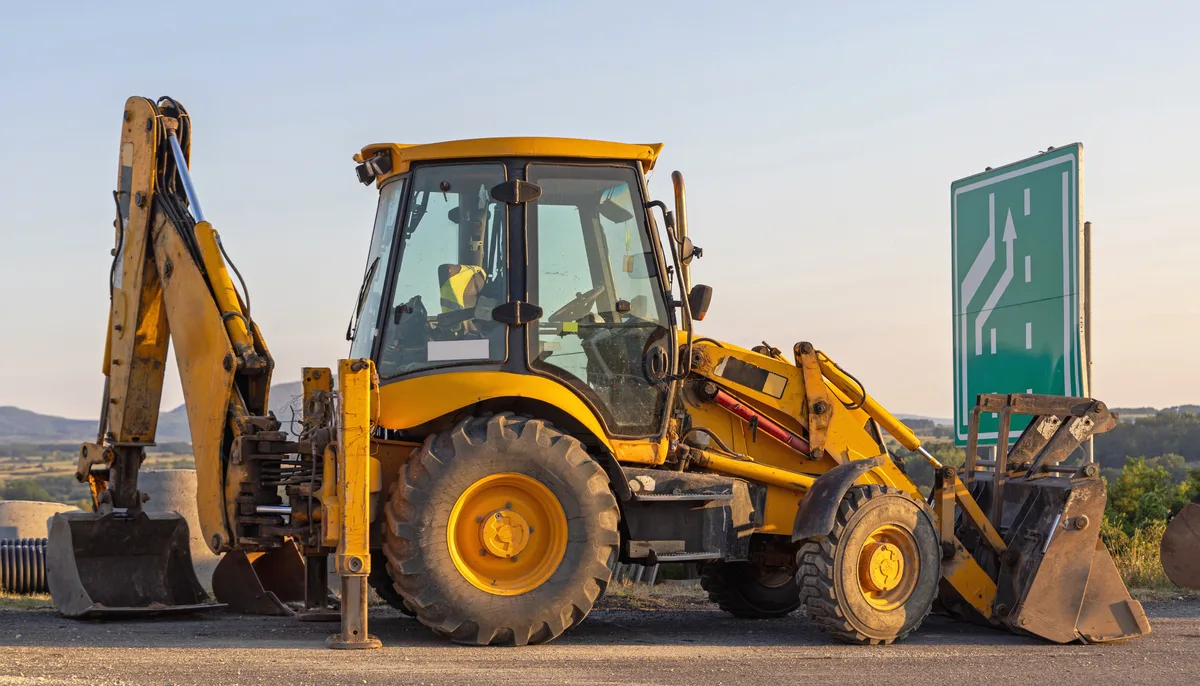
Season and corridor between them explain most Wisconsin losses on this class. The corridor part is traffic: work clusters along the lakeshore and the interstate spine, so a machine moving between jobs is slow, wide traffic inside fast traffic, at the times of year when the pavement is least forgiving. The season part is chemistry and ground — brine on the roads working steadily at rams and pins, cold oil making the first hour of a shift the hardest, frozen ground loading the boom past what the operator feels, and a thaw that undoes the stabilizer support the machine relied on a month earlier. The two constants of the class sit underneath both: swing contact behind the operator, and a leg through ground that looked solid.
Common Wisconsin backhoe claims we see
- Collision while the machine is legally in traffic on a busy corridor. Slow iron on fast pavement is the exposure the registration answer never addressed.
- Boom or bucket contact behind the operator. Swing radius against a wall, a fence line or a vehicle on a tight urban lot.
- Stabilizer breakthrough during the thaw. Support that held through frost gives way as the ground releases, taking the surface and sometimes a shallow service.
- Winter start-up damage to the hydraulic system. Frequently presented as a sudden loss when it is a cold-oil and seal-condition story, so the distinction is worth drawing early.
- Loading and tie-down damage on a fee-registered heavy move. The larger the unit, the more of the year it spends on a deck rather than under its own power.
Why Wisconsin backhoe owners choose Equipment Guard Insurance
Writing equipment on its own is the point of this agency, and in Wisconsin it does something specific. On the commercial side there is no state contractor credential to lean on, so the documents that prove you are a real operation are largely insurance documents — and those should be assembled deliberately rather than inherited from whatever package happened to be in place. We look at which registration bucket a machine falls into before we describe its road use, we ask where it spends the winter, and we place through markets — named on our homepage — that will read a Wisconsin equipment schedule on its own terms.
Major Wisconsin backhoe markets
- Milwaukee. The deepest urban and industrial market in the state, with old underground utilities and lots too tight for the swing radius the machine actually has.
- Madison. Institutional and municipal work on an isthmus, where road moves between jobs are short, frequent and always in traffic.
- Green Bay. Port, paper and industrial site work, with heavy approaches and a season that closes earlier than the schedule wants.
- Kenosha and Racine. Distribution and light-industrial build-out along the southern lakeshore, and the crews most likely to work across the Illinois line.
- Appleton and the Fox Valley. Dispersed industrial and municipal work where a single machine covers a wide radius from one yard.
- Eau Claire. Western Wisconsin site development with longer approaches, thinner local support and slower recovery when a machine goes down.
Related
- Backhoe insurance — the machine physics that hold in every state.
- Skid Steer insurance in Wisconsin — the machine whose Wisconsin paperwork runs through the financial-institutions filing office instead.
- All equipment insurance in Wisconsin — the state hub.
- Equipment floater · Rented & leased equipment
Primary sources
- Dwelling Contractor Qualifier — Wisconsin Department of Safety and Professional Services (contractor licensing)
We do not link a Wisconsin vehicle-code section here. The road-use treatment described above follows how Wisconsin classifies self-propelled construction equipment; where the state publishes a section that states it directly, this page links it.
Wisconsin backhoe insurance FAQs
Does Wisconsin exempt every construction machine from registration?
No, and that is the local wrinkle. The vehicle code carries a road-machinery class — ditch-digging apparatus, power shovels, drag lines, earth-moving equipment, graders and loaders — that is exempt from registration outright, while heavier equipment moved on highways is registered as special mobile equipment under the fee provisions. Two buckets, not one, so the answer for a given backhoe depends on the machine rather than on the category name.
Which sections say that, and why are they not linked here?
The definition and the exemption are recorded in this state’s datum at Wis. Stat. § 340.01(52) and § 341.05, and we name them without linking them. This page links only documents that were fetched and read; those two have not been, and a link is a claim about a document we have opened. Naming what the record holds while linking only what survived a probe is the honest split.
Does Wisconsin license the contractor operating the machine?
Only for dwellings. The Department of Safety and Professional Services issues a Dwelling Contractor certification for the business and a Dwelling Contractor Qualifier credential for the individual, and both reach one- and two-family dwelling construction. Commercial work is not covered by that credential at all — it is governed through permits and trade credentials instead — so a crew doing commercial site work holds no state contractor card for it.
What does a Wisconsin winter actually do to a backhoe?
Three things worth pricing. Cold thickens hydraulic oil and stiffens seals, so the first hour of a January shift is the hardest hour the machine works all year. Road salt and brine attack rams, pins and unpainted steel far faster than an owner who parks indoors expects. And frost changes the ground twice — solid enough to punish the boom in midwinter, then soft enough in the thaw to swallow a stabilizer foot.
How much of the exposure is on the road rather than on the site?
More than in most states, because the work here clusters into corridors. A backhoe moving between jobs along the lakeshore or the interstate spine spends time on busy, fast, weather-affected pavement rather than on empty rural road, so the machine is slow traffic in fast traffic. That is a liability question rather than a floater question, and it should be answered explicitly instead of assumed away.
Can the backhoe be written on its own here?
Yes. Equipment Guard Insurance places equipment monoline in Wisconsin, so the machine and its attachments can be scheduled without moving your liability or workers compensation. On a commercial crew that holds no state contractor credential at all, the insurance file is a large part of what an owner or a general contractor can actually verify about you, and it is worth being deliberate about.