
Connecticut gives a dozer nowhere to hide. The state is small, steep in patches and drained hard, so the ground you open is usually within sight of a brook, a catch basin or somebody else’s lawn, and the gap between a control measure failing and a stranger noticing is measured in feet.
That is why the regulatory half of this page carries more weight here than the mechanical half. The state runs its own construction stormwater program and writes a permit broader than most, one that reaches the water you pump out of an excavation as well as the water that leaves the surface. For blade loads, undercarriage life and slope work — the physics that do not change at a state line — see the dozer insurance pillar.
What dozer insurance costs in Connecticut
No premium appears on this page, and the omission is deliberate rather than evasive: on a dozer the iron is the small half of the exposure, so a figure quoted without the site behind it would be decoration. What moves a Connecticut number is the machine’s age, hours and undercarriage condition, how much ground you keep open at one time and what lies downhill of it, whether your work is fresh land or redevelopment over somebody else’s leftovers, how the machine reaches sites on a road network laid out long before it existed, and your own loss record. Two contractors with identical iron can price far apart because one of them opens a quarter of the ground the other does.
Connecticut dozer regulations: stormwater and land disturbance
Connecticut administers the construction stormwater program itself rather than deferring to the federal agency. The administering body is Connecticut Department of Energy and Environmental Protection (DEEP), the instrument is the CTR100000 — General Permit for the Discharge of Stormwater from Construction Activities, and it attaches at a land disturbance of one acre or more. Authorization is obtained by registering under that general permit rather than by negotiating an individual one.
Dewatering is a discharge, and the permit says so in its own definition of construction activity — the list that ends “grading, excavation, and dewatering.” Water lifted out of a footing hole or a trench and sent somewhere convenient is regulated on its own account, allowed only under the conditions the permit sets and prohibited outright where it carries anything but sediment. On an urban redevelopment parcel it is often the worst water on the job, having sat for decades in fill nobody characterized. Where insurance stands in all of this is a boundary worth stating plainly. A state penalty is an argument between your company and a regulator; no equipment policy was drafted to end that argument and none will. The insurable event is the other thing that happens on the same wet afternoon — silt across an abutter’s driveway, a catch basin packed solid until a street ponds, a brook running brown past a house that stood there first. That is third-party property damage arising out of your work; it belongs to liability and pollution wordings rather than to the floater that repairs the machine, and in a state settled this tightly it will usually run past the value of the dozer that caused it.
Common dozer risks in Connecticut
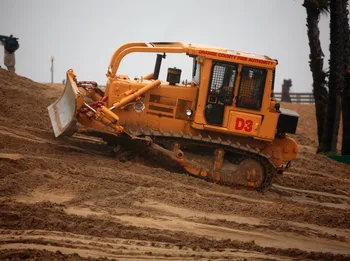
The machine’s own claims here are shaped by what it keeps hitting. Redevelopment work means the blade meets old slabs, foundation walls, cobble fill and buried debris at depths nobody recorded, which is a shock-loading pattern rather than a wear pattern and is hard on the blade, the push-arms and the undercarriage alike. The northwestern hills add ledge to that. Site approaches are tight, so a good deal of damage happens getting the machine on and off the deck rather than working. Wrapped around all of it sits the land-disturbance exposure, which is unusual because it is generated by doing the job correctly: the ground is opened, spring rain arrives, and a state with short slopes and dense drainage moves the result somewhere it does not belong faster than a crew can respond.
Common Connecticut dozer claims we see
- Silt into a municipal storm system. Short flow paths mean the inlet that takes your runoff usually belongs to a town with a maintenance budget and a memory.
- Dewatering discharge that never got registered. The pump was treated as housekeeping rather than as the regulated activity it is.
- Blade and push-arm damage on buried obstructions. Old slabs and foundation walls on redevelopment parcels, hit at speed because nothing on the plan showed them.
- Loading and transport damage on tight approaches. Narrow residential streets and posted bridges make the trip to the job its own event.
- Undercarriage wear presented as a sudden loss. Ledge and cobble accelerate it, but acceleration is not a peril, and settling that early keeps the rest of the file clean.
Why Connecticut dozer owners choose Equipment Guard Insurance
A dozer placed as an afterthought inside a package tends to get valued like a tractor and understood like one. We would rather start from what this machine actually does to a balance sheet: it is comparatively cheap to repair and comparatively expensive to have used, because the ground it relocated keeps moving after the crew goes home. Writing equipment as a standalone line lets us schedule the machine properly without reopening arrangements built around Connecticut work, and it lets us separate the regulatory obligation from the insurable one out loud instead of leaving you to discover the seam later. The markets we use — named on our homepage — price this work on what the ground can do, not on what the iron cost.
Major Connecticut dozer markets
- Bridgeport. Heavy industrial redevelopment on made ground, where what the blade finds is as much of a risk as what it moves.
- New Haven. Institutional and medical expansion on constrained downtown parcels with abutters on every side.
- Stamford. Dense commercial rebuilding with tight staging, short haul distances and no room to hold spoil.
- Norwalk. Coastal-plain work with a high water table, so dewatering is routine rather than exceptional.
- Waterbury. Steeper valley sites over old mill land, a combination that puts grade and unknown fill on the same job.
- Danbury. Hill-country residential and light-industrial pads where ledge and drainage arrive together.
Related
- Dozer insurance — the machine physics that hold in every state.
- Excavator insurance in Connecticut — the machine that answers to a single statewide dig clearinghouse before anything is opened at all.
- All equipment insurance in Connecticut — the state hub.
- Equipment floater · Rented & leased equipment
Primary sources
- General Permit for the Discharge of Stormwater from Construction Activities (CTR100000) — Connecticut Department of Energy and Environmental Protection (stormwater and land disturbance)
- What Other License or Registration Does My Contractor Need? — CT Department of Consumer Protection — Connecticut Department of Consumer Protection (DCP) (contractor licensing)
Connecticut dozer insurance FAQs
Does the Connecticut permit really cover water I pump out of a hole?
Yes, and that is the half crews most often overlook. The general permit counts dewatering as part of the construction activity it governs, so lifting water out of a footing excavation or a trench and putting it somewhere convenient is a regulated discharge in its own right rather than a housekeeping step — permitted only on the permit’s conditions, and not at all where the water carries more than sediment. On redevelopment work it is frequently the dirtiest water on the job, because it has been standing in fill nobody characterized before the blade arrived.
Which agency am I dealing with, and what else does it govern for me?
The state environmental and energy department, which is a single body rather than a pair of them. The same agency that authorizes your discharge also handles waste characterization, remediation oversight and the disposal questions that surface the moment a blade turns up buried material on an old industrial parcel. On a Connecticut redevelopment job those are not separate conversations happening in separate buildings; they are one file.
How close is close enough to matter here?
Closer than in almost any state we write. Connecticut is small, densely settled and drained hard toward the Sound, so the outfall your site reaches is often a few hundred feet away and belongs to a municipal system with a name and an owner. The practical consequence is that a control failure gets noticed by a person rather than discovered later in a report, and the people who notice are the ones who live there.
If the state fines me, will the policy pay it?
No, and any broker who suggests otherwise is selling you something. A penalty is a matter between your company and a regulator; it is not damage to anyone’s property and no equipment or liability form is built to absorb it. What the program does answer for is the physical event underneath the penalty — material off your site onto land, pavement or water belonging to somebody else. That is a third-party loss, and it is priced and adjusted nothing like a fine.
What does Connecticut ground actually do to a dozer?
It surprises it. A great deal of earthmoving here is second- or third-generation work on parcels that were built out, torn down and filled in before anyone recorded what went into them, so the blade meets old slabs, foundation walls, cobble fill and buried debris at unpredictable depths. That is a shock-loading pattern rather than a wear pattern, and it is hard on the blade, the push-arms and the operator’s day. The northwestern hills add ledge on top of it.
Can the dozer go on its own policy without reopening everything else?
That is the way we prefer to do it. Equipment Guard Insurance writes equipment as a standalone line in Connecticut, so the machine gets scheduled on its own terms and nothing else in your program has to be disturbed to make room for it. What we will not do is let you leave thinking the schedule has quietly picked up the land-disturbance exposure, because it has not, and finding that out during a claim is the expensive way to learn it.