

Connecticut is a small state that has been dug up a great many times. Rail, water, gas, steam and three generations of telecom share the same narrow corridors between the shoreline cities, and an excavator working here spends most of its life within a few feet of something somebody else owns.
This page is about the one system that governs every notice in the state, about who is actually checking your competence before you mobilize, and about ground that alternates between ledge and tidewater. For what stays true of the machine wherever it works — reach, swing, undercarriage life, the attachment ecosystem — start at the excavator insurance pillar.
What excavator insurance costs in Connecticut
No honest page prints a figure for this machine, and on an excavator the reason is unusually stark: the iron is the smaller half of what an underwriter is pricing. What moves the number is the character of the digging — how deep, how close to live services, whether you take utility corridors or stay in open cut — and after that the size and age of the unit, the attachments riding on the same schedule, whether it overnights in a fenced yard or on the shoulder of a job, and how your losses have run. A crew opening a shoreline street and a crew shaping a residential lot are different businesses that happen to own the same machine.
Connecticut excavator regulations: dig notice and the one-call duty
at least 2 full days (excluding Saturdays, Sundays and holidays) but not more than 30 days before excavation
Connecticut runs the entire duty through one statewide clearinghouse, and the provisions it operates under are published by the regulator as Call Before You Dig Current Provisions; the underlying chapter sits at Conn. Gen. Stat. § 16-345 et seq. The parameters are simple and both ends of them bind: a floor of two full days that skip weekends and holidays, and a ceiling of thirty. What matters more than the arithmetic is the shape of what you receive. The notice obliges the member facility owners to come out and mark, and that obligation runs to the system, not to you. Nothing in it warrants that every owner is a member, that every record is current, or that the paint on the pavement corresponds to what is actually in the ground under a street that has been rebuilt more times than anyone documented. The duty to excavate carefully around whatever is marked stays exactly where it started, and the loss that follows a careless dig lands on the contractor regardless of how clean the ticket was. Because Connecticut adds no statewide competency license behind that duty, there is no credential doing the reassuring on your behalf either — the paperwork you hand an owner is the whole argument.
Common excavator risks in Connecticut
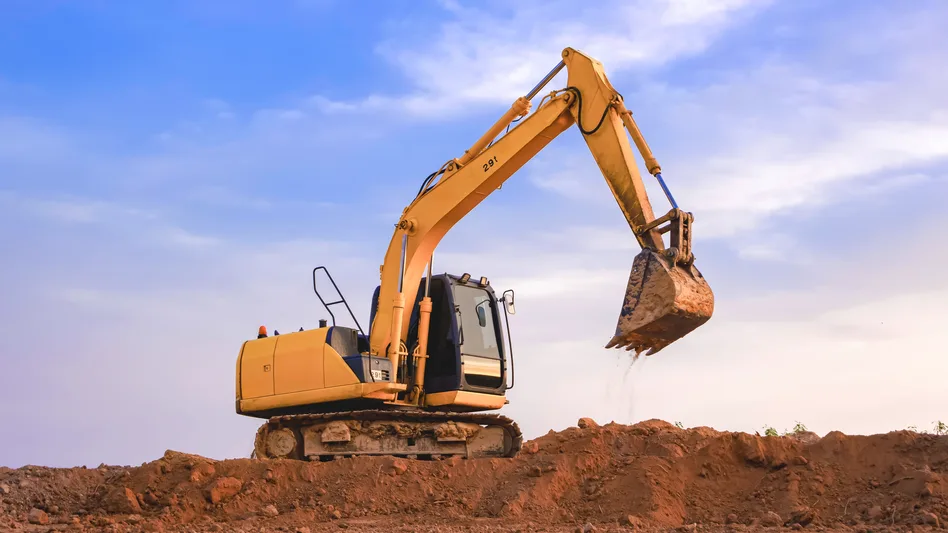
The strike dominates, and it has an unusual profile: an excavator can come away untouched while the claim runs into a scale the machine never approaches. Cut a gas main, a water transmission line or a fiber trunk in one of these corridors and the bill is restoration plus everyone downstream of the outage plus a site that stops until it is safe. Underneath that sit the machine’s two habitual failures — the slide or tip at a trench lip or on a made slope, and the counterweight swinging into something the operator cannot see on a lot with no room. Connecticut then contributes its geology twice over. Shallow ledge and glacial boulders through the interior batter booms, pins and final drives on work that looked like ordinary digging. Along the sound, saturated soils and a high water table make trench walls unreliable and put salt into every wearing surface on the undercarriage.
Common Connecticut excavator claims we see
- Corridor strike with downstream loss. The claim that defines the class here — modest damage to the machine, an outage bill that is not modest at all.
- Trench collapse in saturated coastal soil. Ground that stood while it was dry and did not once the tide and the water table were in it.
- Sudden shock damage on unexpected ledge. A bucket into rock nobody probed for, taking the boom foot, the pins or the drive with it.
- Swing contact on a constrained urban lot. The tail into a wall, a parked vehicle or a fence, on sites where there is no clean radius to work in.
- Theft or vandalism from an unfenced overnight position. Small tracked units and attachments left on the job in dense metro areas.
Why Connecticut excavator owners choose Equipment Guard Insurance
In a state that issues no competency license for this work, your insurance documents are doing the job a license class does elsewhere — which is a strong argument for placing the equipment deliberately rather than inheriting whatever arrived bundled with a package. We write the machine on its own, treat the subsurface question as a real underwriting conversation instead of somebody else’s section, and go to markets — listed on our homepage — that will read excavation work on its merits. None of that obliges you to move liability or comp you are already satisfied with.
Major Connecticut excavator markets
- Bridgeport. Old industrial ground and harbor-adjacent redevelopment, where the buried record is thinnest and the reality is busiest.
- New Haven. Institutional and medical campus work threaded through live services on sites nobody can shut down.
- Stamford. Dense corporate build-out with almost no lay-down room, so swing radius and street occupancy drive the job.
- Waterbury. Brass-era industrial legacy over hill terrain — grade, rock and utilities laid before mapping was routine.
- Norwalk. Shoreline and tidal ground with a high water table, where dewatering and trench stability are the daily problem.
- Danbury. Ledge country on the western edge, with residential and commercial site work that turns into rock excavation without warning.
Related
- Excavator insurance — the machine physics that hold in every state.
- Skid Steer insurance in Connecticut — the machine whose Connecticut question is a filing office rather than a locate.
- All equipment insurance in Connecticut — the state hub.
- Equipment floater · Rented & leased equipment
Primary sources
- Call Before You Dig Current Provisions — Connecticut ’Call Before You Dig’ (dig notice and one-call)
- What Other License or Registration Does My Contractor Need? — CT Department of Consumer Protection — Connecticut Department of Consumer Protection (DCP) (contractor licensing)
Connecticut excavator insurance FAQs
How long before I break ground does the notice have to go in?
Two full days ahead at minimum, with Saturdays, Sundays and holidays not counted toward them, and an outer boundary of thirty days. Both ends bind. A crew that files everything for a season at once will find the early tickets stale by the time the machine actually arrives, and a stale ticket has to be raised again rather than argued about on site.
Everything routes through one statewide system. Does that make compliance easier?
Procedurally, yes — there is a single point of entry, one set of provisions, and nothing that changes when you cross a town line. Substantively it changes very little. A clearinghouse forwards your notice to the members who own facilities in that footprint; it holds no opinion about which of those records are trustworthy, and it cannot tell you that a shoreline street was rebuilt three times over infrastructure nobody re-surveyed.
If the marks were there and I still hit something, whose loss is it?
That question is decided by how the excavation was conducted, not by whether a ticket existed. The notice imposes a marking duty on the facility owners; it creates no indemnity running back to the contractor. If the bucket went in hard beside a mark, or the crew mechanized where hand work was called for, the ticket is evidence of diligence rather than a shield. This is precisely why we treat the underground exposure as its own placement question instead of folding it into the machine schedule.
Who decides whether I am qualified to run heavy-civil work in Connecticut?
At the state level, effectively nobody. The Department of Consumer Protection registers home-improvement and new-home construction contractors, which is a registration rather than a competency examination, and commercial site work and utility work sit outside it entirely. So the general contractor, the municipality or the owner hiring you is reading your certificates of insurance and your reference list in place of a license class. What your policy documents say carries unusual weight here.
What does Connecticut ground do to an excavator?
It fights back in two different ways. Glacial till, boulders and shallow ledge through the western hills and the interior mean a bucket meets rock it did not expect, which works the boom, the pins and the final drive rather than the trench. Down on the sound the problem inverts: saturated tidal soils, a high water table and salt in everything that touches the undercarriage. A machine that alternates between the two ages faster than either alone would explain.
Will you write the excavator without touching my other lines?
Yes. Equipment Guard Insurance places equipment on a monoline basis in Connecticut, so a single machine or a small tracked fleet can be scheduled by itself, attachments included. The underground liability question gets worked alongside that schedule rather than used as a reason to re-tender everything you already have in force.