
In a lot of the country, opening ground means finding out what nature left there. In Pennsylvania it more often means finding out what an earlier industry left there — spoil, culm, fill, workings, and a century of demolition rearranged into something that looks like a hillside.
This page deals with the state around the machine: which permit reaches a disturbed acre and who issues it, what a legacy landscape does to earthmoving, and where the money sits once the blade has finished. The machine’s own physics — blade load, push-arm geometry, undercarriage life — do not vary by state and live on the dozer insurance pillar.
What dozer insurance costs in Pennsylvania
We publish no premium for this class, and on a dozer that reticence is structural rather than evasive. The Pennsylvania terms that move a number are the grade you work and how far a slope runs before it reaches water, whether the site is virgin ground or made ground with an unrecorded history, how much surface you keep open through a freeze-thaw winter, the machine’s hours and undercarriage condition, the distance and difficulty of getting it to site, and your own record. A reclamation job over old spoil and a flat warehouse pad are not the same risk on identical iron.
Pennsylvania dozer regulations: stormwater and land disturbance
Pennsylvania administers the construction stormwater program itself. The instrument is PAG-02 — NPDES General Permit for Discharges of Stormwater Associated with Construction Activities, issued by Pennsylvania Department of Environmental Protection, and it reaches a land disturbance of one acre or more.
Two things make that obligation behave differently here than it does on flat ground. The first is terrain: this is ridge-and-valley and plateau country, so slope lengths are short, gradients are real, and the distance between an open cut and a stream is frequently measured in a few hundred feet rather than in miles. The second is history. A great deal of Pennsylvania earthmoving happens on ground that was mined, filled or built on before anyone proposed the current project, which means the material being disturbed can be spoil rather than soil, the drainage pattern can be inherited rather than natural, and the receiving water may already carry the signature of what happened upstream a hundred years ago. Where insurance attaches is unaffected by any of that and worth being exact about. A penalty assessed against your company for absent or failed controls is a regulatory cost and no equipment policy answers for it. The claim starts when material leaves: sediment on a neighboring property, across a public road, or in a watercourse is third-party damage arising out of your operations, and it belongs to liability and pollution coverage rather than to the floater. On this machine, in this terrain, that is the exposure most capable of exceeding what the iron is worth — and it is generated by the work going to plan, not by anything breaking.
Common dozer risks in Pennsylvania
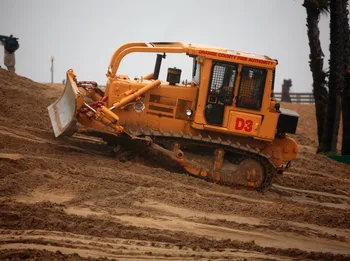
The machine’s own losses here start with the unknown underneath it. Buried obstructions in fill, voids and soft spots over old workings, and bearing that changes without warning across a single pass all concentrate damage on the undercarriage, the blade and the push-arms. Grade adds overturn risk that is a property of the site rather than of the operator, and it is worst on benched cuts and spoil edges. Winter contributes freeze-thaw, which breaks up both the ground the machine works on and the controls protecting it, and salt and moisture that shorten the life of everything exposed. Transport is a standing exposure: narrow valley approaches and old bridges make the last mile the difficult part of many jobs.
Common Pennsylvania dozer claims we see
- Sediment off a steep open cut into a stream below. Short slopes and real gradient make this the characteristic Pennsylvania claim, and it is answered outside the equipment policy.
- Undercarriage or blade damage from buried material in old fill. Unrecorded ground produces impact losses that a survey was never going to predict.
- Ground giving way over former workings or soft spoil. The bearing surface is not always what the top of it looks like.
- Freeze-thaw damage to controls followed by a spring release. A winter of heave undoes work that was correct when it was installed.
- Transport damage on a narrow valley approach or an old bridge. Getting a tracked machine to a Pennsylvania site is frequently the riskiest hour of the week.
Why Pennsylvania dozer owners choose Equipment Guard Insurance
With no statewide competency credential for this trade, a Pennsylvania contractor is judged on the documents it produces itself — which is precisely why the equipment schedule deserves to be built rather than inherited. Writing equipment on its own lets us set an honest valuation basis on machines working abrasive, unpredictable ground, get hours and serial detail right, and leave the rest of your program alone. It also gives us room to be blunt about the half of the risk that lives outside the floater. We place through markets — named on our homepage — that read earthmoving and reclamation work on their own terms.
Major Pennsylvania dozer markets
- Philadelphia. Dense redevelopment on made ground, with short drainage runs and neighbors close enough to be affected the same afternoon.
- Pittsburgh. Steep weathered hillsides and former industrial river terraces — the state’s hardest combination of grade and inherited fill.
- Allentown. Lehigh Valley warehouse build-out over limestone, where what disappears downward matters as much as what runs off.
- Harrisburg. River-corridor and institutional work on floodplain ground draining toward a bay a long way south of the job.
- Scranton. Anthracite country: culm, spoil and old workings, where reclamation and development are frequently the same contract.
- Erie. The one corner of the state that drains to the Great Lakes, with a short season and lake-effect winters that shut ground down early.
Related
- Dozer insurance — the machine physics that hold in every state.
- Skid Steer insurance in Pennsylvania — the machine that finishes what the blade started, and whose Pennsylvania problem is theft rather than runoff.
- All equipment insurance in Pennsylvania — the state hub.
- Equipment floater · Rented & leased equipment
Primary sources
- Construction Stormwater — Pennsylvania Department of Environmental Protection (stormwater and land disturbance)
- Home Improvement Contractor Registration - PA Office of Attorney General — No statewide contractor license; the Pennsylvania Office of Attorney General administers home-improvement contractor registration under the Home Improvement Consumer Protection Act (contractor licensing)
Pennsylvania dozer insurance FAQs
Which permit covers a Pennsylvania site, and who issues it?
The state environmental protection department administers the national program here and issues its own general permit for stormwater discharges associated with construction activity. Disturbance at or above the statutory acreage brings a site under it, and — as elsewhere — a smaller area still counts when it belongs to a larger common plan. Everything about it stays in state hands: the filing, the review and whoever eventually walks your erosion controls.
What does “legacy ground” actually mean for a machine on site?
That the material under your tracks may have been placed by somebody else for a reason nobody recorded. Across the anthracite northeast and the bituminous southwest there is spoil, culm, old workings and fill of unknown depth, and in the older cities there is made ground built out of a century of demolition. A dozer working that is dealing with uneven bearing, buried obstructions and occasional voids, and it is the machine that finds them because it is the one applying weight across the whole surface.
Does old mining change the water question as well as the ground question?
It does. Water that has moved through worked-out ground comes back to the surface with a character of its own, and in mined districts a site can be dealing with drainage that was already a problem before anyone proposed building there. That does not make it your liability — but it does mean the receiving water your runoff joins may be under more scrutiny than the same stream would attract in an untouched county, and it makes documenting your own contribution worth the effort.
Does Pennsylvania license the contractor running the machine?
Not in a competency sense. There is no statewide general-contractor license here; what exists is a home-improvement registration administered by the attorney general’s office, which does not speak to commercial earthmoving at all. So a large grading outfit can be operating entirely lawfully with no state credential an underwriter can look up, and the equipment schedule, the maintenance record and the loss history carry the weight instead.
Is a violation notice an insurance matter?
No. A penalty for controls that were missing, inadequate or unmaintained is a regulatory cost your business carries, and no equipment policy responds to it. The claim begins where the material does: sediment leaving your site and reaching a neighboring property, a public road or a watercourse is physical damage to a third party arising out of your work. In steep country with short slope lengths to the nearest stream, that step happens quickly.
Can the dozer be written on its own here?
Yes. Equipment Guard Insurance places equipment monoline in Pennsylvania, so the machine goes on its own schedule at a value you can defend without reopening the liability and work comp already arranged around your operations. On this class the schedule is the easy half. The harder half is being clear about what the floater does not reach, and we would rather do that at the quote than after a storm.