

An excavator makes money by going where nobody can look. That is the whole proposition and the whole problem, and the states differ mainly in how they structure the warning that comes before the bucket. This one structures it as an exchange with obligations on both sides and a life longer than a single morning.
Below: what you are owed after the request goes in, what a long job has to keep doing, how ground that swells and ground that will not yield each attack the machine, and who licenses you. The machine-level subject — reach, swing, undercarriage economics, the attachments hung on the stick — sits on the excavator insurance pillar.
What excavator insurance costs in Colorado
A page that quotes this machine is guessing, because the machine is the smaller half of the question. What an underwriter is really pricing is the work: how deep you go, how often you are inside a live corridor, whether you take on gas and fiber alignments or stay in subdivision and pond work, how long the jobs run, and what the last few years of losses look like. Machine size, the attachment list, where the unit sits overnight and the miles between jobs fill in the rest. Give us that and we can take a real submission to a market rather than a number to a page.
Colorado excavator regulations: dig notice and the one-call duty
Owners/operators must provide a positive response within two business days; a 30-day continuation notice applies to long jobs.
The duty sits in the excavation notice provisions of the revised statutes, and its structure is what makes this state distinctive rather than the length of its clock. Notice runs at least two business days ahead, not counting the day you give it — and then the obligation turns around: owners and operators owe a positive response inside two business days, so an unanswered ticket is a loose end rather than tacit approval. Work that runs long is kept alive by continuation notice on a thirty-day cycle, which means compliance is something the project carries rather than something mobilization discharges. None of that, however, changes what the notice is worth against a loss. Marking is an obligation on the facility owners; it is not a guarantee that the marks are right, that every owner was reached, or that a careless bucket is somebody else’s problem. In ground that moves seasonally, the difference between where a facility was recorded and where it now lies is a real category, and it is yours to dig around.
Common excavator risks in Colorado
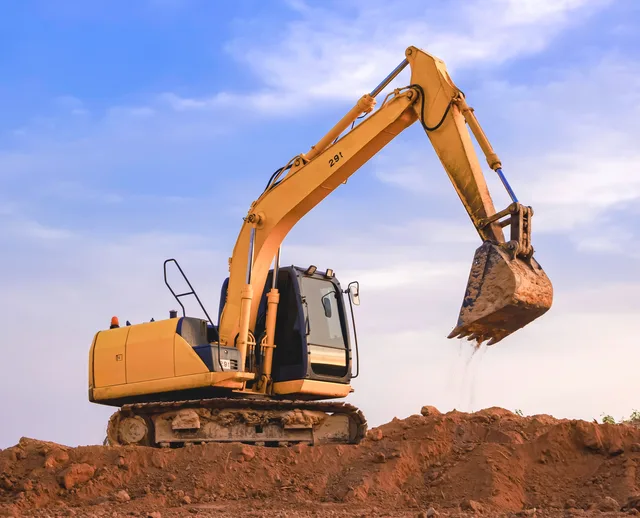
The strike is the loss that reorganizes an account: a machine that drives away and a third-party bill made of restoration, downstream interruption and a shut job. On top of that this state layers a geological problem. Expansive clay swells and shrinks with moisture, so shallow facilities migrate away from the record and a trench wall can be undermined from the flank; rock and decomposed granite along the Front Range slow production, wear undercarriages and tempt operators into forcing the machine. Older corridors add irrigation and ditch infrastructure that predates the subdivisions above it and was never mapped to modern standards. Then there is the working environment itself — jobs at altitude with short shoulder seasons, afternoon storms that fill an open excavation quickly, and long mobilizations between the corridor and the western slope with the machine on a trailer for hours.
Common Colorado excavator claims we see
- Utility strike with downstream interruption. The account-defining claim, where the excavator is the least damaged thing on site.
- Contact with a facility that moved. Shallow pipe displaced by seasonal soil movement, dug exactly where the drawing put it.
- Irrigation or ditch line damage. Older water infrastructure under newer development, with a season’s worth of consequences attached.
- Undercarriage and structural wear in rock. Hard digging forced by production pressure, showing up as premature component loss.
- Transit loss on a long mobilization. Loading damage and road exposure on the hauls between the corridor and the slope.
Why Colorado excavator owners choose Equipment Guard Insurance
With licensing handled town by town, the document that follows you across jurisdictions is your insurance — which argues for building it deliberately instead of accepting whatever a package renewal produced. We write the equipment as its own line, so the schedule reflects the machines and attachments genuinely in service, and we spend the underwriting conversation on excavation method rather than on machine value alone. The markets that sit behind that work are named on our homepage, and using them asks nothing of the liability or workers compensation you already have in place.
Major Colorado excavator markets
- Denver. Downtown and former rail-yard redevelopment, where new towers meet a subsurface assembled over a century.
- Colorado Springs. Rapid expansion onto ground where rock arrives close to the surface and slows every trench.
- Aurora. Large-scale subdivision and water infrastructure work, long linear alignments across young corridors.
- Fort Collins. Corridor growth over ditch and irrigation country, where farm-era pipe sits under suburban streets.
- Pueblo. Older industrial ground with legacy services and heavy site work on established parcels.
- Grand Junction. Western slope energy and orchard country, with long hauls and remote jobs that carry their own support.
Related
- Excavator insurance — the machine physics that hold in every state.
- Backhoe insurance in Colorado — the machine this state registers as a class of its own rather than exempting from the vehicle code.
- All equipment insurance in Colorado — the state hub.
- Equipment floater · Rented & leased equipment
Primary sources
- Colorado Revised Statutes, Title 9 — Excavation notice — notification association (dig notice and one-call)
Colorado excavator insurance FAQs
What am I owed after I put the request in?
An answer. Facility owners and operators must give a positive response within two business days, which turns the notice into something you can hold people to rather than a message dropped into a void. The practical consequence is the one crews miss: silence is not clearance. An unanswered request is an open loop to chase before the machine tracks off the trailer, not a quiet form of permission to start.
My job runs for months. Do I keep calling?
Yes — long work is renewed by continuation notice on a thirty-day cycle rather than carried by the original request. Read that as a project-administration duty and put it on somebody’s calendar, because the person who called it in at mobilization is rarely the person still on site in week six. A crew that believes the first ticket runs to substantial completion is a crew digging without one.
If I did everything right and still hit a line, whose loss is it?
Doing everything right helps you enormously and settles nothing automatically. Notice creates duties on the owners of buried facilities to respond and to mark; it creates no warranty running to you about accuracy or completeness, and it does not touch your obligation to excavate carefully around what was marked. The claim is decided on method and on response — what the crew did with the marks, and what it did in the seconds after the ground stopped matching them.
What does the ground itself do to this machine here?
Two things, in opposite directions. Along the Front Range you meet rock and decomposed granite close to the surface, which is slow, hard on teeth and hard on an undercarriage. Then there is expansive clay, which swells when it takes on water and shrinks when it dries, moving shallow facilities away from where anyone recorded them and undermining a trench wall from the side rather than the bottom. The record can be honest and the ground still have relocated the thing it described.
Who licenses excavating contractors in this state?
Not the state. There is no statewide general contractor license — cities and counties do their own licensing, so a company working the metro can hold several municipal credentials and nothing that travels with it. The electrical and plumbing trades are the exception, licensed centrally through the state boards. For an earthwork contractor that fragmentation puts unusual weight on the documents that do travel: your certificates, your limits, and the loss record behind them.
Can you write only the machine?
That is our default. Equipment Guard Insurance places equipment as a monoline schedule, so the excavator and its attachments are insured on their own terms and the underground exposure is addressed beside them, with no requirement to move liability or workers compensation you have already placed.