

In Connecticut a skid steer is the machine that makes a two-truck outfit competitive against firms several times its size. It loads, grades, digs, breaks and lifts, it fits between a house and a property line, and it can be on a different job in a different metro before lunch. Everything that makes it useful in a state this compact also makes it the hardest single asset on the schedule to protect.
What follows is specific to Connecticut: a state that registers contractors rather than licensing them, which quietly shifts weight onto the certificate of insurance; and a geography where every exit is close, which changes what theft looks like. The machine-level questions — how attachments multiply exposure, what skid steering does to tires, and why these units tip forward rather than sideways — sit on the skid steer insurance pillar.
What skid steer insurance costs in Connecticut
We will not put a premium on a page, because an honest figure is assembled from your machine and your habits rather than from a state average. The Connecticut lever that surprises people is the calendar: a loader that earns money for part of the year and sits for the rest is priced on where it sits, and yard space in the shoreline metros is expensive enough that plenty of crews leave machines on site instead. After storage come the number and value of the attachments on the schedule, the valuation basis you pick, whether a tracking unit is fitted, how far the machine ranges from its base, and your own loss record. A loader that returns to a fenced compound every night is a different risk from one that overwinters in an open lot, and the pricing says so.
Connecticut skid steer regulations: title, lien and ownership
A skid steer is untitled construction equipment, not a DMV-titled motor vehicle; a security interest is perfected by filing a UCC-1 financing statement under Connecticut’s UCC Article 9 with the Secretary of the State.
The consequence is ordinary in law and awkward in practice. Because no title exists, the financing statement and the serial number together are the ownership record, and a lender on a financed loader is added to the policy as a loss payee against that scheduled unit, so any loss payment is issued jointly. The two records have to stay aligned: a lienholder still named against a machine you paid off two seasons ago is the clearest sign a schedule has not been reviewed. Where Connecticut adds something of its own is one layer up, at the entity level. Because the state registers contractors rather than licensing them, there is no license class for anyone to look up, and the certificate of insurance becomes the document that gets read closely. The name on it and the name on the registration need to be the same legal entity, and that is worth checking before a general contractor checks it for you.
Common skid steer risks in Connecticut
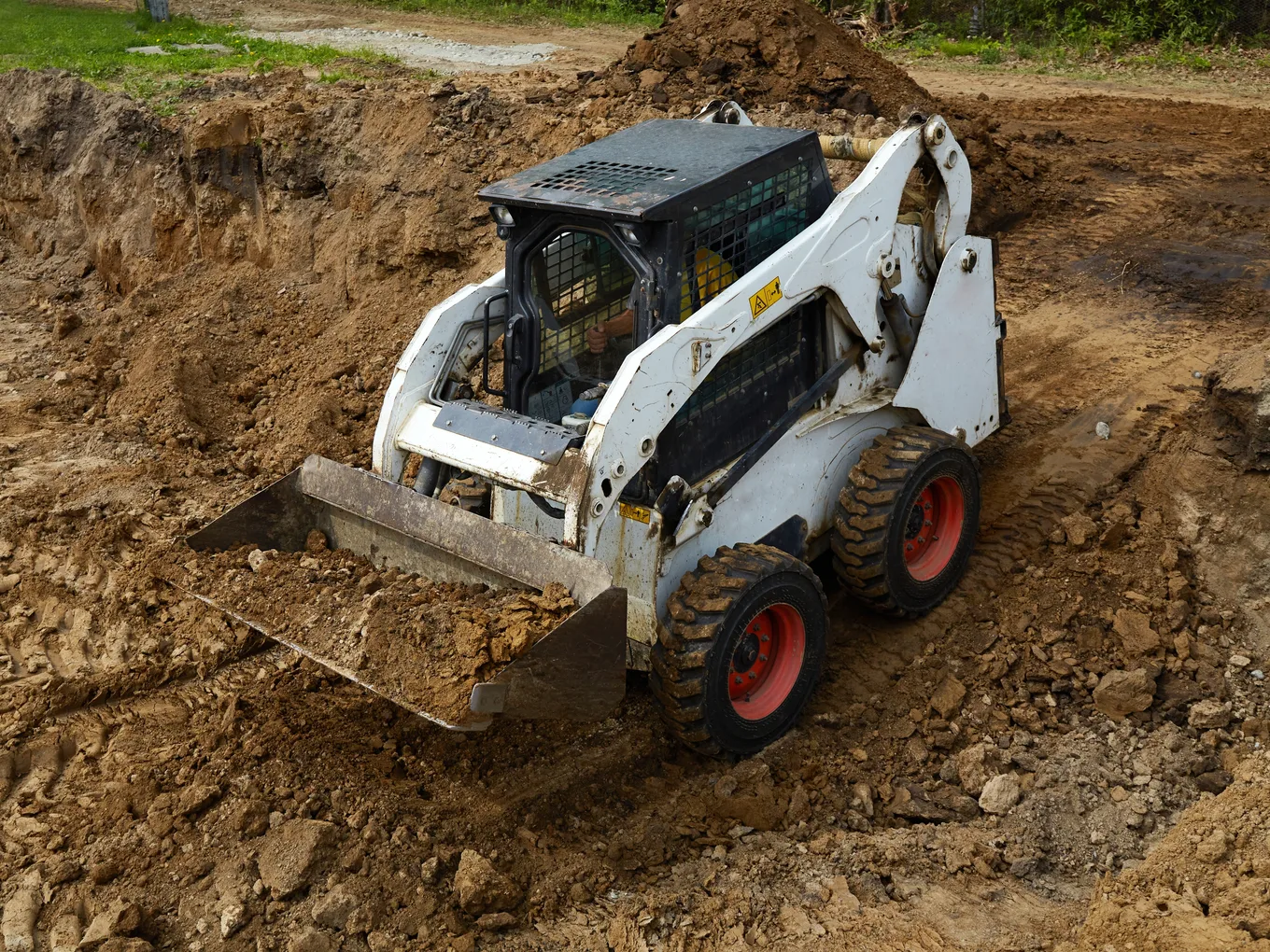
Theft leads, and Connecticut amplifies it through proximity rather than through distance. A compact loader is the most portable serious machine on any jobsite, and here the New York, Rhode Island and Massachusetts lines are all within an easy tow of most work, so the window between a machine going missing and a machine leaving the jurisdiction is short. Winter is the second exposure, and it arrives twice: as freeze and thaw damage to a loader stored outdoors, and as road salt on the undercarriage of a machine that gets hauled all season. On the shoreline, wind and salt air off Long Island Sound add a third layer, and a nor’easter reaches anything left out on an exposed site. After those, the claims are machine-shaped rather than Connecticut-shaped: the forward tip with the arms raised, and damage taken while loading or unloading on a slope.
Common Connecticut skid steer claims we see
- Overnight theft from an unfenced urban lot. The defining claim in this state, often taking the trailer with it, and settled against the serial number because there is no title to settle against.
- An attachment lifted on its own. A breaker or mulching head taken off a shared yard rack while the loader itself stays put — then found to sit under a blanket per-item sublimit rather than scheduled by name.
- Freeze damage on a stored machine. Water where it should not be after an off-season spent outdoors, discovered on the first job of the spring rather than on the day it happened.
- Finished-surface damage on a tight residential lot. Driveways, walks and irrigation on the narrow sites that dominate the shoreline suburbs, where there is nowhere to swing wide.
- Certificate and registration name mismatch. Not an insured loss, but the most common paperwork stop here: the entity on the certificate is not the entity on the consumer-protection registration.
Why Connecticut skid steer owners choose Equipment Guard Insurance
We write equipment monoline, and in Connecticut that removes a specific obstacle. A crew here has usually arranged its general liability around the registration it holds and has no appetite for disturbing any of it to get one loader scheduled properly — and being told the whole program has to move is how equipment ends up underinsured. We do not ask for that. Attachments go on the schedule by name as a matter of course, because on this machine the attachments are where the value quietly accumulates, and we place through markets — named on our homepage — that will read a Connecticut equipment schedule on its own merits instead of as an add-on to something larger.
Major Connecticut skid steer markets
- Bridgeport. The largest city in the state and its densest site-work market, where machines work from lots rather than yards and open storage is the rule rather than the exception.
- New Haven. Institutional and hospital build-out alongside older housing stock, so confined-site work and finished-surface exposure drive most of what is not a theft.
- Stamford. Commercial and high-value residential work inside the New York commuter belt, with the shortest run to an out-of-state line of anywhere a loader is likely to be parked.
- Norwalk. Shoreline residential and light commercial work where salt air and coastal wind sit on top of the theft picture year-round.
- Waterbury. Inland industrial and municipal work on the interstate corridor that runs inland from the shoreline, with a deep enough rental market that rented-in loaders and the certificates the rental houses demand are routine on an account.
- Danbury. Growth and infrastructure work at the western edge, where crews regularly take jobs on both sides of the New York line and a single machine crosses it weekly.
Related
- Skid steer insurance — the machine physics that hold in every state.
- Excavator insurance in Connecticut — the machine the single statewide dig-notice clearinghouse actually reaches.
- All equipment insurance in Connecticut — the state hub.
- Equipment floater · Rented & leased equipment
Primary sources
- What Other License or Registration Does My Contractor Need? — CT Department of Consumer Protection — Connecticut Department of Consumer Protection (DCP) (contractor licensing)
We do not link a Connecticut filing document here. The ownership and lien rules described above follow Article 9 as Connecticut has adopted it; where a state publishes a document that states the rule directly, this page links it.
Connecticut skid steer insurance FAQs
Is a skid steer titled or registered in Connecticut?
No. The state treats it as construction equipment rather than as a road vehicle, so no certificate of title is ever issued and none can be produced after a loss. What stands in for a title is the serial number stamped on the machine, the bill of sale, and whatever financing record exists — which is why a schedule that lists a loader as “skid steer, mid-size” is the weakest document in a claim file.
Do I need a contractor license to run a skid steer in Connecticut?
Connecticut does something unusual here: it registers rather than licenses. There is no statewide general-contractor or trade license for this kind of work. Home-improvement contractors and new-home construction contractors register with the Department of Consumer Protection, which is a consumer-protection filing — it records who you are and places you on a public list — not a test of competency. Nothing about that registration reaches the loader itself, but it does change who reads your certificate of insurance and how hard.
If the registration is not a competency credential, what screens a subcontractor here?
In practice, the certificate of insurance does more of that work than it does in a licensing state. A general contractor or a municipal owner cannot look up a license class and infer capacity, so it looks at limits, at whether the equipment is scheduled, and at whether the entity named on the certificate is the same entity that holds the registration. Mismatched entity names are the paperwork failure that stops a machine at a gate here, and they are entirely avoidable.
Why is theft a serious exposure in a state this small?
Because small means close to the exits. The shoreline metros sit inside the New York commuter belt and the New York, Rhode Island and Massachusetts lines are all short drives from most jobsites, so a compact loader on a trailer can be in another state before the crew arrives the next morning. Size works against recovery rather than for it: there is no long interior for a stolen machine to be spotted crossing.
What does a Connecticut winter do to a machine that is not working?
It turns a working asset into a stored one for a stretch of the year, and storage is where this class is won or lost. A loader parked outside through freeze and thaw takes water into places it should not go, road salt reaches the undercarriage on every haul, and a machine that sits unwatched in an unfenced lot for weeks is the easiest target in the state. It is worth deciding deliberately where the loader spends the off-season rather than letting it end up wherever the last job left it.
Can I insure the loader on its own, without moving my other policies?
Yes — that is the normal request here, not the exception. Equipment Guard Insurance writes equipment monoline, so the loader and its attachments go on their own schedule and your general liability stays exactly where it is.