
A small state does not mean a simple one for an excavating contractor. You can leave a dense industrial river frontage in the morning and be opening sandy, wet ground on a subdivision by lunch, and the two jobs want different plans, different shoring and different worries.
This page covers the excavation rules as this state writes them, who takes the call and what that body actually is, and how the ground itself changes the loss you are most likely to have. For the physics that follow the machine wherever it works — swing, reach, undercarriage wear, the attachments hung on the stick — start with the excavator insurance pillar.
What excavator insurance costs in Delaware
We do not quote this machine from a page, and it is not coyness. The variable that dominates is the work: a crew tying into live services in an old city street and a crew cutting pads on open farmland carry different odds even on the same model year. Beyond that sit machine size, the attachments on the schedule, whether the unit sleeps in a fenced yard or on the job, how far it travels in a week, and the losses behind you. Tell us the work and we can put the machine in front of a market properly; guess at a number here and you would only be reading ours.
Delaware excavator regulations: dig notice and the one-call duty
The statutory clock runs not less than 2 working days but no more than 10 working days before commencement.
The rule sits in Title 26 of the Delaware Code, and the call goes to Miss Utility of Delmarva — a body constituted for the peninsula, not for this state alone. That is the first thing worth internalizing: the phone number does not tell you which law you are under, so a contractor whose week crosses the line has to hold the geography in mind deliberately. The second is what the notice actually produces. It compels the owners of buried facilities to come out and mark; it does not underwrite the marks, it says nothing about facilities whose owner never joined or never knew, and it leaves the entire duty of careful excavation exactly where it was. Working days at both ends of the clock make the schedule a live issue too, because a ticket that ages out is not a ticket, and a job that slips a week starts again with a phone call rather than with a bucket.
Common excavator risks in Delaware
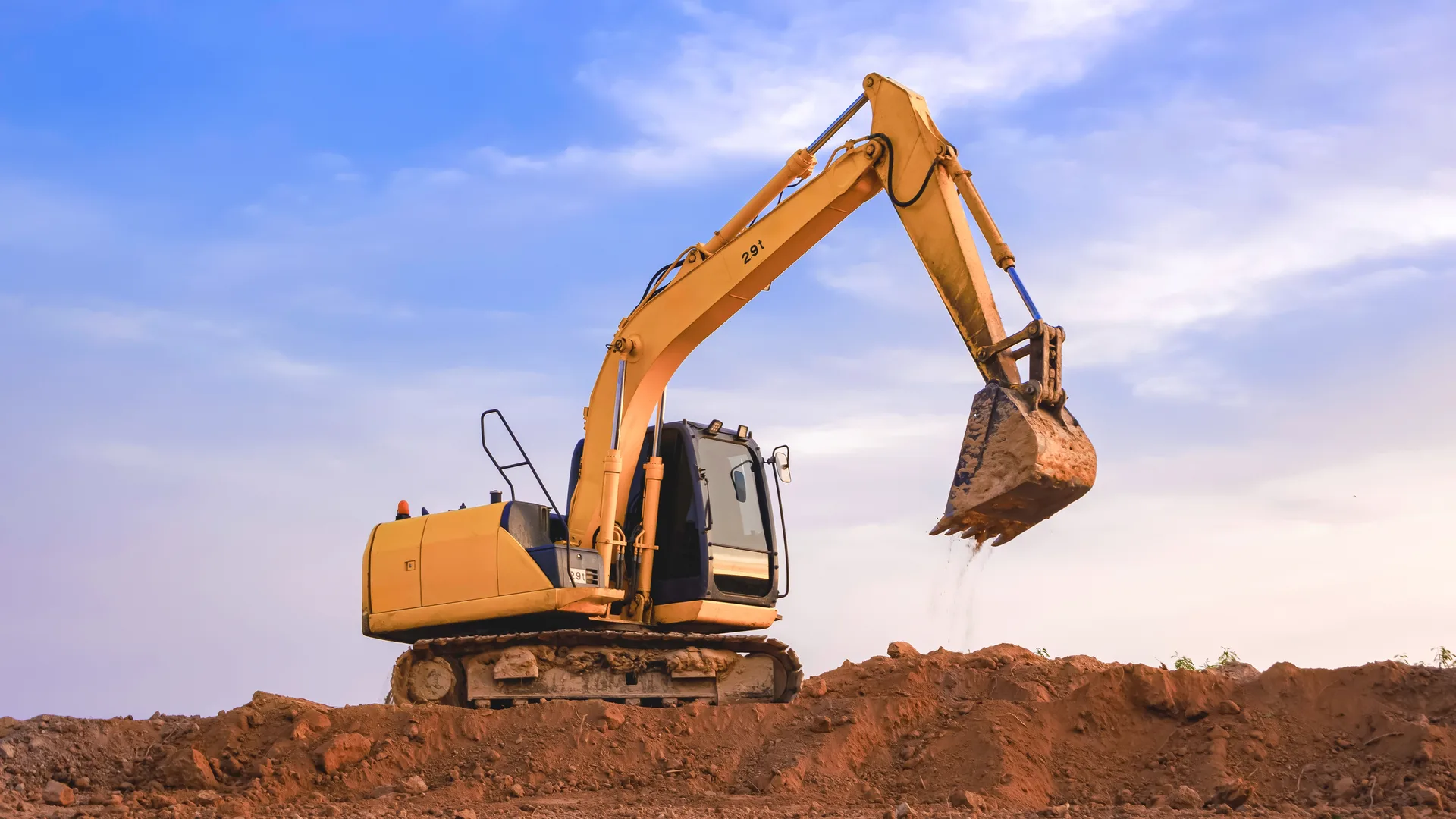
The dominant exposure is the same one that dominates the class — the strike whose third-party cost makes the machine look cheap. Cutting a fiber trunk or a gas service produces restoration, an interruption that runs well past the property line, and a stopped site. What is local is where the second-order risk lives. In the north the answer is congestion: old, layered, heavily used subsurface with little room on the surface either, so the swing radius and the counterweight become as dangerous as the bucket. South of the canal it is water. Sandy ground with a shallow table undercuts a trench wall quietly, floats a working platform after rain, and turns a routine excavation into a shoring and dewatering exercise, with the machine parked on the least reliable edge of it.
Common Delaware excavator claims we see
- Fiber or service strike on an urban street cut. Interruption and restoration costs that arrive with nothing wrong with the machine.
- Trench collapse in saturated sand. The coastal-plain claim, often taking the working platform and the machine edge with it.
- Tip-over from a soft or undercut edge. A track that was on solid ground when the shift started and was not by the afternoon.
- Counterweight contact in tight river-front work. Structures, fencing and parked plant inside the swing on constrained sites.
- Damage or theft during out-of-state moves. A machine crossing the line several times a week is a machine in transit more than most.
Why Delaware excavator owners choose Equipment Guard Insurance
Because nothing here certifies that you can dig, the documents in your submission carry weight they do not carry in licensing states — and a placement assembled to satisfy a checkbox reads that way to the contractor holding it. We write the equipment as its own line, which means the schedule is built around the machines and attachments you actually run rather than whatever came bundled, and it means we can spend the conversation on the underground exposure instead of skirting it. The markets behind that work are named on our homepage. Your liability and workers compensation can stay exactly where they are.
Major Delaware excavator markets
- Wilmington. The oldest and busiest subsurface in the state, with industrial river frontage and street work in the same week.
- Newark. Campus and research expansion where live services run under active grounds and the work windows are short.
- Middletown. Farmland converting to subdivision at speed south of the canal, on ground that holds water.
- Dover. Government, institutional and aviation-adjacent work with security-constrained access and long approvals.
- Bear and Smyrna. Corridor commercial and distribution build-out, where the jobs are large and the mobilizations frequent.
Related
- Excavator insurance — the machine physics that hold in every state.
- Backhoe insurance in Delaware — the machine whose state-law question is the drive between jobs rather than the trench at the end of it.
- All equipment insurance in Delaware — the state hub.
- Equipment floater · Rented & leased equipment
Primary sources
- 26 Del. C. § 806 — Miss Utility of Delmarva (dig notice and one-call)
- Delaware Code Title 30, Chapter 25 — Contractors' License Requirements and Taxes, §2502 License requirement — Delaware Division of Revenue (contractor licensing)
Delaware excavator insurance FAQs
What is the notice requirement before excavation begins?
The code sets it at not less than two working days and no more than ten working days before commencement. The short end is genuinely short by national standards, which sounds like an advantage until a crew treats it as an invitation to call on the way to the job. The outer end matters just as much: a ticket taken out to get ahead of a schedule stops being valid, and the request has to be made over again.
The center that takes my call is not named after this state. Does that matter?
It can, and it is the trap peculiar to working here. The notification service is named for the peninsula rather than for one state, so a contractor running jobs across the line can dial the same place two days running while the law governing the dig changes underneath. One phone number is not one legal regime. Confirm which state’s excavation rules apply to the site you are actually standing on, not to the center you called.
Does a valid ticket mean a strike stops being mine?
No. The obligation the notice creates runs to the facility owners, who must mark what they own; it creates nothing in your favor about accuracy, completeness, or things nobody recorded. Where the claim turns is on your conduct around the marks — hand exposure where it was called for, care in the tolerance zone, and what the crew did the moment the ground stopped matching the paint.
How does the ground change between the north of the state and the south?
Materially, and it changes the loss you should be worried about. Around Wilmington you are working dense, old, layered urban subsurface where the risk is what you meet. Below the canal the coastal plain takes over — sandy, saturated, with a water table close enough to matter — and the risk shifts toward what the trench does once it is open. Dewatering, wall stability and the reach of the machine from a working platform become the operational questions there rather than afterthoughts.
There is no skill test to work here. So who checks me out?
The state requires a contractor business license from the Division of Revenue, and the licensed trades — electrical, plumbing and the rest — sit under their own boards, but nothing tests general earthwork competence. That leaves the private market doing the vetting: the general contractor, the developer and the owner read your certificates, your limits and your history. A thin or badly built equipment placement is visible to them long before it is tested by a loss.
Do I have to move my other policies to place the machine?
Not with us. Equipment Guard Insurance writes equipment as its own line, so the excavator and everything hung on it can be scheduled without touching a liability or workers compensation program that is already working for the jobs you take.