

The buried world in this state is not mainly a city problem. It is a water problem: generations of canal, lateral and delivery pipe laid to move irrigation across valleys that are now filling with houses, warehouses and streets, and an excavator working that ground meets the old system constantly.
This page covers what the state asks before you break ground and what it does not promise you afterwards, the private infrastructure that sits outside every notification system, and what basalt and cobble do to a machine and a schedule. The machine-level material — swing, reach, undercarriage wear, attachment handling — lives on the excavator insurance pillar and applies wherever you work.
What excavator insurance costs in Idaho
We do not publish a premium for this machine, and the reason is that the machine is the part we already know. The rest is what an underwriter actually wants: whether your week is subdivision utility work, canal and headgate work, plant-side excavation or basement digs in town; how deep you routinely go; how much rock you fight; whether attachments ride with the machine; where it sits when nobody is on site; and what your losses have looked like. Two contractors with identical iron can be a long way apart on all of it, which is exactly why a printed number would mislead both of them.
Idaho excavator regulations: dig notice and the one-call duty
Facility owners must respond within two business days after receipt of the notice.
The requirement itself sits in the excavation notice section of the Idaho Code: not less than two business days and not more than ten business days before the scheduled commencement, with the owners of buried facilities owing a response inside two business days of receipt. Stated once, that is the whole clock. What the clock cannot fix is the participation question. A one-call system is a directory of the owners who joined it, so its reach ends where private infrastructure begins — the pressurized irrigation lateral serving a subdivision, the delivery pipe past the point of service, the line an association inherited without a drawing. Nothing about a clean ticket says that ground is empty, and nothing in the marking obligation transfers the consequences of finding out otherwise. The duty to dig carefully, to expose by hand where the situation calls for it, and to stop when the ground contradicts the paint all remain squarely with the excavating contractor.
Common excavator risks in Idaho
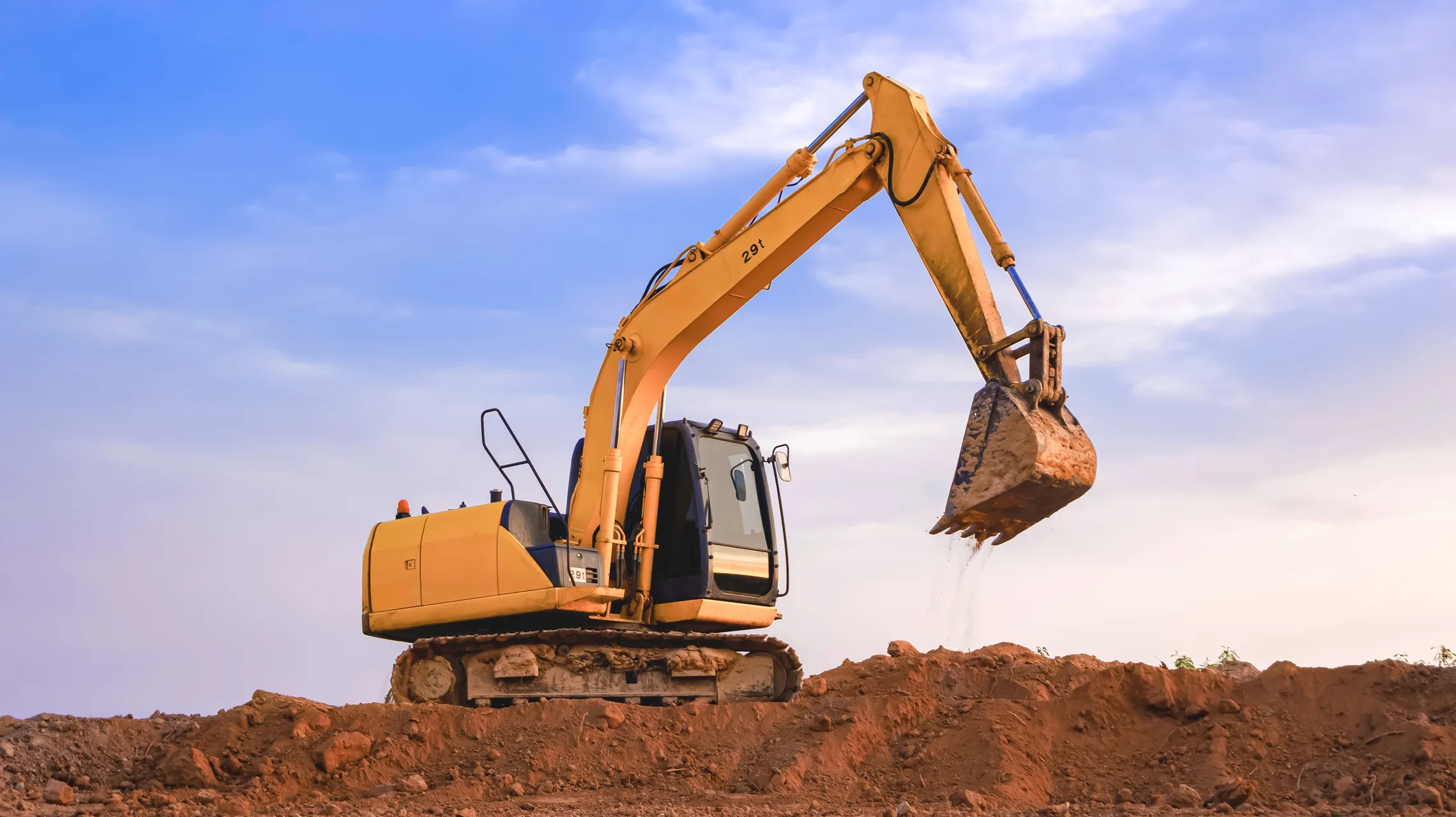
The strike still leads, and its familiar economics apply: a machine that drives home, and a bill made of restoration, interruption and a stopped job. What changes here is which facility gets hit. Cutting an irrigation main during the delivery season takes water away from land that needs it on a schedule nobody can pause, which is a consequential loss with an agricultural clock attached rather than a telecom one. Rock supplies the second theme: basalt shelves and cobble that stall production, wear components fast and encourage forcing the machine, which is how structural damage and cracked attachments arrive. Then the seasons — a compressed working year at elevation and in the north, spring runoff filling excavations, and machines standing on remote sites through months when nobody is visiting them.
Common Idaho excavator claims we see
- Irrigation main or lateral cut in season. Water withheld from land that cannot wait, with the consequential side dwarfing the pipe repair.
- Strike on a private line nobody had to mark. The category a clean ticket says nothing about, and the one that surprises crews most.
- Bucket, stick and cylinder damage in rock. Basalt and cobble met at production pace by an operator under schedule pressure.
- Trench edge collapse in saturated spring ground. Runoff softening a platform that was solid when the excavation opened.
- Theft or vandalism on a remote site. A machine parked out of sight between visits on jobs a long way from the yard.
Why Idaho excavator owners choose Equipment Guard Insurance
Nothing in this state certifies that a contractor can excavate — registration through the state licensing division is a record that you registered, and the trades with real competency exams are elsewhere. That leaves your certificates carrying the argument, so they are worth building rather than inheriting. We write equipment as its own line, schedule the attachments that genuinely travel with the machine, and take the underground conversation seriously enough to describe the irrigation exposure to a market that has probably not heard it framed properly before. Those markets are named on our homepage. Your liability and workers compensation can stay where they are.
Major Idaho excavator markets
- Boise. Downtown and infill work where services are layered under an old grid and there is no room to stage anything.
- Meridian. The fastest conversion of farm ground to subdivision in the state, dug straight through the irrigation network that served it.
- Nampa and Caldwell. Canal and lateral country with food-processing plants, where site work and water infrastructure overlap constantly.
- Idaho Falls. Research and energy-adjacent construction with controlled access and escorted work windows.
- Pocatello. Rail and industrial ground, where the buried record predates most of the companies now using it.
- Coeur d’Alene. Lakeside and mountain work on a short season, in a region whose mining past is still in the ground.
Related
- Excavator insurance — the machine physics that hold in every state.
- Dozer insurance in Idaho — the machine graded against a stormwater program this state took over from the federal agency only recently.
- All equipment insurance in Idaho — the state hub.
- Equipment floater · Rented & leased equipment
Primary sources
- Section 55-2205 — Idaho State Legislature — one-number notification service (dig notice and one-call)
- Idaho Code Title 54, Chapter 52 — Idaho Contractor Registration Act — Idaho Division of Occupational and Professional Licenses (DOPL), Idaho Contractors Board (contractor licensing)
Idaho excavator insurance FAQs
What happens between my request and the day I can dig?
The request goes in not less than two business days and not more than ten business days before the scheduled start, and the owners of buried facilities then have two business days from receipt to respond. Those two windows are meant to overlap, which is the point worth holding on to: the notice is a transaction with a reply expected, so an unanswered request is something to pursue rather than a formality that has quietly completed itself.
What is actually under a new subdivision out here?
Frequently the farm that was there first. The valleys were plumbed for irrigation long before they were platted for houses, so a new street can sit on canal, lateral and pressurized delivery pipe that was installed for agriculture and later inherited by an irrigation district, a homeowners association or a developer. It is real infrastructure with real consequences when it is cut, and it very often does not look like anything on the surface.
Will the notification service locate all of that for me?
Do not assume so. A one-call system reaches the facilities whose owners participate in it; privately owned lines, service laterals past the point of delivery and irrigation pipe held by an association are commonly outside that reach, and nobody is obliged to come and paint them for you. Where the site plan suggests private infrastructure, ask the owner directly, get whatever record exists, and treat the absence of paint as an absence of information rather than as proof of empty ground.
Does a clean ticket protect me if something gets hit anyway?
Not by itself. The notice puts a marking duty on participating owners; it makes no promise about accuracy or completeness, it does not extend to what nobody registered, and it leaves the standard of careful excavation entirely with you. When the claim is examined, the questions are about method around the marks and about what the crew did in the moment the ground stopped agreeing with them.
How much does the ground itself cost me here?
On the Snake River Plain, plenty. Basalt sits close to the surface in places and cobble is everywhere, so the limiting factor on a trench is often the machine rather than the drawing: slow production, heavy wear on teeth and undercarriage, and a real temptation to force a bucket that has stopped cutting. In the panhandle the problem changes shape — grade, timber ground and a season short enough that the work compresses into the months when it is dry enough to be there at all.
Can the excavator go on its own policy?
Yes. Equipment Guard Insurance writes equipment monoline, so the machine and everything hung on it are scheduled independently and the underground exposure is handled beside them, without asking you to move a liability or workers compensation program that already suits your work.