

Most of the digging in Iowa happens away from pavement. The state runs on a county grid of gravel secondary roads, and the excavator that earns its keep here spends its days on field edges, rural road rights of way, small-town mains and the approaches to grain and livestock facilities — all of it over infrastructure that was installed long before anyone was obliged to record it.
This page covers what the marks actually mean here, what a forty-eight-hour clock does to a working week, and what is under an Iowa job that is not under a city street. The machine itself — boom geometry, swing, undercarriage life, quick couplers and attachments — is covered in the excavator insurance pillar, which does not change by state.
What excavator insurance costs in Iowa
There is no honest published price for an excavator, and pretending otherwise would mostly be pricing the wrong thing. The dominant input is the work: how deep you go, how routinely you operate beside live gas, fiber or rural water, whether the schedule is trenching or bulk earthmoving, and how far the machine travels between jobs on gravel. After that come the specification and hours, the attachments carried on the same schedule, where the unit sits overnight when the job is nowhere near the shop, and your own loss history. A tiling contractor and a municipal utility contractor can own the same machine and be nothing like the same risk.
Iowa excavator regulations: dig notice and the one-call duty
Operator positive-response/marking duty within the 48-hour period; horizontal location of a facility defined as an area eighteen inches on either side.
That definition is the whole point of Iowa’s regime, and it is set out at § 480.4 — Required notice, location and marking of underground facilities, administered through the statewide notification center. Notice precedes the work by a forty-eight-hour period that excludes weekends and legal holidays, and the operators owe their response inside that same period. But the operational content is in the tolerance: the law fixes the horizontal position of a facility as a band eighteen inches either side of the mark, which is an admission that nobody knows precisely where the line is. Everything follows from that. Inside the band, powered digging is the wrong method, and a contractor who exposes by hand or by vacuum there is not being cautious so much as being correct. Outside it, the paint is only as good as the records the member operator holds — and in a state where drainage tile, private service runs and decades of agricultural infrastructure were never systematically mapped, plenty of what you can hit has no member to notify at all. The ticket is a process you owe; it is not a warranty anyone owes you.
Common excavator risks in Iowa
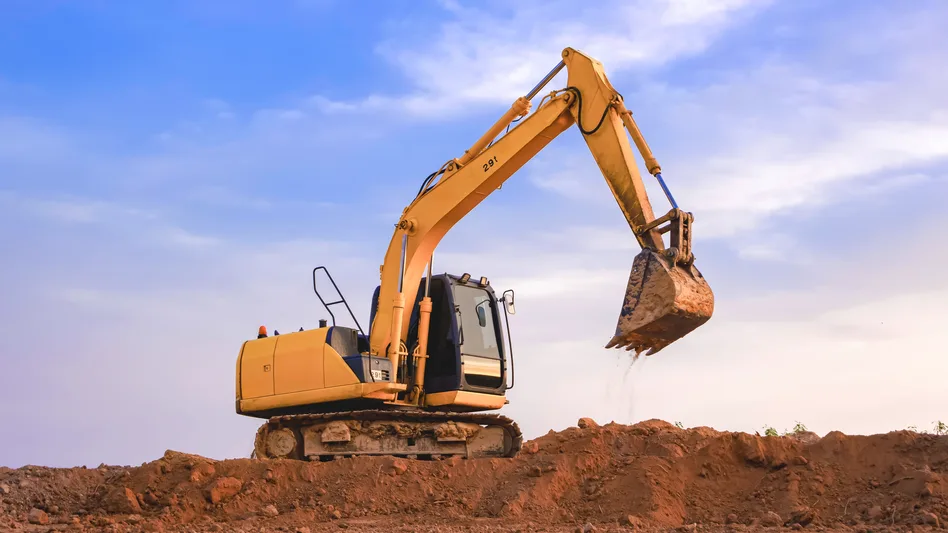
The strike remains the exposure that can rewrite an account, and rural work does not make it smaller — it makes it stranger. A cut fiber trunk in a county right of way takes out service across several counties; a nicked gathering line brings in a pipeline operator and a regulator on the same afternoon; a rural water main leaves farms and a small town dry while the repair is arranged. Alongside it sit exposures that belong to this landscape specifically: trench sidewalls in deep loess and black soil that stand beautifully until saturated and then do not, spring and early-summer ground that stays wet long after the surface looks workable, and machines walking or floating long gravel miles where the loss happens on the ramp rather than in the trench. The everyday two persist everywhere — the tip at a trench edge, the swing into what the operator cannot see.
Common Iowa excavator claims we see
- Fiber or gathering-line strike in a rural right of way. Small trench, large consequence, and often several operators arriving at once.
- Unmapped drainage tile cut during bulk earthwork. A repair obligation plus a drainage argument with the landowner next door.
- Sidewall failure in saturated loess. Ground that held all morning giving way once water found the trench.
- Float and ramp damage on long gravel hauls. The loss that happens between jobs rather than on them.
- Overnight theft from an unattended rural site. Attachments and small tracked units left where nobody drives past after dark.
Why Iowa excavator owners choose Equipment Guard Insurance
Registration is not a competency license, so nothing in Iowa vouches for your crew except the documents you hand across. That is a reason to place the equipment carefully rather than accepting whatever came attached to a package. We write the machines on their own schedule, ask about the subsurface work as a distinct underwriting question, and go to markets — named on our homepage — that will look at excavation and rural utility work on what it involves rather than on a class code. Your existing liability and comp can stay exactly where they are.
Major Iowa excavator markets
- Des Moines. The heaviest continuous site-development and utility replacement in the state, with the most congested subsurface to go with it.
- Cedar Rapids. Flood-mitigation and levee work alongside industrial and food-processing plants that cannot be taken offline.
- Davenport and the river cities. Riverfront ground, old industrial fill and levee maintenance, with barge and rail infrastructure in the way.
- Sioux City. Agricultural processing and rail-served industrial work on bluff terrain, with long approaches from every direction.
- Iowa City. Institutional and medical campus expansion where live services run under active buildings and the site never closes.
- Council Bluffs. Data-center and heavy industrial build-out on river-bottom ground with a shallow table and enormous incoming service runs.
Related
- Excavator insurance — the machine physics that hold in every state.
- Backhoe insurance in Iowa — the machine Iowa keeps outside the motor-vehicle definition while it crosses those same gravel miles.
- All equipment insurance in Iowa — the state hub.
- Equipment floater · Rented & leased equipment
Primary sources
- § 480.4 — Required notice, location and marking of underground facilities — Iowa One Call statewide notification center (dig notice and one-call)
Iowa excavator insurance FAQs
What exactly do the marks on an Iowa job promise me?
Less precision than most operators assume, and the statute is candid about it. The horizontal location of a buried facility is defined as a band eighteen inches to either side of the mark, so the paint identifies a zone rather than a position. Inside that band, mechanized digging is not the right tool no matter how careful the operator is. Crews who plan to expose by hand or by vacuum inside the zone finish the job; crews who treat the paint as a center line they can cut beside are the ones who end up making the call to the utility.
How much notice does the state want before excavation?
The notice has to precede the work by a full forty-eight-hour period, and Saturdays, Sundays and legal holidays do not count toward it. Within that same period the facility operators owe a response — marking what they have, or telling you they have nothing there. A response you never received is information in itself and is not a reason to start; it is a reason to raise it again before the machine moves.
Does an answered locate request move the strike risk off my company?
No. The response duty belongs to the operators; the care duty never left you. If the bucket goes through something, the argument is about how the excavation proceeded around the marked band — whether it was exposed properly, whether the crew kept working after the marks stopped making sense, whether anybody probed. That is a liability exposure with its own severity curve, and we place it deliberately rather than hoping the equipment policy quietly reaches it.
What is buried under an Iowa job that is not under a city street?
Far more than the record suggests. Farm drainage tile runs almost everywhere in the northern and central counties and is generally unmapped, rural water districts have distribution mains along road rights of way, gathering and transmission pipelines cross the state, and grain, ethanol and livestock facilities carry their own service runs. Fiber has been going down the same rights of way for years. The open field that looks like the safest dig in the state is frequently the one with the least documentation.
Does Iowa license excavating contractors?
It registers them rather than testing them. A construction contractor working in the state registers and bonds through the Division of Labor, which is an administrative step and a financial assurance, not a competency examination. So no license class is speaking for your ability when a general contractor or a county engineer decides whether to put you on a job — your certificates, your equipment schedule and your record are doing that work instead.
Can you write the excavator by itself?
Yes. Equipment Guard Insurance places equipment monoline in Iowa, so an excavator, a mini and the attachments that ride with them can be scheduled on their own terms. The underground liability question gets addressed in the same conversation, and nothing about it requires you to move liability or comp you already carry.