

There is a version of this trade that mostly builds new things, and a version that mostly opens old ground to replace what is failing in it. Michigan runs heavily on the second, and the second is where an excavator earns its reputation as the machine whose worst day has nothing to do with the machine.
Below: how the state times the warning and how quickly that warning goes stale, what the resulting ticket genuinely transfers, and why a hard freeze cycle guarantees that the shallow half of the buried world drifts away from the drawings. The mechanical side that holds in every state — boom and swing geometry, undercarriage life, running a breaker or a thumb — sits on the excavator insurance pillar.
What excavator insurance costs in Michigan
A number here would be a guess dressed up, because the machine is not the main variable. The things that actually price a Michigan excavator are the shape of your year: how much replacement work versus open-site work, how deep, how often inside a live utility envelope, how much of it is in a street with traffic beside the trench. After that come unit size and age, the attachments on the schedule, whether the machine winters in a yard or on a job, and your loss history. A crew replacing lead services under a city street and a crew cutting pond and drainage on open ground share a machine type and almost nothing else.
Michigan excavator regulations: dig notice and the one-call duty
at least 72 hours, but not more than 14 calendar days, before the start of any blasting or excavation (the 72 hours excluding hours of nonbusiness days)
That rule is published as the section of the Michigan Compiled Laws governing excavation notice, and the two-week outer limit deserves more attention than it usually gets. A firm that wins a multi-block contract and pulls one ticket at mobilization is running unmarked by the third week without anything visibly changing on site — the paint is still there, faded, and the machine keeps working. Renewal is the discipline, not the call. As for what the ticket delivers: it obliges the facility owners to mark, and that is the whole of it. Depth is not warranted. Abandoned infrastructure is not covered by anybody’s duty. Private service runs that were never registered will never be marked by anyone. And a strike beside a good mark is judged on how the digging was done, not on whether a ticket existed. Everything the ticket does not carry stays with the contractor, which is precisely the exposure worth arranging deliberately.
Common excavator risks in Michigan
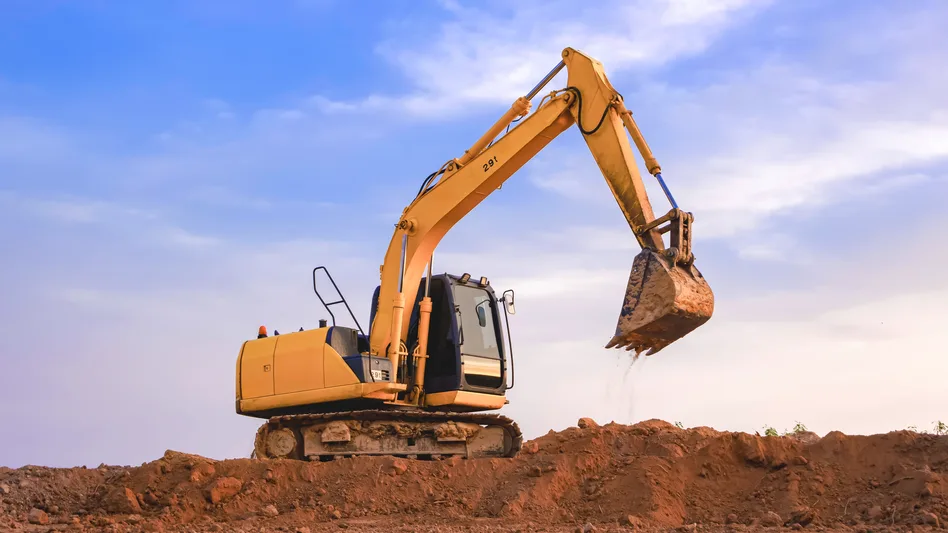
The defining loss is the one where the excavator walks away undamaged and the file stays open for a year. A gas main, a water transmission line or a fiber trunk brings restoration, service interruption to everyone downstream, a site that must be made safe, and a stopped crew — none of it proportional to the iron involved. Michigan then supplies its own multipliers. Legacy industrial ground in the southeast holds infrastructure that predates consistent recordkeeping. Annual frost heave shifts shallow services out of alignment with the record. Traffic-adjacent trench work in dense corridors adds the struck-by exposure and the property damage that comes with working a few feet from moving vehicles. And under all of it the machine still slides at a trench edge and still swings into what the operator cannot see.
Common Michigan excavator claims we see
- Main strike during replacement work. The signature Michigan claim, where the ground had been opened many times before and recorded differently each time.
- Unrecorded or abandoned line encountered mid-trench. Nobody owns it, so nobody marks it, and the argument lands on the crew that found it.
- Trench collapse in a traffic corridor. Vibration, saturation and a wall that had been holding until the shift traffic put on it stopped being tolerable.
- Counterweight contact on a constrained street. Parked vehicles, poles and building faces within the swing circle on a narrow urban job.
- Loading and float loss between phases. Repeated short moves are where the damage happens, not the long hauls.
Why Michigan excavator owners choose Equipment Guard Insurance
With no statewide commercial credential to hand over, the paperwork you present is the whole of your case — and it should be built for that job. We write the equipment monoline, ask specifically about the replacement work rather than skipping past it, and place the machine and the below-grade exposure with markets willing to look at street-opening contractors as a class worth underwriting rather than avoiding. Those markets are named on our homepage. The arrangement does not disturb the liability or comp already sitting behind your crews.
Major Michigan excavator markets
- Detroit. The deepest layering of buried infrastructure in the state, over industrial ground where the drawings and the trench routinely disagree.
- Grand Rapids. Sustained commercial and institutional build-out through an older core, with steady street-opening work between the new sites.
- Warren and Sterling Heights. Postwar suburban infrastructure reaching replacement age all at once, in dense residential grids with narrow working room.
- Ann Arbor. University and medical campus work where live services run under active buildings and shutdown windows are measured in hours.
- Lansing. State institutional and municipal utility programs, the projects most dependent on records nobody can fully verify.
- Flint and Kalamazoo. Service-line and main replacement programs at scale, which means a great deal of shallow work in old residential ground.
Related
- Excavator insurance — the machine physics that hold in every state.
- Dozer insurance in Michigan — the machine whose statewide paperwork is about sediment leaving the site, not about what the blade uncovers.
- All equipment insurance in Michigan — the state hub.
- Equipment floater · Rented & leased equipment
Primary sources
- MCL - Section 460.725 - Michigan Legislature — MISS DIG System, Inc. (dig notice and one-call)
- Residential Builders — LARA Bureau of Construction Codes, Licensing Section — Michigan Department of Licensing and Regulatory Affairs (LARA) (contractor licensing)
Michigan excavator insurance FAQs
How long is a Michigan dig ticket good for?
Long enough to plan with and short enough to lose. The statewide system wants notice at least 72 hours ahead — counted so that non-business hours do not fill the requirement — and no more than fourteen calendar days before the work starts. On a phased job that is the trap, because the ticket pulled for the whole street runs out while the crew is still working the first block. The fix is not clever scheduling; it is treating the ticket as a consumable that gets renewed rather than a permission slip that gets filed.
Does the ticket move the strike risk onto the utility?
No, and the reason is structural rather than a matter of fine print. What the notice buys is a duty on facility owners to come out and mark. It carries no promise that the marks are complete, no statement of depth, and nothing at all about abandoned lines or private runs the owners never registered. The question a claim turns on is how the excavation was conducted around whatever marks existed — which is why we place the below-grade exposure as its own decision instead of letting it ride quietly on the equipment form.
Why does freeze-thaw matter to an excavation contractor here?
Because it moves things. A deep annual frost cycle heaves and settles the shallow band where service leads, irrigation, communications drops and older water services live, and after enough winters a line no longer sits at the depth or exactly the alignment the record was drawn from. The same cycle breaks brittle pipe on its own schedule, which is a large part of why the replacement work exists — so the crew fixing the consequences of frost is digging in ground frost has already rearranged.
Does Michigan license me to run excavation work?
Not for commercial site work. The state licensing agency issues residential builder and maintenance-and-alteration licenses, and commercial general contracting is left to local regulation, so requirements vary by city and county. For an excavation firm bidding commercial and municipal work, that means there is no statewide credential to present. The certificate of insurance becomes the thing being evaluated, and it gets read by people with nothing else to read.
What makes utility replacement work riskier than new construction?
You are digging where somebody already dug, repeatedly, over a very long time. A street that has carried water, gas, sewer, power, telephone and later fiber has been opened and backfilled by different crews across different decades, each recording their work to the standard of their era. Abandoned mains stay in the ground, services get rerouted without redrawing, and the composite map is a best effort rather than a survey. New construction has fewer unknowns; replacement work is almost entirely unknowns.
Can the excavator be written on its own?
Yes. Equipment Guard Insurance places equipment monoline across Michigan, so the machine and its attachments carry their own schedule and the underground question is answered beside them, with no requirement to move anything else you have in force.