

Two absences shape this machine in Nebraska more than any rule does. No state authority tests whether an excavating contractor knows the work, and a large share of what is buried in the countryside belongs to the person who farms above it rather than to a utility with a locator on staff.
Both absences land on the contractor. One means your documents have to argue your competence because nothing else will; the other means a perfectly executed notification can still leave you digging blind. This page follows those through the regime, the terrain and the weather. The material that belongs to the excavator wherever it works — reach and tail swing, undercarriage, the attachment ecosystem — is on the excavator insurance pillar.
What excavator insurance costs in Nebraska
No figure belongs on a page like this, and in Nebraska the spread is genuinely wide: an outfit trenching in an eastern metro and one building terraces and waterways out on the western plains are not the same account in any respect an underwriter cares about. What moves the number is the mix of urban and rural work, depth and proximity to live services, how much of the year is spent around irrigation and agricultural infrastructure, unit values with their thumbs and breakers, where the fleet sits during storm season and over the winter, and the record behind it.
Nebraska excavator regulations: dig notice and the one-call duty
The statutory span is at least two full business days, but no more than ten business days, before commencing the excavation.
That obligation lives in the One-Call Notification System Act, and the important reading of it is about who is inside the system and who is not. Facility operators that participate owe a response to a properly placed notice, and on a street job in an established city that covers most of what is under you. Move onto rural ground and the coverage of the system thins: private service runs, pivot supply lines, yard lines and old drainage tile frequently have no participating owner at all, so there is nobody for the center to notify and no record to consult. The notice you placed was still correct and still necessary — it simply cannot reach that class of facility. Nothing in the Act transfers your own duty either: you keep the obligation to excavate carefully around whatever was marked, and you keep the risk of everything that was not. On the rural half of this state, the second half of that sentence is doing most of the work.
Common excavator risks in Nebraska
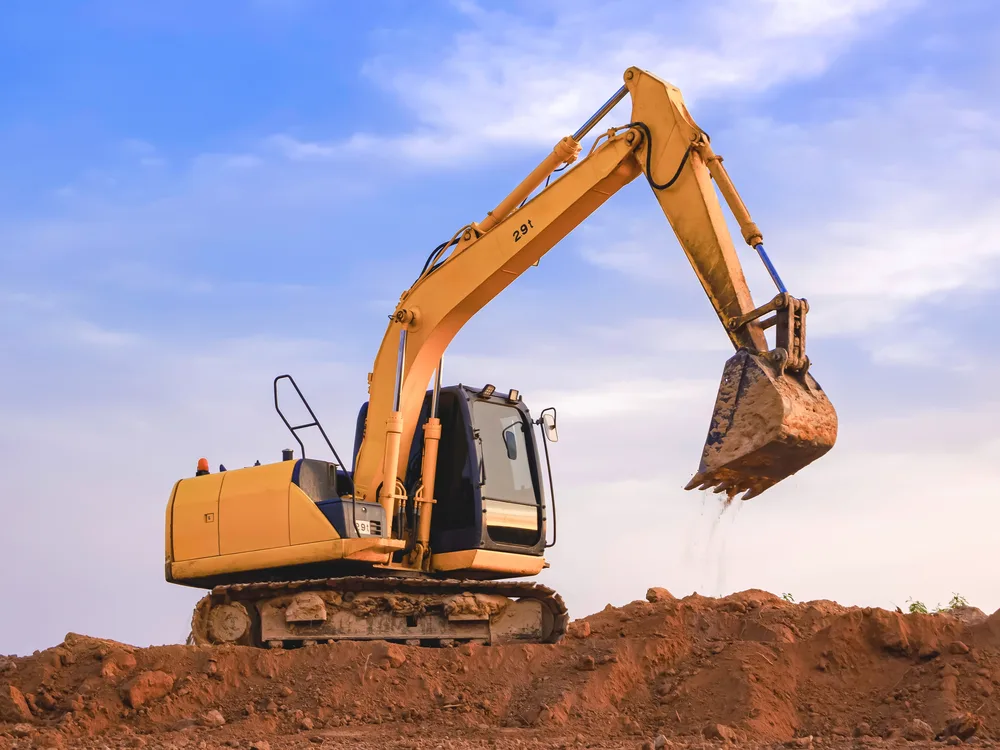
The strike divides into two quite different claims here. In Omaha and Lincoln it is the familiar one — a cut gas, power or fiber service, restoration billed by the utility, an outage running well past the site, and a crew standing down while things are made safe. Out in the country it is the unmarked private line: less spectacular, rarely damaging to the machine, and capable of putting a farm out of water or a livestock operation off supply during the weeks when that matters most. Both are liability losses that the equipment schedule does not answer.
Weather then supplies the machine losses. This is severe-storm country, so hail and straight-line wind can take several units in one night if they are all parked together, and river-valley flooding reaches machines left in a bottom overnight. Add the routine hazards — trench-wall failure in saturated loess and alluvial soils, the tail swing on constrained lots, and transport damage over long moves between scattered rural jobs — and the picture is complete.
Common Nebraska excavator claims we see
- Unmarked private irrigation line cut. The distinctly Nebraska file — a modest repair and a very unhappy landowner in the middle of a season.
- Utility strike in an eastern metro. Restoration plus service interruption, on a machine that needs nothing more than a wash.
- Hail or wind loss across a parked fleet. One storm cell over one yard, several units on the same claim.
- Flood loss on a unit left in a bottom. Water arriving faster than anyone could get back to move it.
- Trench collapse in saturated loess. A wall that stood all week failing after a heavy rain, with a machine at the edge.
- Transport damage on a long rural move. Loading, hauling and unloading between jobs that are hours apart.
Why Nebraska excavator owners choose Equipment Guard Insurance
When the state does not certify competence, the paperwork has to. That is a reason to build the equipment placement deliberately rather than inherit whatever came attached to a package — a schedule with the right values, the attachments actually listed, and limits that match the work you bid. We write the iron monoline, so getting that right costs you nothing on the liability and comp you already hold, and we treat the underground question, including the part of it no notification center can answer, as a subject in its own right. The markets behind that are named on our homepage.
Major Nebraska excavator markets
- Omaha. The state’s densest congestion of buried service, with redevelopment over ground that was built on long before anyone mapped it well.
- Lincoln. Steady institutional, campus and municipal replacement work on an established grid, close to live services on almost every job.
- Bellevue and the Sarpy corridor. Sustained suburban and data-center-adjacent development, where new construction runs beside older utility alignments.
- Grand Island. Agricultural processing and rail-served industrial work, so site jobs sit right at the boundary between utility and private infrastructure.
- Kearney. Corridor and highway work through irrigated country, where the machines are in open ground and the private-line exposure is at its highest.
- North Platte. Rail, municipal and rural water work at real distance from any large yard, which makes an unattended unit genuinely unattended.
Related
- Excavator insurance — the machine physics that hold in every state.
- Backhoe insurance in Nebraska — the machine the statute writes out of the definition of a motor vehicle altogether.
- All equipment insurance in Nebraska — the state hub.
- Equipment floater · Rented & leased equipment
Primary sources
- Neb. Rev. Stat. § 76-2321 — Nebraska statewide notification center (dig notice and one-call)
- Contractor Registration — Nebraska Department of Labor (contractor licensing)
Nebraska excavator insurance FAQs
Nebraska registers contractors instead of licensing them. Why does that matter to me?
Because registration records that you exist; it does not assert that you are any good. Every contractor and subcontractor working on someone else’s real property registers with the state labor department, and there is no examination or competency class behind it. So when an owner or a general contractor wants to know whether to put you on a job, the objective evidence available to them is your certificates, your schedule and your record — which means those documents are carrying weight here that a license class carries elsewhere.
What is the private-facility problem, in practice?
A notification center can only reach the facility owners who belong to it. Service lines a landowner installed — the run out to a pivot, the yard line to a shop or a bin site, the drainage tile put in two generations ago — often have no member to notify and no record anyone maintains. So a properly placed notice, correctly answered by every participating operator, can still leave a live line completely unmarked in the ground in front of you. On rural work the landowner interview is not a courtesy; it is the only locate that exists for that class of facility.
Does a valid ticket protect me if I hit something?
It protects you less than the phrase "we called it in" implies. The notification obliges participating operators to respond and mark; it warrants nothing about accuracy, nothing about completeness and nothing at all about facilities outside the system. Afterwards the question is how you excavated in the vicinity of what was marked, and what you did about the categories the system was never going to reach. That is a liability analysis, and it is why the underground exposure gets arranged as its own subject next to the equipment schedule.
Is irrigation infrastructure really a distinct exposure?
It is one of the defining ones here. Buried mainlines, pivot supply, rural water district piping and older tile networks run across ground that looks entirely open, and an excavator working a site or a road project can be into that network without any of the visual cues a street job provides. The damage is rarely dramatic on the machine, but taking a farm out of water in the middle of a growing season creates a loss conversation with a landowner that has nothing to do with the cost of the pipe.
What weather exposures should be on the schedule conversation?
Hail and wind first — this is severe convective storm country, and a fleet parked in one yard is a concentration of value under a single storm cell. Flooding along the river valleys is the second: a machine left in a bottom overnight is exposed to water that can arrive faster than anyone gets back to move it. And the winter closes the ground for a stretch, so a share of the fleet sits idle at whatever site it finished, which is a storage and security question rather than an operating one.
Can the machines be written on their own?
Yes. Equipment Guard Insurance writes equipment as a standalone line in Nebraska, so units and attachments go on their own schedule and the underground liability is addressed beside them. There is no requirement to move liability or workers compensation that is already placed around the rest of your work.