

Most states treat a contractor’s insurance as something to check after the award. Oregon treats it as part of the right to work — the license that lets you bid is issued against a bond and coverage, and it stays valid only while they do. That single fact makes the equipment placement a licensing question as well as a protection question.
What follows is the rest of the Oregon picture: how the dig clock runs in business days on both edges, what a locate ticket genuinely hands off, and how radically the work changes when you cross the Cascades. The machine characteristics that do not vary by state — reach and swing, undercarriage life, breakers and thumbs — belong to the excavator insurance pillar.
What excavator insurance costs in Oregon
We will not print a premium, and the reason is that the machine ranks somewhere below fourth on the list of things that set one. Ahead of it: the character of the work, depth, how much of your year runs inside a live utility envelope, whether you are digging saturated valley clay or breaking basalt, and which license endorsement your operation is built around. Then unit size and age, attachments carried on the schedule, where the machine sits between jobs, and your record. A firm cutting foundations on a hillside subdivision west of the valley and a firm trenching through rock on the east side share a machine class and no other meaningful input.
Oregon excavator regulations: dig notice and the one-call duty
Operators must locate and mark within two full business days following the excavator’s notice.
The notice duty and the marking obligation sit together in the state’s notification rules, which we describe here without linking: the address on record resolves to an administrative-rules index rather than to a section that states the duty, and this page cites only documents it has opened and read. The design is symmetrical: you give at least two full business days and no more than ten, and the operators get those same two full business days to locate and mark. Counting in business days is where schedules slip, since a single holiday can move a start further than a foreman expects and there is no credit for calling on a weekend. Past that, the allocation is the ordinary one and it is worth stating without softening. The ticket obliges registered facility owners to mark what they own. It certifies no depth, reaches nothing abandoned or unregistered, and does not convert a careless excavation into a protected one. Everything outside that narrow duty stays with the contractor holding the sticks — which is why the below-grade exposure is arranged on purpose here, particularly for firms whose license endorsement already depends on coverage staying in force.
Common excavator risks in Oregon
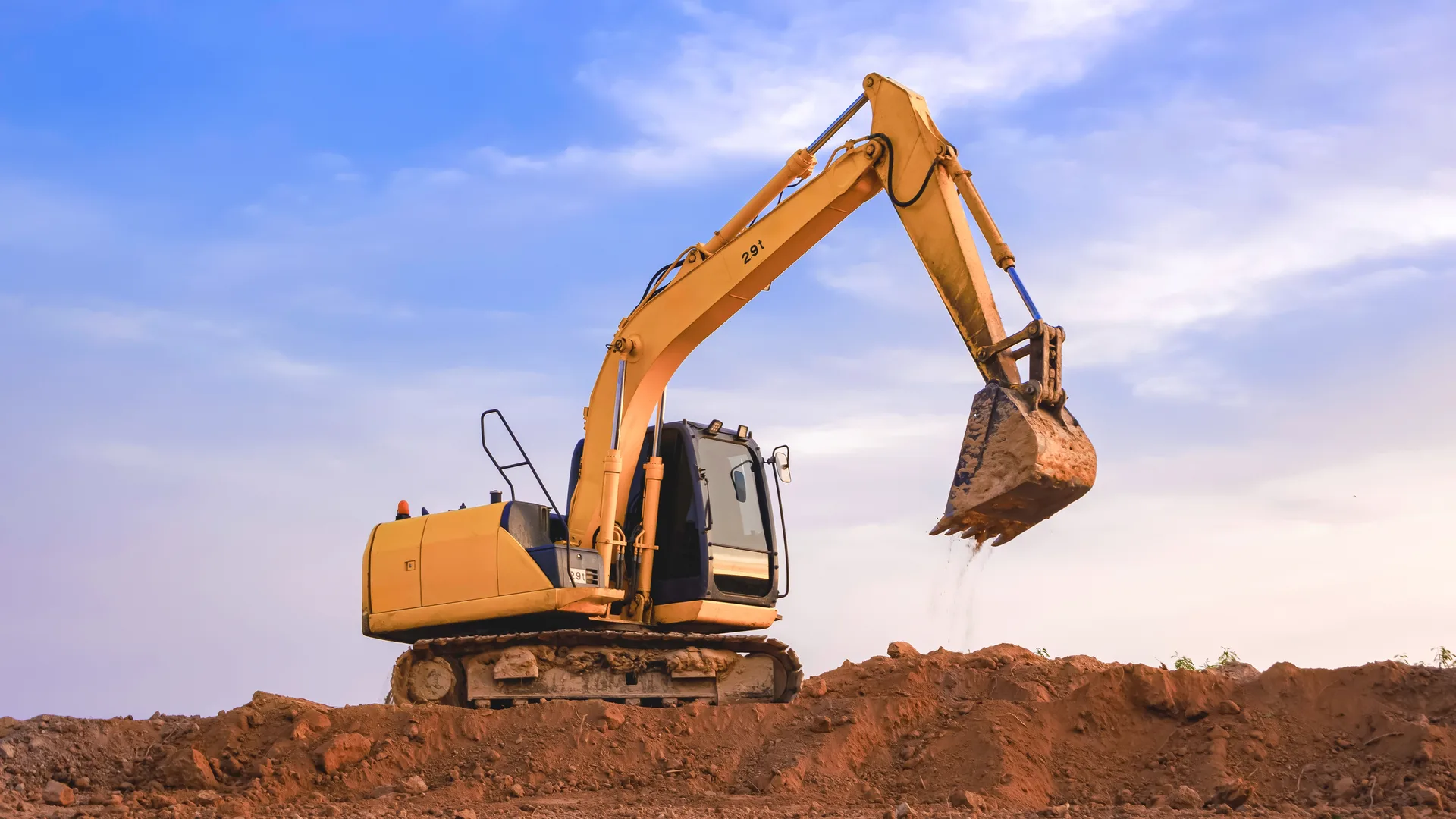
Two risk profiles share one state. On the wet side, saturation is the enemy: slopes move, clay trench walls fail after rain, access roads soften, and a good share of the annual loss is a machine that has to be recovered rather than repaired. On the dry side the ground fights back instead — basalt and hardpan mean hammering, ripping and structural stress, with vibration near existing structures becoming a claim that needs no impact at all. The strike exposure sits over both, and it behaves as it does everywhere: the excavator is often barely marked while restoration, service interruption and downstream claims run for months. Underneath all of it, the machine’s own habits — the trench-edge slide, and the swing catching what nobody in the cab could see.
Common Oregon excavator claims we see
- Slope failure or slide on saturated ground. The signature west-side loss, and often a recovery operation before it is a repair.
- Utility strike with service interruption. Modest damage to the machine, a third-party file that outlives the project.
- Vibration damage during rock work. Cracked masonry or fractured brittle pipe near a hammer, with nothing struck directly.
- Undercarriage and structural stress in basalt. Sudden failure from hard-ground work, distinct from the wear no floater covers.
- Transit loss on mountain routes. Grade, weather and repeated loading between the valley and the east-side jobs.
Why Oregon excavator owners choose Equipment Guard Insurance
A placement in Oregon has to do two jobs at once — protect the machine and keep the requirements your license rests on properly satisfied — and those are not the same job. We write the equipment monoline, build the schedule so it reads cleanly against your endorsement, and take the underground question seriously rather than treating it as somebody else’s section. The markets behind that are named on our homepage, and none of this obliges you to move liability or comp you already carry and are satisfied with.
Major Oregon excavator markets
- Portland. The most congested subsurface in the state, worked in a street grid where hillside sites and old utility corridors meet.
- Salem. State institutional and municipal replacement work, on ground that holds water through much of the working year.
- Eugene. University, medical and valley site development, with steady utility work between the campuses.
- Gresham and Hillsboro. The metro’s growth edges, where subdivision and technology-campus construction runs continuously into agricultural ground.
- Bend. High-desert rock, rapid residential expansion, and excavation that is mostly breaking rather than digging.
- Medford. Southern terrain and dispersed jobs, with long approaches and a fire-season overlay on the working calendar.
Related
- Excavator insurance — the machine physics that hold in every state.
- Skid Steer insurance in Oregon — the machine most likely to be taken off a site overnight, where the whole argument is about serial numbers and filings.
- All equipment insurance in Oregon — the state hub.
- Equipment floater · Rented & leased equipment
Primary sources
- OAR Chapter 952, Division 1 — Oregon Utility Notification Center; full rule text incl. OAR 952-001-0050 'Excavator to Give Notice of Proposed Work; E — Oregon Utility Notification Center (Oregon 811) (dig notice and one-call)
- CCB License — Oregon Construction Contractors Board (contractor licensing)
Oregon excavator insurance FAQs
How far ahead does Oregon want notice before excavation?
At least two full business days, and not more than ten full business days, before you begin. Operators then have those same two full business days from your notice to locate and mark. Business days rather than calendar days is the operational detail: a holiday sitting in the middle of the week stretches a start date further than most crews assume, and a ticket left too long at the far end has to be placed again rather than argued about.
Why does my insurance affect my CCB license?
Because in Oregon they are the same document viewed from two sides. Anyone working for compensation on real-property improvements must be licensed by the Construction Contractors Board, and the license is issued against a bond and insurance held at the level of the endorsement you carry — residential or commercial, at the tier you registered for. A lapse is therefore not a private matter between you and a broker; it is reportable, and it puts the license, not just the protection, at risk. That is the reason we ask which endorsement you hold before we structure anything.
Does calling the locate in protect me if I hit something?
It protects the part of the record that is about your conduct, which is worth having, and nothing beyond it. The notice compels facility owners to mark their own registered plant. It says nothing about depth, nothing about lines that were abandoned rather than retired, and nothing about private runs on the far side of a meter. Whether you dug carefully around what was marked is the question that decides the claim, and it is a liability question we handle deliberately rather than assuming the equipment form absorbs it.
How different is west-side work from east-side work?
Different enough to be treated as two markets. West of the Cascades the ground is wet for much of the year, slopes are unstable when saturated, and trench walls in clay behave badly after rain — so slides and equipment recovery drive the loss picture. East of the range you are into basalt and hardpan, where the machine is hammering and ripping instead of digging, undercarriage and structural stress climb, and vibration near existing structures becomes its own exposure. The same excavator earns its keep two entirely different ways.
What else does a stricter licensing regime change for an excavation firm?
It changes who reads your paperwork and how closely. Because a license genuinely gates the right to work here, the general contractors and public owners hiring you are checking status and endorsement level as a matter of routine, and a certificate that does not line up with the license class raises a question at exactly the wrong moment. It is a good argument for having the equipment placement built rather than accumulated — the documents get inspected in Oregon far more often than they do in states with no credential at all.
Can the machine go on its own policy?
Yes. Equipment Guard Insurance writes equipment monoline in Oregon, so the excavator and its attachments sit on their own schedule while the below-grade exposure is addressed alongside — with an eye on keeping every requirement your endorsement depends on satisfied.