

Almost everything in Utah is built on a narrow strip between mountains and water, on ground that was farmland within living memory and lakebed long before that. The subsurface underneath is a layered record of irrigation, annexation and very fast growth — and an excavator working the corridor is cutting through all three at once.
This page covers what the state requires before you dig, why an operator’s silence is a legal permission and a practical hazard, and what a licensed trade means for your exposure. For the parts of the machine that do not vary by state — reach and swing, undercarriage life, couplers and attachments — read the excavator insurance pillar.
What excavator insurance costs in Utah
No page should print a premium for this machine. The iron is a modest part of what is being rated: the first questions are what you dig, how deep, and how often the work puts a bucket next to something live — wet utility, dry utility, or an irrigation system whose location is a matter of local memory. After that the size and hours of the unit, the attachments carried on the schedule, elevation and travel between valleys, where the machine sleeps, and your losses. A contractor doing subdivision wet utility on the valley floor and one cutting bench ground for custom lots are priced apart for good reasons.
Utah excavator regulations: dig notice and the one-call duty
Notice to the association is notice to each operator; an excavator may begin once facilities are marked or 48 hours have elapsed with no operator response.
Two features of that arrangement do real work. The first is consolidation: a single notice to the statewide association is treated as notice to every operator with facilities in the area, which removes the burden of identifying them but also removes any signal about who is actually listening. The second is the release condition. Once the facilities have been marked, or once the waiting period has run and no operator has responded, the excavation may lawfully proceed — meaning silence functions as a green light. Legally that is settled. Practically it is one of the least comfortable rules in this batch of states, because a non-response tells you nothing about what is in the ground; it tells you somebody did not answer. Nothing in the process transfers the consequences of a strike, and a Utah contractor carries a further exposure most of this batch does not: a licensed classification that can be examined after a bad job. We state this requirement from our own record and link no section for it — our citations are limited to documents we have opened and confirmed to be currently in force, and this one has not met that test.
Common excavator risks in Utah
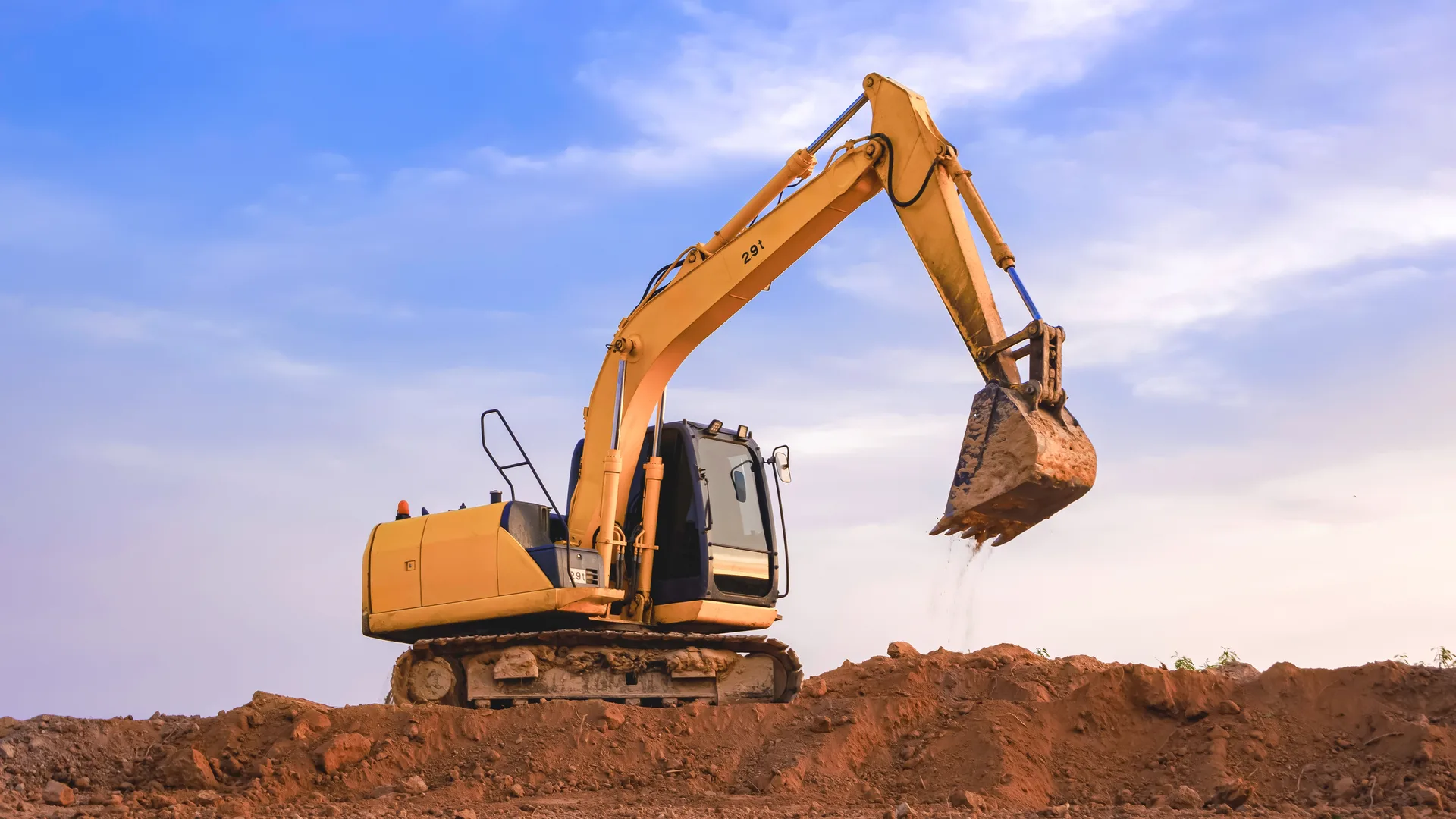
The strike is still the loss that changes an account, and along the Wasatch Front the most commonly struck things are not the ones a crew rehearses for: pressurized secondary irrigation, old ditch and canal works absorbed into subdivisions, and culinary mains installed piecemeal as farm ground was annexed. A cut irrigation line floods a site and several properties below it long before anybody finds a valve. The geology contributes its own set — lakebed gravels and cobble that make trench walls unpredictable and beat up buckets and couplers, a shallow table on the valley floors, and rock, caliche and steep approaches once you leave them. Elevation swings mean frost depth and working season vary inside a single company’s territory. Behind all of it sit the machine’s ordinary failures: the slide at a trench edge or on a bench cut, and the swing into whatever is behind the operator on a lot with no room.
Common Utah excavator claims we see
- Pressurized irrigation line cut. Water damage spreading downhill across properties nobody was working on.
- Utility strike with service interruption. The classic severity claim, where the third-party side leaves the machine far behind.
- Bench or cut-slope slide. A tracked machine working across grade on ground that behaved until it was loaded.
- Cobble and boulder damage to bucket, coupler or drive. Sudden loading in lakebed gravels rather than gradual wear.
- Theft or component loss from a remote site. Machines and attachments left overnight on jobs a long way from the valley.
Why Utah excavator owners choose Equipment Guard Insurance
A licensed classification is worth protecting, and the fastest way to put one at risk is a loss you cannot answer for. We write equipment on its own so the schedule matches your machines rather than a package assembled around something else, we ask about the underground work directly instead of leaving it to an assumption, and we place through markets — listed on our homepage — willing to underwrite excavation on its merits. Nothing in that asks you to disturb the liability or comp you already have.
Major Utah excavator markets
- Salt Lake City. The oldest and busiest subsurface in the state, where utility replacement runs through streets rebuilt over generations.
- West Valley City. Industrial and distribution ground on the valley floor, with a shallow table and heavy incoming service runs.
- Lehi and the north Utah County corridor. The fastest build-out in the state, cutting new infrastructure straight across former farm and irrigation ground.
- Provo and Orem. Institutional and infill work on constrained lots where the campus and the city cannot be shut off.
- Ogden. Rail-served industrial and older municipal replacement, with canyon-mouth terrain immediately behind it.
- St. George. Desert caliche and rock, extreme summer heat on the machine and the crew, and rapid residential expansion.
Related
- Excavator insurance — the machine physics that hold in every state.
- Backhoe insurance in Utah — the machine Utah names by hand in its own definition of special mobile equipment.
- All equipment insurance in Utah — the state hub.
- Equipment floater · Rented & leased equipment
Primary sources
- Utah Code § 54-8a-4 — Notice of excavation (Effective 5/1/2024; no supersession stamp) — statewide association (Blue Stakes of Utah 811) (dig notice and one-call)
- Utah Code Chapter 55, Utah Construction Trades Licensing Act (58-55-301 License required) — Utah Department of Commerce, Division of Professional Licensing (DOPL) (contractor licensing)
Utah excavator insurance FAQs
What has to happen before the machine goes in the ground?
One notice to the statewide association, given no fewer than forty-eight hours ahead and no more than fourteen days ahead. The legal effect of that single call is the part worth understanding: notice to the association counts as notice to every operator with facilities in the footprint, so you are not chasing individual utilities. When the facilities have been marked, or when the waiting period has run without an operator responding, the excavation may lawfully begin.
So silence from an operator means I can start?
Legally, after the waiting period, yes — and that is exactly why it deserves a policy of its own rather than a shrug. A non-response is not evidence that nothing is buried there; it is evidence that nobody answered. Starting on silence is lawful and still leaves you holding the whole consequence if something unmarked is in the trench. Sensible crews treat an unanswered ticket as a reason to probe, to expose by hand, and to document the attempt before a bucket moves.
Do you link the Utah statute on this page?
No, deliberately. We cite only documents we have opened and confirmed to be the version currently in force, and for this section we have not been able to establish that to the standard the rest of our citations meet. So the requirement above is stated from our own record rather than quoted, and no link is offered. If you need the operative text for a contract or a claim, take it from the Utah Code as published by the legislature or from counsel, not from us.
Does Utah actually license excavating contractors?
Yes, and that makes it unusual. The Division of Professional Licensing issues contractor classifications — general building and general engineering among them, plus specialty classifications — with pre-license coursework, examination and insurance requirements behind them. Heavy-civil and site work sits under that scheme rather than outside it. The practical consequence is that your license is an asset with a disciplinary history attached, and a claim involving how a job was run can reach further than the policy.
What is buried in Utah that surprises people?
Water, mostly. The Wasatch Front is threaded with pressurized secondary irrigation systems, older canal and ditch infrastructure and culinary mains laid as farmland became subdivision, and the records for the oldest of it are inconsistent. Add gravel benches left by an ancient lake, a shallow table on the valley floors, caliche and rock in the southwest, and freeze depth that changes with elevation rather than with latitude, and two jobs an hour apart can be entirely different digs.
Can the excavator be written on its own?
Yes. Equipment Guard Insurance places equipment monoline in Utah, so the machine and its attachments go on a schedule of their own. The subsurface liability question is worked through alongside it, and none of it requires you to move liability or workers compensation you already have in force.