

Two features of Washington law converge on the same filing cabinet. The dig statute makes short notice expensive in a way it names out loud, and contractor registration certifies a bond and a policy rather than any assessment of skill. In both cases, what you can document is what you are.
Underneath the paperwork the state is really two operating environments — a wet, year-round west side and a dry, hard-frozen east — and the same excavator behaves differently in each. The machine fundamentals that hold in both places, and everywhere else, sit on the excavator insurance pillar.
What excavator insurance costs in Washington
Any page that quotes a rate for an excavator is guessing, and here the guess would be worse than usual because the same registered contractor can be running two entirely different risk profiles. What a market prices is the work: routine depth, the share of your year spent alongside live gas, water and fiber, whether you take on wet-weather trenching, machine size and age, the attachments scheduled with it, the security of the yard or the site where it sits, and your history. A crew doing utility replacement under Seattle streets and a crew building irrigation infrastructure in the Columbia Basin are not the same account, however similar the iron looks.
Washington excavator regulations: dig notice and the one-call duty
Emergency excavations are exempt from the notice timing; short-notice excavation exposes the excavator to the operator’s response costs.
The obligation is set out in the Revised Code section on excavation notice, and it has one feature most states leave to litigation: the shortcut has a stated consequence. Give less than the required notice and the operator’s response costs come back to you. The window runs not less than two and not more than 10 full business days before the work-to-begin date you declare, and genuine emergencies are exempt from that timing altogether. Everything else in this regime works the way it does elsewhere and disappoints people for the same reason: the request obliges operators to mark what their records show, and the private service line, the abandoned run and the irrigation lateral that was never registered with anyone remain exactly where they always were — underneath your bucket, uninsured by the ticket, and squarely inside the exposure we would rather write deliberately than leave implied.
Common excavator risks in Washington
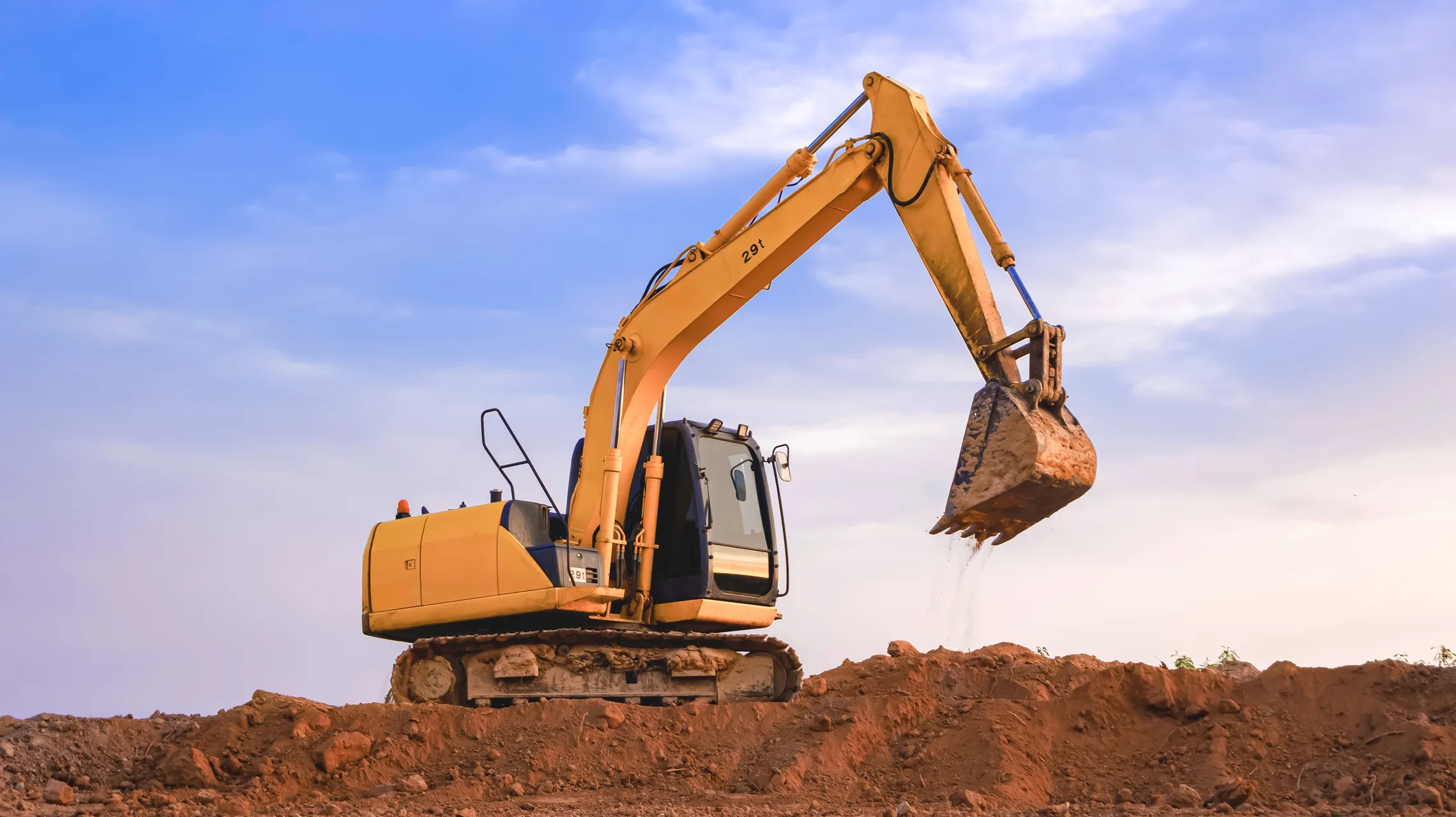
The strike leads, and its economics are the reason this class needs thinking about at all: the machine is often unmarked while the restoration, the interruption to everyone downstream and the stopped site become a third-party file far larger than the excavator’s value. Around that, the west side contributes water — saturated till and fill, excavations that need pumping, trench faces that soften over a long wet season, and slope work on ground that moves after rain. The east contributes distance and dust, with long approaches, jobs far from a service truck, and hard ground in winter that reads back almost nothing through the boom. Common to both are the machine’s own two habits, the edge slide and the blind tail swing, which show up wherever a lot is too tight to give the operator room.
Common Washington excavator claims we see
- Response costs after a short-notice start. The claim this statute specifically anticipates, and the easiest one in the state to avoid.
- Strike with downstream service interruption. Third-party loss that runs well past the physical repair, on a machine that may not have a scratch on it.
- Trench wall failure in wet ground. Saturated till and fill that stood in September and did not in January.
- Tail-swing contact on a constrained lot. Finished surfaces, vehicles and structures inside the swing arc on infill work with no room to set up wider.
- Loss on a long eastern approach. Transit and loading damage on hauls where the nearest replacement machine is hours away.
Why Washington excavator owners choose Equipment Guard Insurance
In a state that registers you on the strength of a bond and a policy, an equipment placement that was thrown in beside something else is a weak link in a document set people actually read. We write the machine on its own, list the attachments properly, and ask the questions an excavation underwriter will ask — depth, proximity to live service, wet-weather work, where the unit sleeps — instead of treating the underground exposure as another desk’s subject. The markets behind that are named on our homepage, and none of this obliges you to move the liability policy your registration depends on.
Major Washington excavator markets
- Seattle. The most congested subsurface in the state, where a downtown or urban-village dig involves several facility owners and no room to be wrong about any of them.
- Tacoma. Port and industrial ground, much of it fill, with heavy service corridors feeding terminals and rail.
- Bellevue. High-value commercial and residential redevelopment where an interrupted service reaches occupied buildings within minutes of the cut.
- Everett and Kent. Low-lying valley logistics ground, drainage-driven and wet, where dewatering is a routine part of a trench rather than an exception.
- Spokane. The eastern base — dry, colder, with long approaches to county and agricultural jobs and far fewer facility records in the open country beyond it.
- Vancouver. Southwest growth work in river-corridor ground, where new residential build-out meets a high water table and service laid for a smaller version of the place.
Related
- Excavator insurance — the machine physics that hold in every state.
- Skid Steer insurance in Washington — the compact unit that raises a filing-office question where this one raises a locate-ticket question.
- All equipment insurance in Washington — the state hub.
- Equipment floater · Rented & leased equipment
Primary sources
- RCW 19.122.030: — one-number locator service (dig notice and one-call)
- Register as a Contractor — Washington State Department of Labor and Industries (contractor licensing)
Washington excavator insurance FAQs
What happens if I dig before the full notice period has run?
You take on the facility operator’s response costs. The statute says so directly rather than leaving it to be argued, which is unusual and useful: short-notice excavation is not a technical foul with no consequence, it is an agreement to pay for the scramble you caused when somebody has to get a locator to your site out of sequence. Emergencies are exempt from the timing, but an emergency has to actually be one, and the exemption is not a way to recover a schedule you let slip.
How is the notice window counted here?
Not less than two full business days and not more than 10 full business days before the scheduled work-to-begin date. The phrase to notice is "work-to-begin date": the clock is measured against a date you declare, so moving your start moves the whole calculation. Declaring an optimistic date and then sliding is how crews find themselves outside the window on a job they believed was called in properly.
Does registering with L&I mean the state has judged me competent?
No, and the distinction matters commercially. Washington does not issue a competency license for general contracting. Every construction contractor registers with Labor and Industries as a general or specialty contractor, and the registration is built on a surety bond and a liability policy rather than a trade examination. Nobody tests whether you can run an excavator. What the state records is that the financial instruments exist — so the certificates you produce are doing the work a license class does elsewhere, and keeping them current is keeping the credential meaningful.
Is the exposure the same on both sides of the mountains?
It is a different job. West of the Cascades the ground is wet most of the year: saturated glacial till and fill, water in the excavation, trench walls that lose strength as the season goes on, and work that continues through rain rather than stopping for it. East, the profile flips to dry, dusty, hard-frozen in winter, with irrigation infrastructure in ground that looks empty from the surface and long approaches between jobs. A crew that works both sides needs one insurance program and two sets of operating habits.
The locate was marked and I dug anyway into something — whose problem is it?
Yours, in almost every version of that sentence. A locate request obliges operators to mark facilities they have records for; it makes no promise that the marks are exhaustive, and it says nothing about the care taken once the paint is down. Private service lines on the customer side, older irrigation and drainage runs, and anything abandoned in place sit outside the marking duty altogether — and the claim will turn on how the excavation was carried out, not on whether a ticket number exists.
Do I have to bundle to get equipment coverage?
Not with us. Equipment Guard Insurance writes equipment-only policies, so the excavator and its attachments can be scheduled by themselves and nothing else in your program has to move. Given that your registration already rests on a liability policy you are unlikely to want disturbed, keeping the equipment placement separate is usually the cleaner answer anyway.