

An excavator in this state works in a strip. The mountains decide where anything can be built, so the road, the rail, the town and every buried service crowd into the same valley floor, and the machine digs through the one piece of ground everybody else needed too.
This page is about what that does to the job: why a rural West Virginia trench can be more congested than a city one, what the hillside standing over the cut adds on top of the strike exposure, and how a long industrial and extractive history leaves things in the ground that no locate will find. For the machine considered on its own — reach, swing, undercarriage, the attachments — see the excavator insurance pillar, which holds anywhere.
What excavator insurance costs in West Virginia
No page can quote this machine honestly, and the reason is not evasiveness. Rating an excavator here starts with the work, not the iron: how much of your year is spent in a valley-floor corridor beside live services, how much is benching and slope work on grade, how deep you routinely go, and whether energy-support work is part of the mix. The unit follows — size, age, the attachment list, where it sits when it is not earning — and your loss record closes it out. A crew cutting sewer through a river town and a crew building access road on a mountainside are not the same account, whatever the model numbers say.
West Virginia excavator regulations: dig notice and the one-call duty
Notice must be not more than ten working days before the beginning of work.
The duty itself is set out at WV Code § 24C-1-5, and it works the way most of these regimes do: notice into the statewide system, a wait measured in business days with weekends and holidays excluded, an outer limit past which the notice is stale, and an obligation on the member operators to put approximate marks on the ground. What is worth dwelling on is what the marks are silent about. They speak for the facilities the participating operators own and record. They do not speak for the gathering lines, well services and workings left by a century of extraction, they do not survey anything, and they do not shift the consequence of a strike away from the crew that made the cut. In a state whose flat ground carries the highway, the rail and every utility in the same few hundred feet, the practical result is that an accurate locate and a safe trench are two different achievements — and only one of them is somebody else’s job.
Common excavator risks in West Virginia
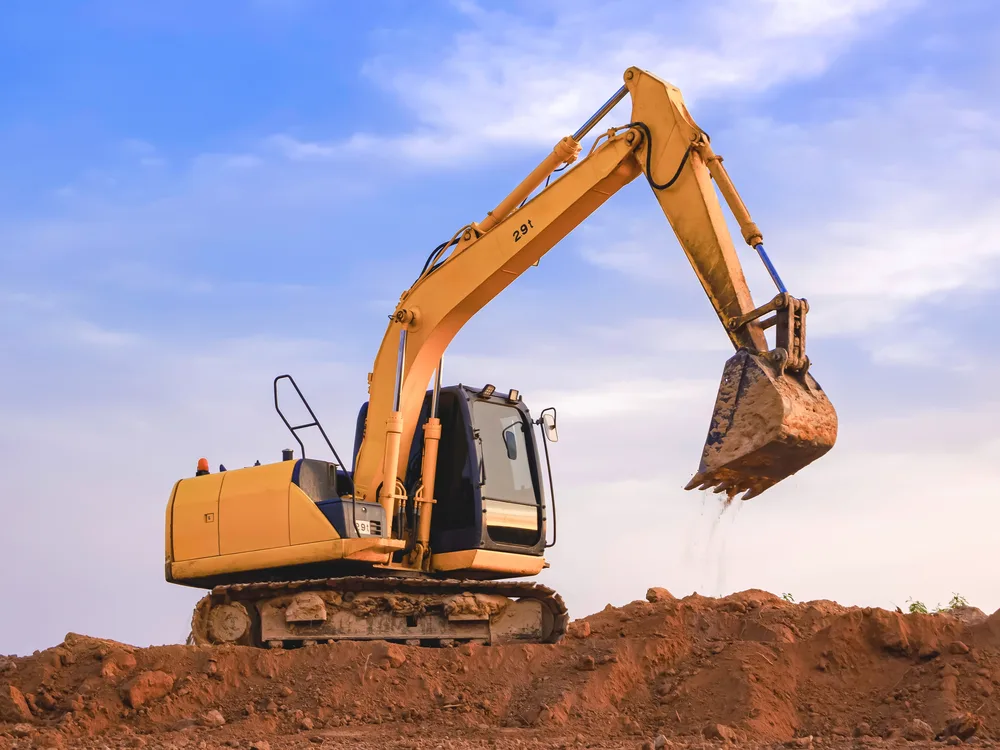
Two exposures run at once here, which is what makes the state distinctive. The first is the strike, and it behaves as it does everywhere: a machine that drives away, a facility owner’s restoration bill, service lost to everyone downstream, a stopped site, and on gas or fiber a set of consequential claims far larger than the excavator. The second is the ground itself. Working a bench or a side-hill means the excavator is standing on material it is actively changing, and slope failure takes the machine down a grade rather than tipping it in place — a recovery problem as much as a damage one. Around both of those, the ordinary items: spoil stacked where it should not be, an undercut bank, a swing that meets a guardrail or a structure because the corridor left no room, and transport losses on narrow approaches where getting a float turned around is the hardest part of the day.
Common West Virginia excavator claims we see
- Strike on a legacy line nobody had recorded. The characteristic claim in extraction country — every mark was right and the ground still held something older.
- Slope failure under a benched machine. The excavator goes down the grade with the material it was cutting, and the recovery is its own event.
- Corridor strike with service interruption. A valley-floor trench beside the road, where one bucket reaches something that feeds a whole community.
- Swing contact in a confined corridor. Counterweight into rail furniture, guardrail, a structure or a parked unit where there was never room behind the machine.
- Transport loss on a narrow approach. Loading, hauling and turning on steep single-lane access, which is where a surprising share of machine damage happens.
Why West Virginia excavator owners choose Equipment Guard Insurance
The reason we write equipment on its own is that it forces the right conversation. A package quote looks at an excavator and sees a value; it does not ask how much of your year is spent on grade, or whether the trench you are cutting shares its corridor with a gas main and a rail spur. We start there instead, then take the machine and the underground exposure to markets — named on our homepage — that will underwrite excavation as a trade rather than treating it as an awkward class. West Virginia already licenses your competence at state level; the placement should match the standard the license sets, and none of it requires you to move liability or comp you have arranged elsewhere.
Major West Virginia excavator markets
- Charleston. The state’s densest valley-floor infrastructure, where chemical, municipal and transport corridors overlap in a very narrow band.
- Huntington. River, rail and port-adjacent industrial work with old service networks and a high water table close to the Ohio.
- Morgantown. University and medical build-out on steep sites, so benching and slope stabilization are part of almost every excavation.
- Parkersburg. Long-established industrial ground where what was buried in earlier decades is a live question on every dig.
- Wheeling. Constrained northern-panhandle sites hemmed between the river and the hillside, with reconstruction work in very tight quarters.
- Martinsburg. Eastern-panhandle distribution and residential growth on gentler terrain, where the pace of work rather than the grade is the pressure.
Related
- Excavator insurance — the machine physics that hold in every state.
- Backhoe insurance in West Virginia — the unit that has to justify itself on a public road as well as on the bench.
- All equipment insurance in West Virginia — the state hub.
- Equipment floater · Rented & leased equipment
Primary sources
- West Virginia Code | §24C-1-5 — West Virginia 811 (dig notice and one-call)
- West Virginia Code §21-11 — West Virginia Legislature (contractor licensing)
West Virginia excavator insurance FAQs
How far ahead does West Virginia want the excavation notice?
Two business days ahead at the earliest usable point, with weekends and holidays left out of the count, and the notice may not be given more than ten working days before work begins. The outer limit is the one that trips crews on staged jobs: a phase that keeps sliding needs the call made again, because a ticket taken for a start date that has drifted is no longer the ticket for the work being done.
Why does the same trench feel more congested here than in a bigger state?
Because the geography concentrates it. The buildable land in most of the state is a narrow floor between hillsides, and that floor already carries the highway, often a rail line, the water and sewer, the gas, the electric and the communications, all inside a strip that may be only a few hundred feet wide. Congestion in a large city is a downtown problem; here it is the normal condition of any job in a river bottom, including jobs that look rural from the road.
What does the hillside above the excavation add to the risk?
A second, independent way to lose the machine. Benching, cut-and-fill and side-hill setups mean the excavator spends much of its life on ground it is also modifying, and slope failure does not announce itself. Undercutting a bank, stacking spoil uphill of the cut, or swinging a loaded boom across the fall line are the ordinary mistakes, and in steep country the consequence is a machine on its side down a grade rather than a scrape on the counterweight. Recovery on a benched site is often a bigger job than the damage.
Does the state’s energy history change what is actually under the site?
It does. West Virginia has been drilled, mined and piped for a very long time, so alongside the current utility network there is a legacy of gathering lines, service lines to old wells, and workings that predate any reliable mapping. Marks can be entirely correct about what the member operators own and still say nothing about what an earlier era left in the ground. Treating an accurate locate as a complete picture of the subsurface is the specific misreading this state punishes.
Does West Virginia license the contractor running the excavator?
Yes, and genuinely so — it is one of the few states with a real statewide contractor license, issued by the Contractor Licensing Board under the Division of Labor across general and specialty classifications. That means the classification you hold is part of how an owner or general contractor reads you, and it sits beside your certificates rather than replacing them. Getting the equipment placement right is part of keeping that file coherent.
Can the excavator be scheduled without moving everything else?
Yes. Equipment Guard Insurance writes equipment monoline in West Virginia, so the machine and its attachments stand on their own schedule and the underground exposure is handled beside them, leaving the liability and comp you already carry undisturbed.