
A rough-terrain forklift earns its place on an Alabama site by being unglamorous. It moves block, trusses, pipe and pallets of finish material from where the truck dropped them to where the crew needs them, all day, without incident — which is exactly how a machine acquires the reputation that makes its first serious loss such a surprise.
The regulatory answer in this state is short and slightly unsatisfying: there is no state safety authority over your crew. The more useful question is what took its place, and Alabama has a clearer answer than most federal-posture states do. For the machine physics that hold regardless of any of it — capacity against reach, the load chart, ground bearing, attachments — see the forklift insurance pillar.
What forklift insurance costs in Alabama
Any published premium for this class would be fiction, because the machine is not what is being priced. The Alabama inputs that matter are how many people run the unit and what evidence exists that each was evaluated on it, whether it is a fixed-mast truck or a telescopic machine working out at reach, the kind of sites the work takes you onto — a secured campus and an open subdivision are different submissions — the attachments on the carriage, where the machine sits through storm season, and your loss history weighted toward injury rather than damage.
Alabama forklift regulations: who enforces operator safety
Alabama is under federal OSHA for private-sector employers, so the powered-industrial-truck operator training and evaluation requirements are the federal standard applied directly.
So the honest statement of the rule is a statement about who is missing: no Alabama inspector, no Alabama citation, no state appeal, nothing between your crew and a federal standard. Read on its own that sounds like a lighter burden, and for a contractor whose work never leaves an open site it broadly is. But a great deal of Alabama equipment work does not happen on open sites. Access to a secured federal-facility campus, a refinery, a shipyard or a port terminal is granted by contract, and the entity granting it writes its own conditions: documented operator qualification for the specific machine, evidence of evaluation, sometimes a site-specific orientation before anyone touches a control. That gate is checked every time you arrive, not once every several years, and failing it costs a day of production rather than a penalty notice. Alongside it sits the state layer that does exist — two separate licensing boards, one for nonresidential general contractors and one for residential builders, so a business running one telehandler across both markets answers to two state authorities, neither of which cares how the machine is operated. That is the real compliance map here, and none of it is drawn by a safety regulator.
Common forklift risks in Alabama
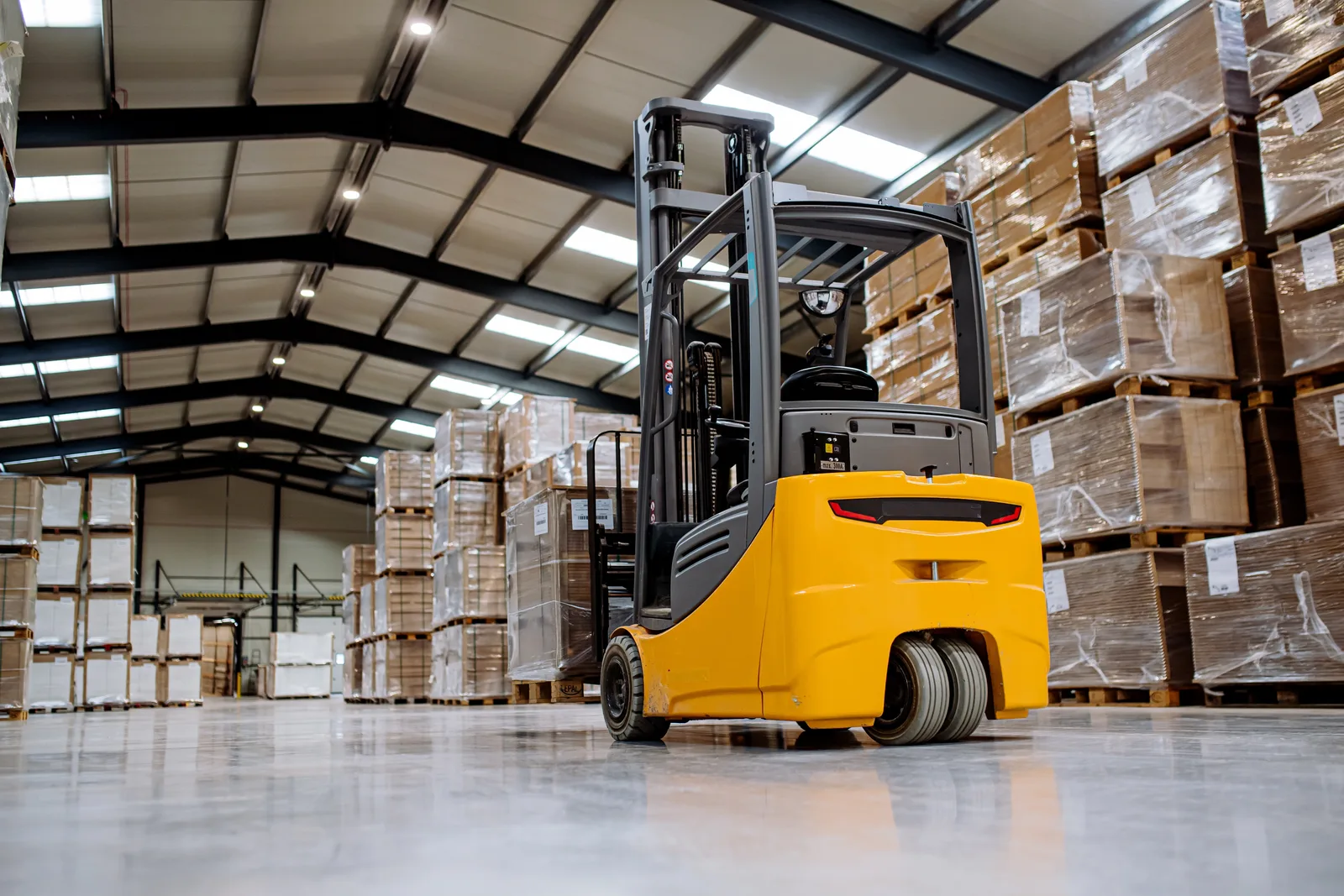
The unit is almost never the loss. A telehandler that drops what it was carrying tends to need an inspection and a hose; the material, the structure and the person underneath are what the claim is made of. The two constants are that reach eats capacity — a lift comfortably inside the chart at the machine can be outside it at full extension — and that the surface an outrigger finds is rarely as engineered as it looks. Alabama layers its own conditions on top. The coastal plain gives sand over a high water table, which stops supporting a point load as soon as it is wet, while north Alabama clay holds well dry and turns greasy fast. Storm season moves machines onto staging ground and out to restoration work under time pressure, with unfamiliar operators and unfamiliar sites. And summer heat on the Gulf side does to concentration what it does everywhere, only for longer.
Common Alabama forklift claims we see
- Load dropped into finished work. Placing material into a completed structure puts the boom exactly where the invested money already is.
- Forward tip at extended reach. The capacity curve, not a mechanical failure — and the reason the chart lives in the cab rather than the office.
- Worker struck or crushed on the ground. The severe outcome, and in this state it triggers a federal investigation with no local counterpart.
- Outrigger through saturated coastal sand. Ground that carried the machine dry and gives up on it after rain or a high tide cycle.
- Storm-season damage to a staged machine. Parked in the open, in a location nobody scheduled, often under someone else’s control.
Why Alabama forklift owners choose Equipment Guard Insurance
A generalist looks at a telehandler, sees a value, and rates the iron. That misses where the money actually goes on this class, which is the injured operator, the crushed material and the structure the boom was reaching into. In a state whose real enforcement happens at a client gate, the documentation that gets you through that gate is the same documentation that makes you a better risk on paper, and we would rather build the submission around it than around the machine value. We write equipment monoline, so the telehandler goes on its own schedule without disturbing arrangements built around your Alabama work, and we place through markets — named on our homepage — that will read a jobsite lifting account for what it is.
Major Alabama forklift markets
- Huntsville. Secured research and aerospace-adjacent campuses where site access is contractual and operator documentation is checked at every entry.
- Mobile. Port, shipyard and heavy-industrial lifting over water-adjacent ground, with salt air working on machines that live outdoors.
- Birmingham. The deepest commercial and institutional construction market in the state, with infill sites that leave little room around a boom.
- Montgomery. State and public-institutional projects where a managing contractor runs the qualification paperwork the state does not.
- Tuscaloosa. University and light-industrial work with concentrated seasonal build windows and a lot of machines moving at once.
- Hoover. Suburban commercial and multi-family construction where the severity sits in finished work rather than in structure.
Related
- Forklift insurance — the machine physics that hold in every state.
- Skid Steer insurance in Alabama — the machine on the same site whose worst day is a theft rather than an injury.
- All equipment insurance in Alabama — the state hub.
- Equipment floater · Rented & leased equipment
Primary sources
- State Plans — Occupational Safety and Health Administration (operator safety)
- About – Alabama Licensing Board for General Contractors — Alabama Licensing Board for General Contractors (nonresidential) and Alabama Home Builders Licensure Board (residential) (contractor licensing)
Alabama forklift insurance FAQs
Which agency regulates a forklift operator in Alabama?
A federal one. There is no approved Alabama plan covering private-sector employers, so the powered-industrial-truck training and evaluation obligations are the federal standard applied without a state layer, and any inspection, citation or appeal runs federally. Nothing about that is unusual; roughly half the country works this way. What is unusual is what has grown up in the space where a state agency would sit.
What actually enforces operator training here, then?
Your customers do. Alabama has an unusually heavy concentration of secured federal-facility work around Huntsville and port and heavy-industrial work at Mobile, and access to that kind of site is controlled by contract rather than by statute. The owner or the managing contractor sets the requirements, checks them at the gate, and can remove a machine or a person on the spot. That review is often stricter, and always faster, than a regulatory inspection would be.
Does Alabama regulate contractors at all?
It does, through two separate boards rather than one. Nonresidential and commercial general contractors are licensed by the Licensing Board for General Contractors, while residential builders come under the Home Builders Licensure Board. If the same telehandler works both kinds of job, the business behind it holds credentials from two different state authorities — neither of which has any say over how the machine is operated.
How should hurricane season factor into the schedule?
By changing where the machine is, and telling us when it does. Storm season moves equipment onto staging grounds, then out to restoration work, then back — and machines spend more time parked in the open, moved by people who do not normally move them, and worked in conditions nobody planned around. The exposure that season creates is as much about location and custody as it is about wind.
Does the ground vary much across the state?
Enough that the same machine behaves differently at either end of it. The coastal plain around Mobile is sand with a water table close to the surface, which drains fast but offers little to an outrigger once it is saturated. North Alabama is red clay that carries a load well when it is dry and turns slick and mobile within an hour of rain. A crew that works the whole state is setting up on two soils that fail in opposite ways.
Will you write the machine on its own?
Yes. Equipment Guard Insurance places equipment monoline in Alabama, so the telehandler and its attachments sit on their own schedule. Where a client gate is what actually governs your operators, we would rather build the submission around that documentation than around the machine’s serial number.