
A rough-terrain forklift earns its place by being unremarkable. It sets block, feeds a roof, lands a bundle on the fourth floor of a building that is still open for business, and nobody treats it as the dangerous machine on site — because for years running, it is not.
What Connecticut adds is a question about authority rather than a question about rules. The state holds an approved plan whose reach ends at the public payroll, so a private crew here works to the federal standard and answers to a federal office. For how the machine itself behaves — reach, load charts, ground bearing, the way capacity leaves as the boom comes out — start at the forklift insurance pillar.
What forklift insurance costs in Connecticut
We will not print a range for this class, and no broker who has read a loss run on one would. The number follows the people and the paperwork around the machine rather than the iron: how many operators run it, whether each has an evaluation recorded on that specific unit rather than a card from a room full of people years ago, whether the machine is a fixed-mast truck or a telehandler placing loads at reach, the kind of sites a contractor takes in a state this built-up, and where the unit sits once the crew goes home. What the machine would cost to replace is one of the smaller inputs in that list.
Connecticut forklift regulations: who enforces operator safety
Connecticut runs an OSHA-approved State Plan that covers only state and local government employees; a private equipment contractor here is under federal OSHA, including the powered-industrial-truck standard.
That sentence rewards a second reading, because it is the fact owners here reliably invert. Connecticut does have an approved plan and it is a serious one — it is simply written for the state and municipal workforce, and a private contractor sits outside its scope entirely. So when a telehandler puts a bundle through a curtain wall, the compliance officer who arrives is federal, the citation is federal, and the contest runs through the federal review process; there is no Connecticut safety agency in that chain to telephone. The consequence worth planning around, in a state that builds as much public work as this one, is that a town crew and your crew can stand on the same slab under two different enforcement regimes on the same afternoon. And the state relationship a contractor here actually holds is a registration with the Department of Consumer Protection, which is a consumer channel and tells you nothing about how a lifting incident will be handled. Working out which door the paperwork goes through before you need it is worth considerably more than it sounds.
Common forklift risks in Connecticut
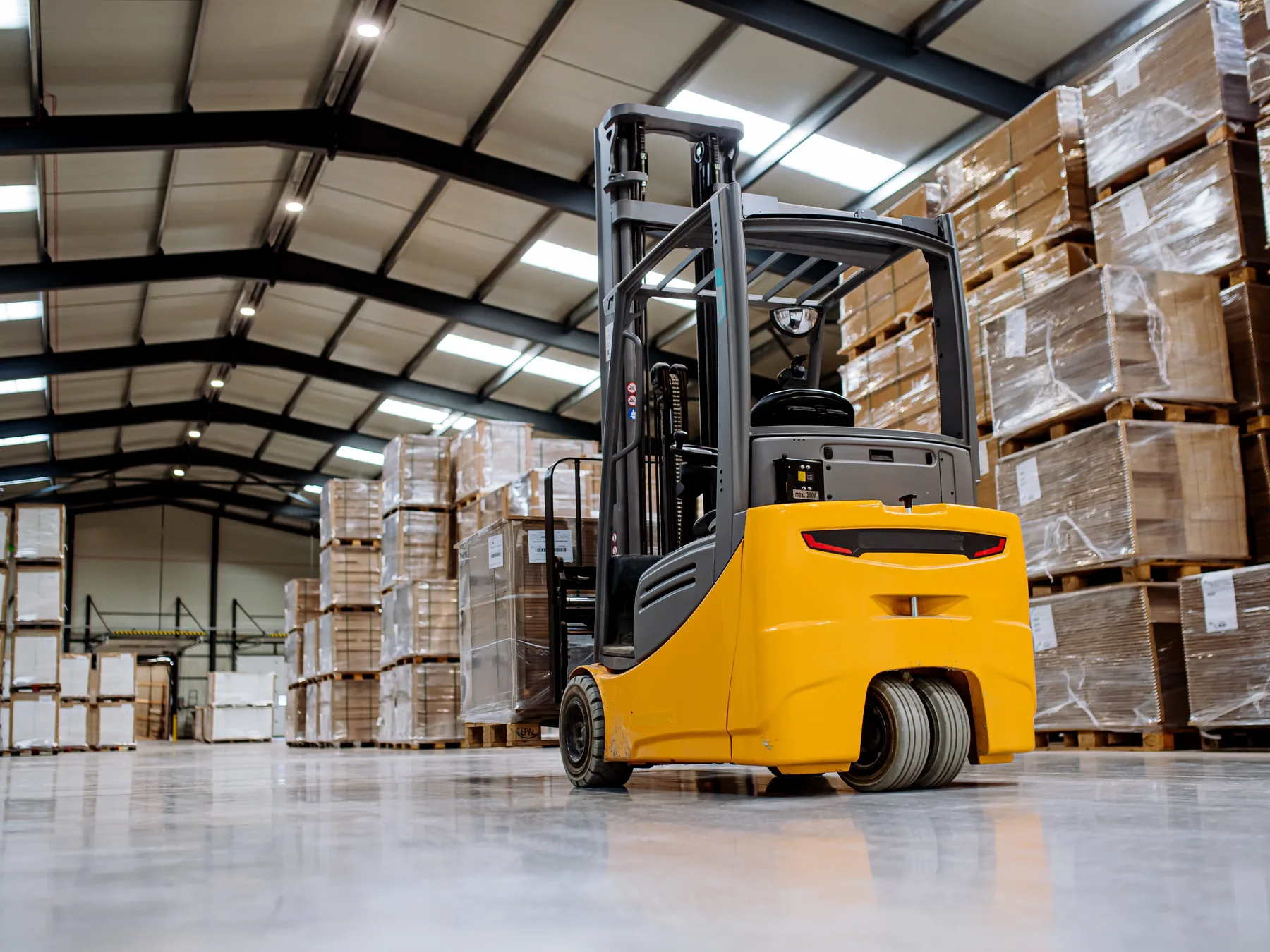
Almost everything expensive about this machine happens to something other than the machine. A load that comes off the forks, or a unit that leans forward as the boom reaches and quietly spends capacity the operator thought was still there, produces claims counted in injured people, ruined material and damaged finishes. Connecticut concentrates that: sites are tight, the work is usually an addition or a conversion rather than open ground, and the structure being reached into is frequently occupied and already paid for. The ground contributes too — a coastal state with a real freeze cycle moves the fill under an outrigger between one visit and the next, and the hill towns rarely offer a pad that is level without help.
Common Connecticut forklift claims we see
- Bundle released at height. The material and whatever it lands on set the number, and the telehandler is usually back at work the next morning.
- Forward lean with the boom extended. Reach eats capacity, and the load chart is the document nobody consults twice.
- Worker struck on the ground. A liability and workers compensation event, and the outcome that decides a bad year on this class.
- Contact with an occupied face during placement. Glazing, brick and finished trim on a live building are the most common third-party damage here.
- Outrigger settling into fill. Redevelopment ground in this state is frequently made ground, and made ground is not uniform.
Why Connecticut forklift owners choose Equipment Guard Insurance
Plenty of brokers quote this machine as a small version of something bigger and leave it there. We would rather say plainly that the floater is the inexpensive half of the account: what turns a Connecticut telehandler into a serious year is the person under the load and the finished work it touched, and both of those live outside the equipment policy. Writing the equipment line monoline lets the machine and its attachments be scheduled properly without reopening anything else you have arranged, and we place through markets — named on our homepage — that read a jobsite lifting exposure as jobsite work rather than as indoor equipment with bigger tires bolted on.
Major Connecticut forklift markets
- Bridgeport. Waterfront and brownfield redevelopment, where loads are set on made ground beside structures still in use.
- New Haven. Hospital and campus expansion on constrained blocks, with lifting staged over live pedestrian routes.
- Stamford. Office and residential conversion work where a boom reaches into a face that is already glazed and finished.
- Norwalk. Transit-corridor infill on narrow parcels, with deliveries staged tight and no room to reposition.
- Waterbury and New Britain. Older industrial districts with plant maintenance lifting inside working yards.
- Danbury. Hilly commercial and light industrial ground, where a level pad is something a crew has to build rather than find.
Related
- Forklift insurance — the machine physics that hold in every state.
- Excavator insurance in Connecticut — the machine whose state duty starts before the bucket moves, through one statewide dig-notice clearinghouse.
- All equipment insurance in Connecticut — the state hub.
- Equipment floater · Rented & leased equipment
Primary sources
- State Plans — Occupational Safety and Health Administration (operator safety)
- What Other License or Registration Does My Contractor Need? — CT Department of Consumer Protection — Connecticut Department of Consumer Protection (DCP) (contractor licensing)
Connecticut forklift insurance FAQs
Does the Connecticut state safety plan cover my forklift operators?
No, and this is the fact most often stated backwards. Connecticut does hold an approved State Plan, but its jurisdiction is limited to state and local government employees. A private equipment contractor and every operator on that payroll sit under federal OSHA, so the powered-industrial-truck training and evaluation duties reach you as the federal standard rather than through anything Connecticut administers. The plan is real; it is simply not yours.
Then who actually shows up after an incident on a Connecticut jobsite?
A federal compliance officer. Because the state program does not extend to private employers, there is no Connecticut safety agency in the chain at all — the inspection is federal, the citation is federal, and any contest runs through the federal review process. Owners who moved a crew here from a full state-plan state spend the first hour of a bad day calling the wrong office.
We do a lot of town and school work. Does that split matter on a public site?
It shows up plainly there. On a municipal project the town’s own employees are inside the state program while your operators are under the federal standard, so two crews can be working the same slab on the same afternoon answering to different authorities. Nothing about that is a loophole for either side, but it does mean a site-wide safety expectation set by the owner is not the same thing as the rule that binds you, and the documentation each side has to produce is filed in different places.
Is a telehandler on a Connecticut site judged like a lift truck on a flat floor?
The qualification duty reaches both machines, and almost nothing else carries across. A rough-terrain unit sets loads on grade, on fill and on ground that a wet week changes, and it delivers material into a structure at reach rather than onto a level surface. In a state where redevelopment usually means working beside something occupied, the part of the training that concerns this specific machine on this specific site is the part that matters, and it is also the part most often waved through.
What is the exposure that decides a bad year on this machine?
The people and the property around it, not the unit. A telehandler that drops a bundle or leans forward as the boom extends usually goes back to work after an inspection, while the material, the finished face it was reaching into and the worker standing below carry the loss. Those sit in liability and workers compensation. Scheduling the iron and stopping there insures the cheapest part of the problem.
Can you place the machine without disturbing the rest of my program?
Yes. Equipment Guard Insurance writes equipment monoline in Connecticut, so the telehandler and its attachments go on a schedule of their own. Given that the safety authority here is federal while your state registration is a consumer-protection matter, we would rather map who owns which half of an incident with you now than sort it out during one.