
A telehandler is a delivery machine with a boom. It takes material off a truck at the edge of a Delaware site and puts it where the trade that ordered it is standing, twenty or thirty times a day, and it does this so reliably that nobody thinks of it as the piece of equipment most likely to injure someone.
What makes this state different is not a rule — Delaware has no safety rule of its own to offer. It is the geography. This is a small state with busy borders, and the authority governing your operator can change between Monday and Thursday without anything about your business changing at all. For the machine itself, in every state — capacity against reach, the load chart, ground bearing, attachments — start at the forklift insurance pillar.
What forklift insurance costs in Delaware
No honest figure can be printed here, and the reason is structural rather than evasive: what is being priced is a group of people and a set of sites, not a machine. In Delaware the variables that move a quote are the number of qualified operators and the quality of the evaluation record behind them, whether the unit is a fixed-mast truck or a telescopic machine placing loads at reach, how much of the work is out of state and therefore under a different authority, the attachments on the carriage, where the machine is stored, and a loss record read for injuries first. The value of the iron barely moves the answer.
Delaware forklift regulations: who enforces operator safety
Delaware is under federal OSHA for private-sector employers, so the powered-industrial-truck operator training and evaluation requirements are the federal standard applied directly.
Two consequences follow, and the second one is the reason this page exists. The first is the plain absence: there is no Delaware occupational safety authority, and the nearest thing the state has to a universal contractor credential is a business license issued by the Division of Revenue — a registration that establishes you exist and pay, not that you are competent or safe. Specialty trades are licensed separately; general contracting is not licensed for skill at all. The second consequence is that this state is too small for the question to stay answered. Our verified data records Maryland as running its own approved plan covering private-sector employers, which means a Delaware operator on a Maryland job that afternoon has moved into a state program, with a state inspector and a state citation behind it. New Jersey looks like the same story and is not: it operates an approved plan that reaches only state and local government employees, so a private crew working there stays under federal OSHA. A contractor who hears “that state runs its own plan” and stops listening has just drawn the wrong conclusion twice in one week. The obligations do not travel with the truck; they sit with the address, and knowing which is which is the whole of compliance on this class here.
Common forklift risks in Delaware
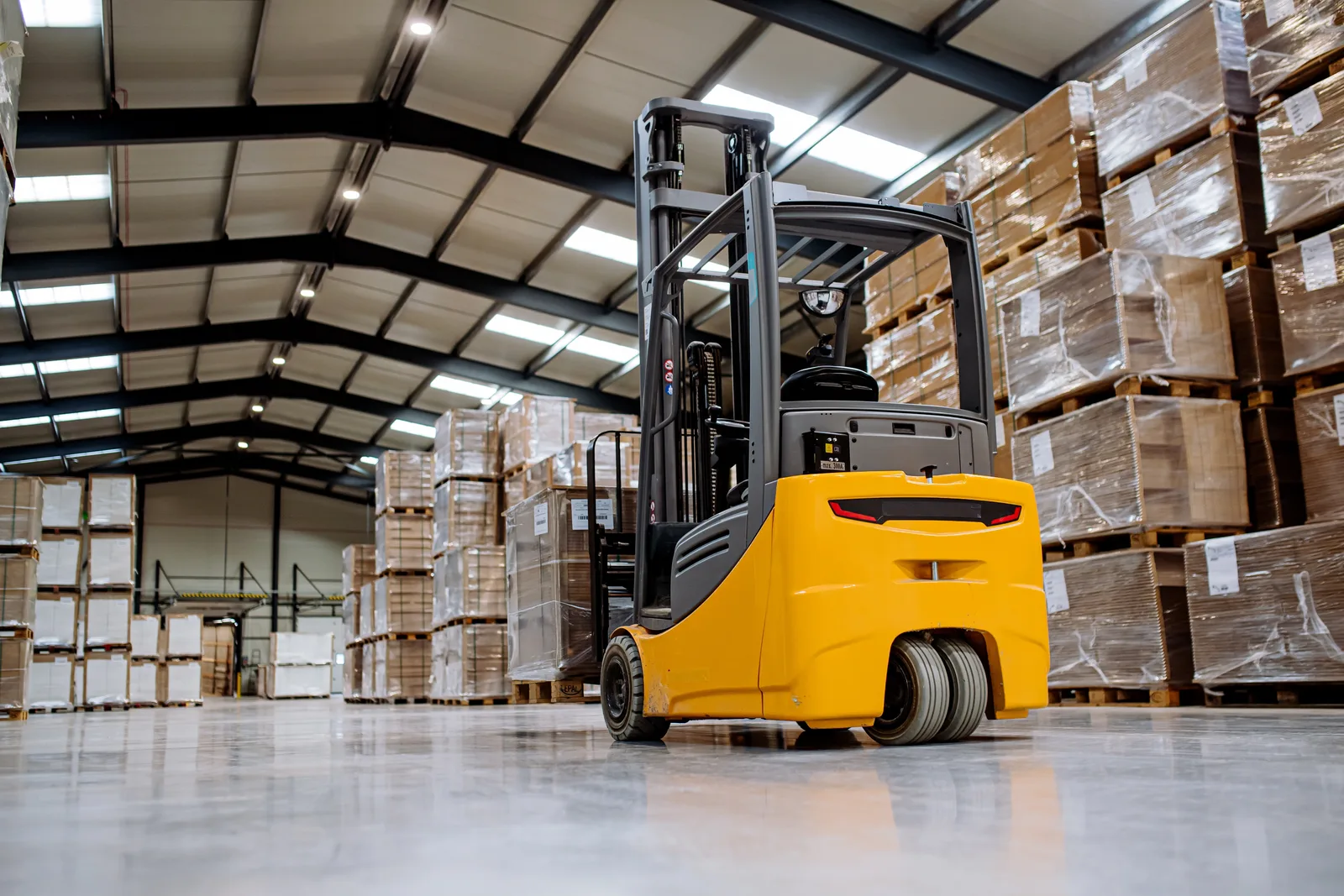
What this machine damages is rarely itself. A dropped bundle or a settled wheel usually costs an inspection and some hydraulic work, while the material, the structure and the person underneath supply the claim. The mechanics repeat everywhere: capacity falls away as the boom extends, so a lift that was well inside the chart at the machine is marginal at reach, and the ground beneath an outrigger is almost never what a load chart assumes. Delaware sharpens the second half. Coastal-plain sand and silt over a shallow water table looks like ideal setup ground — flat, drained, uniform — and behaves very differently once a point load goes through it after a wet stretch. Add the corridor traffic, which puts a lot of this work on constrained sites hard against roads and occupied buildings, and the boom spends more of its life over something that belongs to somebody else.
Common Delaware forklift claims we see
- Load dropped over a public frontage. Corridor and infill sites put the swing path across a sidewalk, a lane or a neighboring property.
- Forward tip at extended reach. The capacity curve doing what it does, on a lift that was legitimate before the boom went out.
- Struck-by injury to a worker on foot. The severe outcome, investigated federally with no Delaware agency involved at any stage.
- Outrigger into saturated coastal-plain ground. Flat and firm-looking is not the same as compacted, and the water table here is close.
- Damage to installed work during placement. Reaching into a finished opening is reaching into value that is already paid for.
Why Delaware forklift owners choose Equipment Guard Insurance
The floater is the cheap half of this account and we will say so before you ask. What decides a bad year on a telehandler is the operator and the person standing under the load, and those sit in liability and workers compensation rather than on the equipment schedule. For a Delaware contractor the added complication is that the same crew works under different authorities in the same month, and the boundary between what the equipment policy answers for and what it does not is worth drawing before anyone needs it. We write the machine monoline so it can be scheduled properly without reopening anything else, and we place through markets — named on our homepage — that read a jobsite lifting exposure rather than filing it under general equipment.
Major Delaware forklift markets
- Wilmington. Dense urban redevelopment where a boom regularly works above a street or against an occupied building wall.
- Newark. University and laboratory campus construction, with access controlled by the institution rather than by any state authority.
- Middletown. Fast southern New Castle County growth on newly graded ground that has not had a season to settle.
- Bear. Commercial and light-industrial corridor work with tight lay-down areas and constant material movement.
- Dover. Capital-city institutional projects where a managing contractor sets the qualification requirements at the gate.
- Smyrna. Kent County corridor building with long travel between jobs and machines that stay on site between them.
Related
- Forklift insurance — the machine physics that hold in every state.
- Excavator insurance in Delaware — the one machine on this site whose state obligations really are written down in Delaware law.
- All equipment insurance in Delaware — the state hub.
- Equipment floater · Rented & leased equipment
Primary sources
- State Plans — Occupational Safety and Health Administration (operator safety)
- Delaware Code Title 30, Chapter 25 — Contractors' License Requirements and Taxes, §2502 License requirement — Delaware Division of Revenue (contractor licensing)
Delaware forklift insurance FAQs
Who enforces forklift safety on a Delaware jobsite?
Federal OSHA. Delaware operates no approved plan covering private-sector employers, so the operator training and evaluation obligations arrive as the federal standard with nothing between them and your crew, and any inspection or citation is federal. There is no state safety office to notify, to appeal to, or to build a relationship with.
Does the state regulate contractors in any way?
It registers them, which is not the same thing. There is no statewide skill-based general-contractor license here; what every contractor needs is a state contractor business license issued by the Division of Revenue, with specialty trades such as electricians and plumbers licensed separately. The universal credential in this state is administered by a revenue authority, so what Delaware verifies about you is fiscal rather than occupational.
Why does the size of the state matter to this machine?
Because a working week routinely crosses out of it. Delaware is compact enough that a crew and a telehandler can be on three states’ jobs inside a few days, and the enforcement identity is not the same in all three. Our data layer records Maryland as running its own approved plan reaching private-sector employers — so a Delaware operator working a Maryland site is under a state program, not the federal one they left behind that morning.
What about New Jersey — does its state plan cover my crew?
No, and this is the mistake worth naming. New Jersey does operate an approved plan, but it covers only state and local government employees. A private equipment contractor working there is under federal OSHA, exactly as in Delaware. Hearing that a neighboring state runs its own plan and concluding that it governs your operators is the single most common error in this region, and it points in the wrong direction on both counts.
What does Delaware ground do to a telehandler?
It offers less than it appears to. This is coastal-plain country — sand and silt over a water table that sits close to the surface, on land flat enough that water leaves slowly. Ground that looks firm and level, which is exactly the condition a load chart assumes, can be the ground that gives up under an outrigger once the machine puts a point load through it. The flatness is not the reassurance it looks like.
Can the machine be scheduled without a package?
Yes. Equipment Guard Insurance writes equipment monoline in Delaware, so the telehandler and its attachments go on a schedule of their own. Where a crew works across state lines routinely, we would rather map which authority applies where before a loss than reconstruct it afterward.