
Ask a foreman which machine on an Indiana site is the dangerous one and almost nobody says the telehandler. It carries material rather than digging or demolishing, it moves at walking pace, and it spends most of the day doing something that looks routine — until the day the load ends up somewhere that was not part of the plan.
What is genuinely Indiana about this machine is a structural oddity in how the state divides authority. Operator safety is centralized and state-run; nearly everything else about a construction job is decided locally. For the physics that do not care where you are — the load chart, what reach costs in capacity, the forward-tip pattern and how attachments change all of it — see the forklift insurance pillar.
What forklift insurance costs in Indiana
There is no rate to publish for this class and any figure you find elsewhere is a guess wearing a decimal point. What genuinely moves an Indiana quote is the number of people qualified to run the machine and how convincingly that qualification is evidenced, whether the unit is a fixed-mast truck or a telescopic machine placing loads out at reach, the mix of jurisdictions the crew works and therefore how much of the job is unfamiliar ground, the attachment schedule, where the machine is kept between jobs, and your own record. The value of the iron is close to the least important variable in that list.
Indiana forklift regulations: who enforces operator safety
Indiana operates its own OSHA-approved State Plan covering private-sector employers, so powered-industrial-truck operator training, evaluation and enforcement run through the state program rather than federal OSHA directly.
The instinct is to hear that and relax, on the theory that a state agency will understand a local contractor better than a federal one would. It is worth resisting. An approved state plan is required to be at least as effective as the federal standard it replaces, so nothing in the operator training, machine-specific evaluation or refresher obligations gets easier — the state simply owns them. What is genuinely distinctive here is the contrast with everything sitting beside it. Indiana imposes no statewide general-contractor license; that authority lives with cities and counties, each with its own rules, and only a small number of trades are licensed at the state level at all. So a crew running one telehandler carries a single uniform safety obligation that follows the machine everywhere in the state, wrapped in a permitting and inspection layer that changes with the job address. Owners get caught out in both directions — assuming the safety rule is as local as the permit, or assuming the permit is as statewide as the safety rule. Sorting which is which before the machine rolls is cheaper than sorting it during an investigation.
Common forklift risks in Indiana
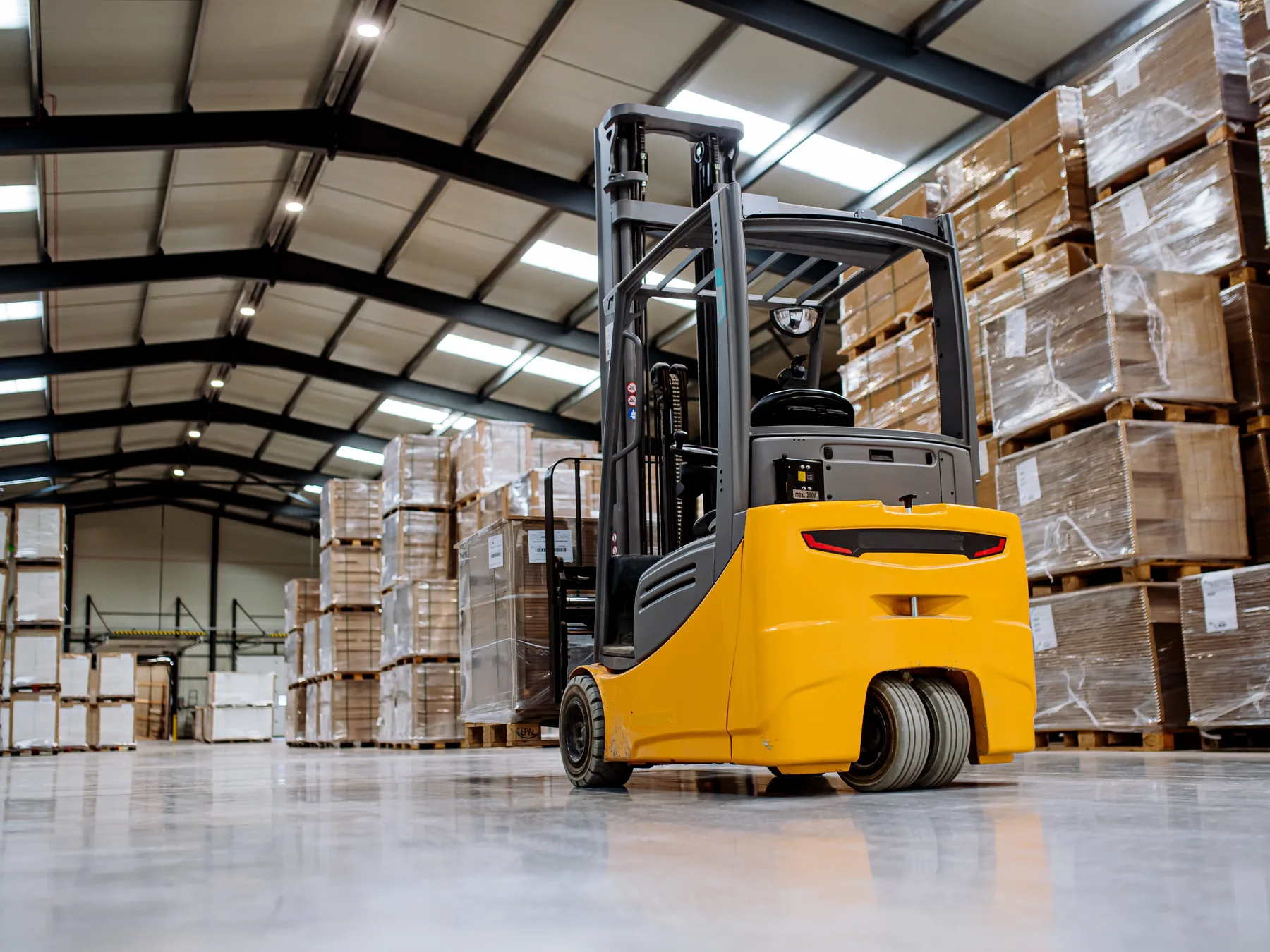
The damage here lands on people and on material, and only incidentally on the machine. A telehandler that sets a load down badly is usually back at work the same afternoon; the framing package that fell, the wall it fell against and the laborer who was under it are what fills the file. The mechanics behind it barely vary — capacity drops away as the boom extends, so a lift that was well inside the chart at the machine becomes marginal at full reach, and the surface the outriggers found was graded fill rather than anything engineered. Indiana adds two things of its own. Much of what gets built here is large-footprint and low, which means long travel across a site with a load up rather than short lifts to height, and that is where struck-by and material-in-transit losses come from. And the freeze and thaw that runs through the winter keeps changing what a pad will hold from one week to the next.
Common Indiana forklift claims we see
- Load lost while traveling across a site. The signature Indiana claim on a long, flat build — the lift was fine, the trip across the pad was not.
- Forward tip at extended reach. The chart in the cab is correct and was consulted before the boom went out, not after.
- Struck-by injury to a worker on foot. The costliest outcome this machine produces, and the one that brings the state safety program to the site.
- Wheel or outrigger through unengineered fill. Graded ground that has not been compacted for a point load, made worse by a thaw.
- Damage to installed work during placement. Reaching into a structure that is already finished puts the boom where the completed value is.
Why Indiana forklift owners choose Equipment Guard Insurance
We live here, which is worth exactly as much as the work behind it and no more — but it does mean the state safety program is something we deal with continuously rather than read about. The honest position on this machine is that the floater is the cheap part of the account: what decides a bad year is the operator and the person standing under the load, and both of those sit in liability and workers compensation rather than on the equipment schedule. Writing equipment monoline lets us put the machine and its attachments on a proper schedule without reopening anything else you have arranged, and we place through markets — named on our homepage — that will underwrite a jobsite lifting exposure as its own class rather than as a smaller loader.
Major Indiana forklift markets
- Indianapolis. The deepest concentration of commercial build-out in the state, with infill sites where a boom works close to occupied buildings and public frontage.
- Carmel. High-value suburban commercial and multi-family work where damage to installed finishes drives claim severity more than machine damage does.
- Fort Wayne. Industrial and plant expansion with lifting done around production that stays running through the job.
- South Bend. Campus and institutional projects where documented operator evaluation is checked before a machine is let onto the property.
- Evansville. River-corridor industrial and heavy maintenance lifting, with older structures taking loads they were not designed around.
- Gary. Heavy industrial and demolition-adjacent site work in tight yards, where the ground is as likely to be slag and fill as soil.
Related
- Forklift insurance — the machine physics that hold in every state.
- Excavator insurance in Indiana — the machine whose obligations start before the bucket moves rather than after the load is up.
- All equipment insurance in Indiana — the state hub.
- Equipment floater · Rented & leased equipment
Primary sources
- State Plans — Occupational Safety and Health Administration (operator safety)
Indiana forklift insurance FAQs
Who answers a forklift complaint on an Indiana site?
The state. Indiana runs an approved occupational safety program that reaches private-sector employers, so the compliance officer, the citation and the appeal path all sit inside the state system rather than the federal one. A contractor who has only ever worked federal-posture jobs is often surprised to find the state, and not a federal office, on the other end of the phone.
Is a state-run program a friendlier program for a local contractor?
That is the assumption worth correcting before it costs something. An approved state plan has to be at least as effective as the federal baseline, so there is no relief hiding in it — operator training, evaluation on the specific machine, and refresher requirements all still apply with full force. The difference is who administers them, not how demanding they are.
Why does this page keep contrasting safety with licensing?
Because in Indiana the two point in opposite directions, and that is the practical shape of the job. There is no statewide general-contractor license here; municipalities and counties each set their own rules, and the state licenses relatively few trades directly. So the crew running a telehandler carries one uniform statewide safety obligation and a stack of local requirements that change from one job address to the next.
Does that patchwork actually reach the machine?
It reaches the paperwork around the machine, which is the same thing by the time a claim is open. A telehandler that works three jurisdictions in a month is subject to three permitting regimes, three inspection cultures and three sets of local expectations about barricading, sidewalk closure and overhead work — while the operator qualification file behind it stays constant. Knowing which obligations travel with the machine and which stay with the address is most of managing this exposure.
What kind of lifting drives Indiana claims on this class?
Long-span, low-rise construction more than tall work. A great deal of what gets built here is single-story with a big footprint, which means a telehandler spends its day walking material a long way across a site and placing it into a structure at moderate height rather than reaching high. That profile trades the dramatic tip-over for a steadier diet of struck-by exposure, ground-condition failures on unfinished pads, and damage to material in transit across the site.
Can you insure the telehandler without moving the rest of my program?
Yes, and this is the state where we do it most. Equipment Guard Insurance is based in Indiana and writes equipment monoline, so the machine and its attachments can be scheduled on their own while the liability and workers compensation arrangements you already have stay where they are.