
Of every machine on an Iowa site, the reach machine is the one people trust most and think about least. It sets panels on a grain facility, walks steel to the far side of a pad, keeps a masonry crew fed all day, and asks for no attention at all until the afternoon it puts a load down badly.
The Iowa fact worth knowing is about ownership of the problem. This state runs its own approved safety program rather than leaving private employers to a federal agency, so the identity of everyone in the chain after an incident is different from what a crew working a state or two over would experience. For the behavior of the machine itself — capacity at reach, load charts, ground bearing, the forward-tip pattern — start at the forklift insurance pillar.
What forklift insurance costs in Iowa
Publishing a rate for this class would be dishonest, because the rating follows operators and records rather than the unit on the schedule. The inputs that move it in Iowa are how many people run the machine and whether each has an evaluation documented against that specific model, whether you are placing at height on open ground or working inside a plant, how much of the year the machine is idle, where it sits through the winter, and your own loss history. Two identical telehandlers with different operator files are not the same submission, and the difference is bigger than anything the value line contributes.
Iowa forklift regulations: who enforces operator safety
Iowa operates its own OSHA-approved State Plan covering private-sector employers, so powered-industrial-truck operator training, evaluation and enforcement run through the state program rather than federal OSHA directly.
The consequence is administrative rather than substantive, and being precise about it saves arguments later. A state program is required to be at least as effective as the federal one, so nobody should read this as a lighter touch on operator qualification — training, evaluation on the specific machine and refreshers all still apply, and an inspector will ask for the records before asking about the machine. What changes is whose name is on everything: a state inspector attends, a state citation issues, a state appeal route applies, and a contractor working across the western or southern boundary is answering to two different agencies for one machine doing one job. Iowa also puts a second state-side obligation on the same contractor. There is no competency license here, but construction businesses above a statutory annual threshold register and bond through the state labor division, which is an administrative filing rather than an exam. The effect is that both your permission to operate and your safety enforcement sit with the same government — a genuinely different posture from a federal-enforcement state, where those two things belong to authorities that have no reason to speak to each other.
Common forklift risks in Iowa
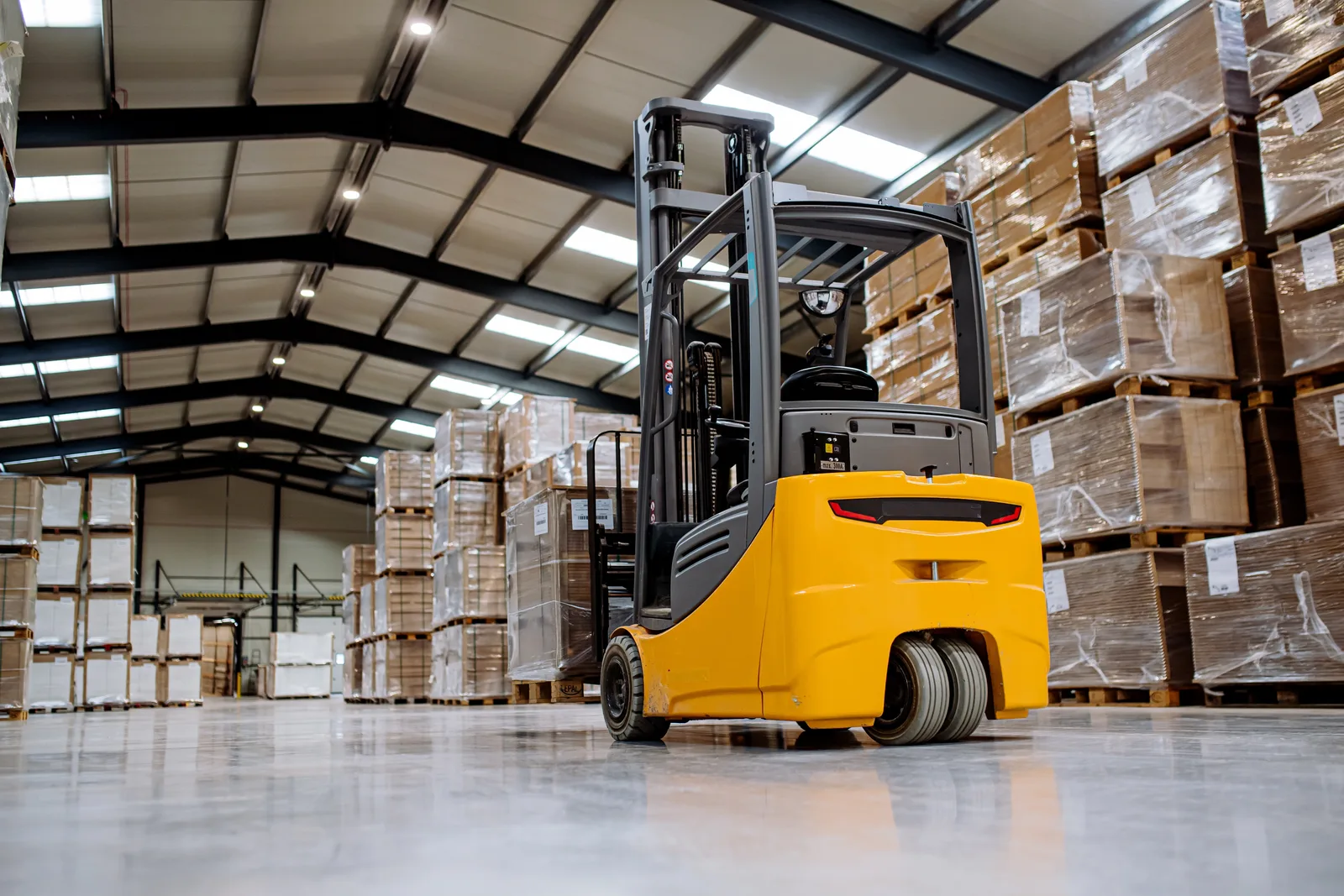
The claims on this machine are about people and material, not about the machine. A load released at height, or a unit that leans as extension quietly spends the capacity it began with, injures whoever was below and destroys whatever was being carried, while the telehandler itself is usually back at work within days. Iowa adds two conditions of its own. Frost lifts and thaw drops the ground a rough-terrain unit sets up on, so bearing is a seasonal variable rather than a fixed one. And this is a state with a real record of severe straight-line wind, which is the single worst thing that can arrive while a boom is extended on open ground with a panel on the forks.
Common Iowa forklift claims we see
- Panel or steel released during a tall placement. The material and the partly built structure carry the loss, and the machine takes an inspection.
- Lean past the chart at full extension. Capacity falls away with reach and the chart is the document least often reread.
- Injury to a worker under the load path. The largest single outcome on this class, and the equipment schedule answers for none of it.
- Bearing failure on thawing or recently worked ground. A seasonal certainty in this state, not an unlucky one.
- Wind catching a load on an open pad. A distinctly Iowa version of the same event, and the one that gives an operator least warning.
Why Iowa forklift owners choose Equipment Guard Insurance
A lot of brokers treat a telehandler as a bigger version of something small and stop at the floater. We would rather say plainly that the floater is the inexpensive half. The exposure that decides a bad year is the person under the load and the structure the load was going into, which lives in liability and injury coverage, not on an equipment schedule. In a state that runs its own program the good news is that the file which satisfies an inspector is largely the file that defends a claim. We write equipment monoline so the machine can be scheduled properly on its own, and we place through markets — named on our homepage — that read a jobsite lifting exposure for what it is.
Major Iowa forklift markets
- Des Moines. The steadiest commercial and institutional lifting in the state, with placements made close to occupied buildings on constrained downtown sites.
- Cedar Rapids. Food and grain processing plants where reach machines work around production that cannot be shut down, and a market that learned what wind does to a site.
- Davenport. River-corridor industrial work at the eastern boundary, where crews cross into another enforcement regime as ordinary routine.
- Sioux City. Agricultural processing and tall facility construction with the longest travel legs in the state and the least support nearby.
- Iowa City. Medical and campus expansion where documented operator evaluation is checked before a machine is let inside the fence.
- Waterloo and Council Bluffs. Manufacturing plant lifting and large-footprint site development at opposite ends of the state, both running machines long hours.
Related
- Forklift insurance — the machine physics that hold in every state.
- Dozer insurance in Iowa — the machine whose obligations belong to an environmental agency rather than a safety one.
- All equipment insurance in Iowa — the state hub.
- Equipment floater · Rented & leased equipment
Primary sources
- State Plans — Occupational Safety and Health Administration (operator safety)
Iowa forklift insurance FAQs
Who inspects a forklift incident on an Iowa jobsite?
The state does. Iowa operates its own approved occupational safety program covering private-sector employers, so the person who arrives after a serious lift goes wrong is a state employee, the citation is issued by the state, and the appeal runs through a state process. A contractor whose work crosses into a federal-enforcement state deals with a different agency for the same machine on the same kind of job.
Does running a state program mean Iowa is easier on operator rules?
No, and it is worth killing that assumption early. An approved state program has to be at least as effective as the federal one, so the substance of operator training, evaluation on the specific machine, and refresher intervals is not a place to look for relief. What genuinely differs is who administers it — the office, the timelines, the contacts and the appeal route are all Iowa rather than federal.
Does the state already have a file on my business before an incident?
Usually yes. Iowa does not issue a general-contractor competency license, but it does require construction businesses above a statutory annual threshold to register and bond through the state labor division. That is an administrative registration rather than an exam, and it means both your right to operate and your safety enforcement sit with the same government. In a federal-enforcement state those two things belong to different authorities entirely.
What kind of lifting actually drives Iowa claims?
Agricultural and plant work more than commercial building. Telehandlers here set steel and panels on grain and processing facilities, feed masons on institutional projects, and stage components on energy sites where the nearest support is a long way off. Those are tall placements on open ground with wind across them, which is a different problem from lifting on an enclosed urban lot.
How much does Iowa weather change the underwriting?
Enough that it shows up in two separate places. Frost and thaw move the surface a rough-terrain machine sets up on, so bearing that was solid before a freeze is unreliable after one, and the building season compresses lifting into fewer months with more machines and more temporary operators. Then there is wind: severe straight-line events are a real part of this state’s record, and an extended boom is the least forgiving thing on a site when one arrives.
Can you write the machine on its own?
Yes. Equipment Guard Insurance places equipment monoline in Iowa, so the telehandler and its attachments go on their own schedule without touching anything else. The operator and public-injury side is a separate conversation we will have with you honestly, because in a state-program state the documentation that satisfies an inspector and the documentation that defends a claim are largely the same paperwork.