
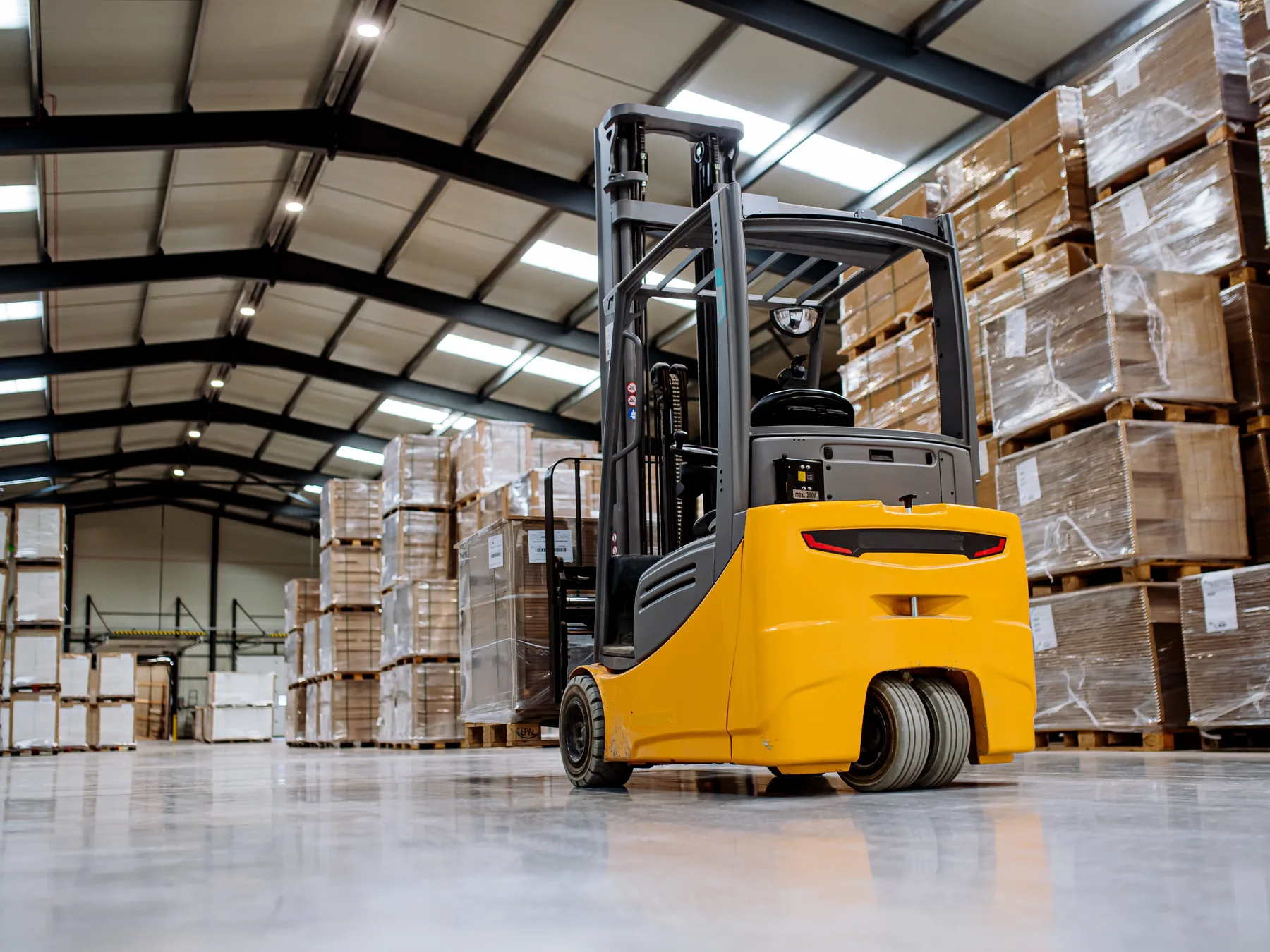
On a Montana site the rough-terrain forklift is often the only piece of equipment that can reach where the material has to go. It lands trusses, sets panels, feeds a crew working out of a trailer, and gets treated as transport rather than as lifting equipment — which is the assumption that eventually costs somebody.
Nothing about the safety rule here is Montana-specific, because Montana has no part in it. What is specific is how little the state asks of a contractor beforehand, and how much distance costs afterward. For the physics that decide whether a pick is sound anywhere — capacity against reach, boom geometry, what the ground has to carry — start with the forklift insurance pillar.
What forklift insurance costs in Montana
Nobody can name a figure for this class from a page and be telling the truth, because the rating conversation is about people, records and geography rather than about the machine. In Montana the inputs are the operator roster and how specific each evaluation is to the actual unit, the mix of fixed-mast trucks and telehandlers working at reach, how far the work sits from a service center and how long a machine would be out if it stopped, whether the unit winters on a site or in a yard, and the losses already recorded. What the telehandler would cost to replace is the least of it.
Montana forklift regulations: who enforces operator safety
Montana is under federal OSHA for private-sector employers, so the powered-industrial-truck operator training and evaluation requirements are the federal standard applied directly.
The interesting content of that sentence is what it leaves empty. There is no Montana safety agency in the chain — no state inspector, no state citation, no state appeal — and a contractor arriving from a state-plan jurisdiction should stop searching for one. Nor does this state test anybody’s competence to run the equipment. Montana has no general-contractor competency license at all: a contractor with employees registers with the Department of Labor and Industry through a Construction Contractor Registration, and an independent contractor may hold an exemption certificate instead. Both are workers-compensation-based instruments, with no examination and no skills assessment behind either of them. Follow that through and the position is unusually clear. The one thing this state checks before somebody may hold themselves out as a contractor is whether an injured worker is covered — which is precisely the outcome a rough-terrain forklift is most capable of producing. Nobody has verified competence at any stage, so the operator evaluation file a contractor keeps is not merely the best evidence available; on a Montana job it is the only evidence that exists, and it is the first document a federal compliance officer asks to see.
Common forklift risks in Montana
Wind and remoteness are what set this state apart on this machine. A load at full extension presents a surface to the weather, and open country gives an operator no warning and no shelter when a gust arrives mid-pick; the correction — retract, set down, wait — costs time that a short working year makes expensive. Distance compounds everything that follows. A telehandler that stops working four hours from a dealer holds up the whole crew, the parts and the technician both have to travel, and an adjuster is not going to be on site that afternoon. Then the seasons do their part, with hard freeze giving way to a thaw that takes the support out from under a pad that has been dependable for months.
Common Montana forklift claims we see
- Load taken by wind at full reach. The characteristic Montana loss, and it starts after the pick is already committed.
- Worker injured beneath a raised load. Workers compensation and liability, and the exact outcome the state’s only registration exists to fund.
- Forward tip under extension. Reach spends capacity, and the load chart is the document nobody consults a second time.
- Extended downtime on a remote site. The repair is minor and the schedule loss is not, which is a rented-and-leased conversation rather than a floater one.
- Ground giving way during the thaw. A pad that carried the machine all winter stops carrying it without any visible change.
Why Montana forklift owners choose Equipment Guard Insurance
Plenty of brokers will rate this machine off a value and a class code. We would rather start from what actually goes wrong: the telehandler survives most of its own accidents, and what does not survive is the person underneath, the material it was carrying and the structure it reached into. In a state whose only contractor gate is an injury-coverage registration, being clear about where the equipment policy ends and where the liability and work-comp side begins is worth real money. We write the equipment line monoline so the unit and every attachment are scheduled properly without touching anything else, and the markets we place through — named on our homepage — understand remote-site lifting rather than treating a telehandler as indoor equipment that took a long drive.
Major Montana forklift markets
- Billings. The largest industrial market in the state, with refinery and plant lifting staged inside facilities that stay running.
- Bozeman. The fastest growth Montana has, and the most repetitive picking, on parcels being built out from raw ground.
- Missoula. Valley infill and campus projects on constrained river-corridor sites with limited approach for a machine.
- Great Falls. Agricultural and institutional building on high plains where wind is a daily operating factor rather than an event.
- Kalispell. Northwest resort and residential work with long winters and jobs well away from any service center.
- Butte and Helena. Mining-adjacent industrial and state institutional projects at elevation, where access roads decide how a unit gets to the pick.
Related
- Forklift insurance — the machine physics that hold in every state.
- Skid Steer insurance in Montana — the compact machine that disappears from a remote yard long before anybody notices it is gone.
- All equipment insurance in Montana — the state hub.
- Equipment floater · Rented & leased equipment
Primary sources
- State Plans — Occupational Safety and Health Administration (operator safety)
Montana forklift insurance FAQs
Does Montana enforce operator safety on private jobsites?
No. There is no approved state plan reaching private-sector employers here, so the powered-industrial-truck training and evaluation obligations arrive as the federal standard and the inspector, the citation and any contest are federal. That absence is not a technicality — it means the state offices a Montana contractor deals with regularly have no role whatsoever in what happens after a load comes down.
So what does Montana require of a contractor at all?
Registration built on injury coverage rather than on competence. There is no general-contractor competency license in this state. A contractor with employees obtains a Construction Contractor Registration through the Department of Labor and Industry, and an independent contractor may instead hold an exemption certificate — a workers-compensation-based scheme with no examination and no skills test behind it. The state is asking whether an injured worker is covered, not whether anybody knows how to run the machine.
Why does that matter for a telehandler specifically?
Because it lines up exactly with where this machine does its damage. The worst realistic outcome of a rough-terrain forklift is not a wrecked unit, it is a person hurt underneath a load — and that is the precise thing Montana’s only gate is concerned with. It also means nobody has independently checked operator competence at any point, so the evaluation record a contractor keeps is genuinely the only evidence in existence, and a federal compliance officer will ask for it first.
How much does distance change the exposure?
More than most owners price in. A telehandler that goes down on a site hours from the nearest dealer stops the crew rather than merely costing a repair, and the parts, the technician and the replacement unit all have to travel. That is a rented-and-leased and business-interruption conversation as much as a floater one, and it is a substantially different problem from the same breakdown in a dense market.
What Montana conditions actually cause losses on this machine?
Wind and season, mostly. A load held out at reach becomes a sail, and open ground here offers very little shelter from a gust that arrives after the pick has started. The working year is short enough that a great deal gets attempted in marginal weather at the ends of it, and the ground moves hard between a deep freeze and a spring thaw. What breaks is rarely the telehandler — it is the material, the structure and the person nearby.
Can you schedule the machine on its own?
Yes. Equipment Guard Insurance writes equipment monoline in Montana, so the telehandler and its attachments are listed by serial number without disturbing anything else you carry. Given that the state gate here is a coverage registration and the safety authority is federal, we will want to be specific with you about which policy answers for the machine, which answers for the worker, and which answers for the downtime.