
The telehandler is the machine that makes a small crew look bigger than it is. One operator sets what four people would otherwise carry, all day, without anyone treating the lift as an event — and the habit of not treating it as an event is exactly what the bad one relies on.
The Nebraska question is not what the rule says but who is holding it. This state keeps a register of contractors and no authority over their forklift operators, and the distance between those two facts is wider than it looks from an office. For the mechanics that hold everywhere — rated capacity against reach, boom geometry, ground bearing, the forward-tip pattern — see the forklift insurance pillar.
What forklift insurance costs in Nebraska
Publishing a premium for this class would be dishonest, because the rating conversation is about people and evidence rather than about the machine. What moves it here is the number of qualified operators and whether each evaluation is written against the specific unit, whether you run a fixed-mast truck or a telehandler placing at extension, how exposed your typical site is to wind, the distances the unit trailers between jobs, where it overwinters, and your loss experience. What the machine cost is close to the least significant input on the list.
Nebraska forklift regulations: who enforces operator safety
Nebraska is under federal OSHA for private-sector employers, so the powered-industrial-truck operator training and evaluation requirements are the federal standard applied directly.
That absence would be unremarkable except for what sits beside it. Before a contractor may perform work on someone else’s real property in this state, the Contractor Registration Act requires registration with the state Department of Labor — registration, deliberately, and not a competency license: no exam, no classification, no review of how anybody was trained. So a Nebraska contractor has a file with a state labor department, has probably renewed it, and has every reason to assume that the state therefore has some role in workplace safety on the job. It does not have one here. The body that will investigate an incident involving your telehandler is federal, and nothing in the registration connects to it. The practical effect of the gap is that the only people who ever ask to see an operator evaluation are the ones who can hurt you commercially rather than administratively — a general contractor deciding whether to invite you back, a facility owner deciding whether your machine comes through the gate, an adjuster deciding how comfortable a claim is to defend. Registration is a fact about your company. The evaluation record is the only document that is a fact about the lift.
Common forklift risks in Nebraska
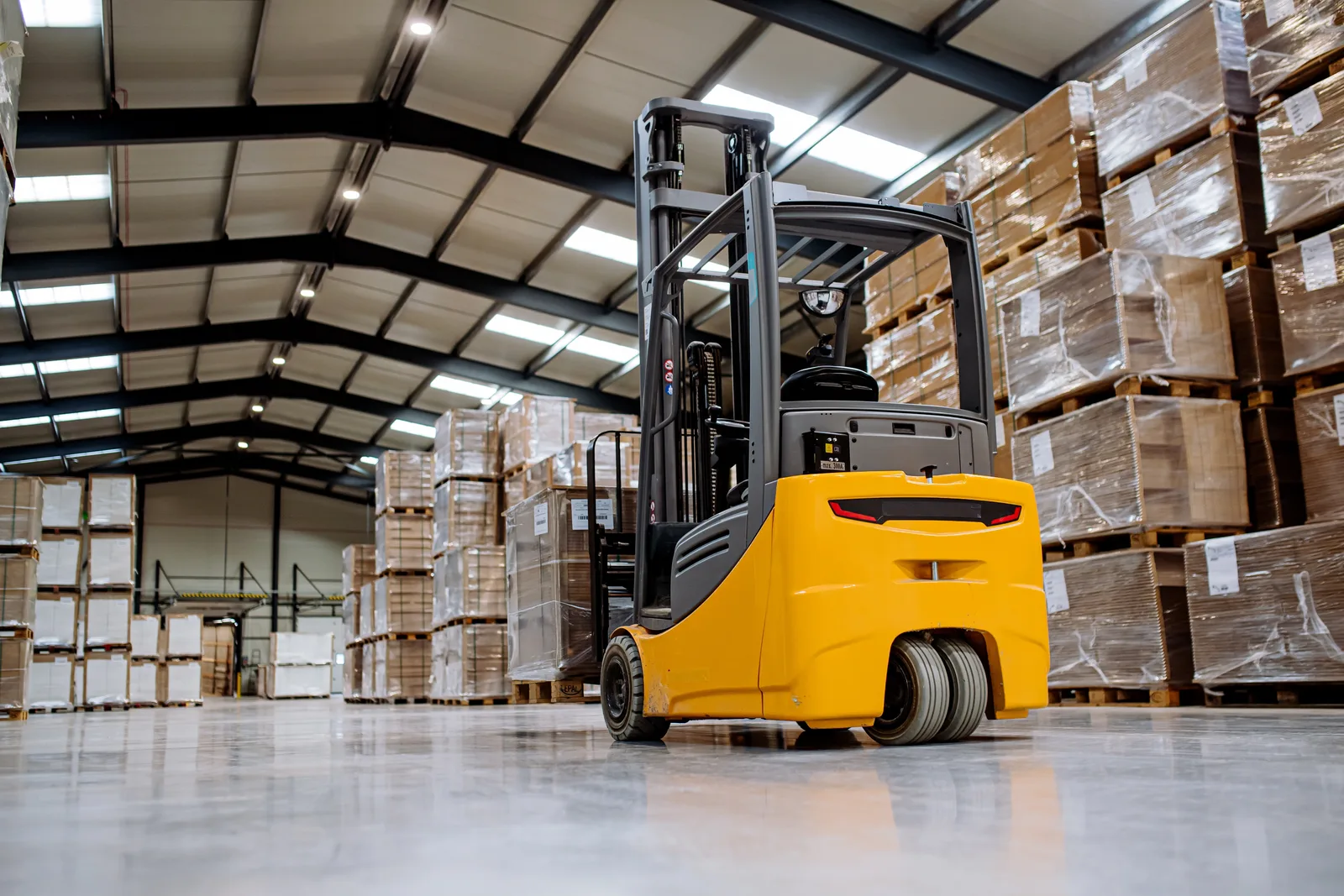
This machine damages people and property long before it damages itself. A tip or a released load typically leaves a unit that can be inspected and returned to work, while the material, the structure and anyone underneath carry the loss. Reach is the constant villain, because rated capacity falls away as the boom extends and the chart is consulted least when the crew is behind. Nebraska adds two of its own: sustained open-country wind that pushes a suspended load the operator has no way to steady, and a deep winter frost that lifts and drops the ground a stabilizer pad was bearing on between one visit to a site and the next.
Common Nebraska forklift claims we see
- Load driven off line by wind at extension. Weight was never the problem; movement at the top of the boom was.
- Material released during placement. The bundle and what it strikes decide the size of the claim.
- Forward tip on a graded agricultural pad. Drainage grade and full reach are a poor combination.
- Struck-by injury on the ground. The worst outcome available on this class, and no equipment policy answers for it.
- Stabilizer settling in heaved or thawing soil. A predictable spring problem across the whole state.
Why Nebraska forklift owners choose Equipment Guard Insurance
Most brokers put this machine on a schedule and stop thinking about it. We would rather say the uncomfortable part out loud: the floater is the cheap half of the account, and the year that goes wrong is decided by an operator and by whoever was standing under the load, which lands in liability and workers compensation. Equipment monoline lets us schedule the unit properly without reopening a program that works, and we place through markets — named on our homepage — that treat lifting on open ground as its own exposure rather than as a small version of something indoors.
Major Nebraska forklift markets
- Omaha. The state’s deepest commercial and institutional build-out, with placements over occupied ground and tight downtown staging.
- Lincoln. Campus, capitol and medical projects where documented operator qualification is checked before admission to the site.
- Bellevue. Federal-adjacent and infrastructure work with formal site rules and controlled access.
- Grand Island. Central-corridor agricultural processing and bin construction, with lifts alongside live operations.
- Kearney. Regional commercial and highway-corridor work with long trailer moves between short jobs.
- North Platte. Rail and western-district industrial work on exposed sites where wind reaches a load first.
Related
- Forklift insurance — the machine physics that hold in every state.
- Excavator insurance in Nebraska — the machine with a statutory clock that starts running two business days before it does.
- All equipment insurance in Nebraska — the state hub.
- Equipment floater · Rented & leased equipment
Primary sources
- State Plans — Occupational Safety and Health Administration (operator safety)
- Contractor Registration — Nebraska Department of Labor (contractor licensing)
Nebraska forklift insurance FAQs
I registered with the state labor department — does that cover safety?
It does not, and the two are worth keeping firmly apart. Nebraska requires every contractor and subcontractor performing work on another party’s real property to register with its Department of Labor, but that is a registration rather than a competency license, and it carries no exam and no safety review. Powered-industrial-truck training and evaluation for a private employer here are federal duties, enforced federally.
So who arrives after a telehandler drops a load on a Nebraska job?
A federal inspector. There is no approved state plan reaching private-sector employers, so the standard, the citation and the appeal are federal, and no state office is a party to any of it. The confusion is understandable given that this state does maintain a labor department a contractor already knows by name — it simply is not the body that shows up.
Does that make the training record less important?
The opposite. The record is the only thing that speaks for you, and its readers here are usually private: the general contractor prequalifying your crew, the plant or facility owner setting site rules, and the adjuster working out how a load came down. Being registered proves you exist. A dated evaluation on the specific machine proves the operator was qualified to be holding it, and only one of those two documents helps after an incident.
What does open-country wind do to a machine at reach?
It makes a suspended load into a sail, which is the risk most transplanted operators underestimate here. A panel or a bundle of sheeting at extension catches a sustained crosswind and starts to move the top of the boom, and there is no shelter on a section-line site to break it. The machine is often rated to lift what it is holding; it is the movement of the load, not the weight, that ends the placement badly.
Is agricultural and grain-facility work different from general construction?
Different enough to matter to an underwriter. Bin, feed and processing work puts a reach machine alongside tall structures, live operations and grade that was built for drainage rather than for standing a load on. It also concentrates into short windows around the growing season, so the same machine goes from idle to running long days quickly, with operators who may not have touched it for weeks.
Can the machine sit on its own policy?
Yes. Equipment Guard Insurance writes equipment monoline in Nebraska, so the telehandler and its attachments go on their own schedule and nothing else has to be reopened. We will be candid about where the operator exposure sits, but that is advice attached to the account rather than a condition of writing it.