
Most of the year a telehandler is the most useful machine on a New Hampshire site and the least discussed. It carries lumber up a slope, sets a beam a crane would be absurd for, feeds a roof crew — and then, on one afternoon, puts a load somewhere the ground underneath was never going to support.
The interesting thing about this state is not the rule but the map of who holds it. Trace every obligation attached to that machine and you keep landing outside New Hampshire government: federal for safety, federal for stormwater, regional for the dig-notice call, municipal for the credential. The machine physics that do not care where you are — reach against capacity, boom geometry, ground bearing — are on the forklift insurance pillar.
What forklift insurance costs in New Hampshire
Publishing a premium for this class would mean inventing one, because what is actually being rated is the crew, the records and the ground. In New Hampshire the inputs that matter are how many operators touch the machine and whether each evaluation is documented on that specific unit, whether the fleet is fixed-mast trucks or telehandlers reaching to height, how much of the work sits on wooded and sloping lots, how many towns you work across in a season, where the machines stand through the winter, and the claims already behind you. What the unit would cost to replace matters far less than any of those.
New Hampshire forklift regulations: who enforces operator safety
New Hampshire is under federal OSHA for private-sector employers, so the powered-industrial-truck operator training and evaluation requirements are the federal standard applied directly.
The absence is worth following through, because it repeats. There is no state safety agency in this chain — investigation, citation and appeal are federal, and nothing about that is escalated or eased at the state level. Then look at the ground itself: New Hampshire is a non-delegated state for construction stormwater, so the permit over disturbed acreage is issued federally too, which is not how most of the country handles it. The credential that lets you take the job is a town matter or a trade-board matter, never a single state license. Even the call before anyone opens the ground goes to a center serving several states rather than to a New Hampshire office. Four obligations, four different governments, and the state is only really present on the smallest of them. The consequence for an equipment owner is that nobody local is going to catch a documentation problem for you or hold a file you can point to after a bad lift, so the training and evaluation record you keep on each operator is not a formality — it is the entire evidentiary position you will have. And the picture is not stable across the border: a job an hour west, in Vermont, sits inside a state program that covers private employers, with a state inspector and a state citation attached. Same machine, same lift, a different government reviewing it.
Common forklift risks in New Hampshire
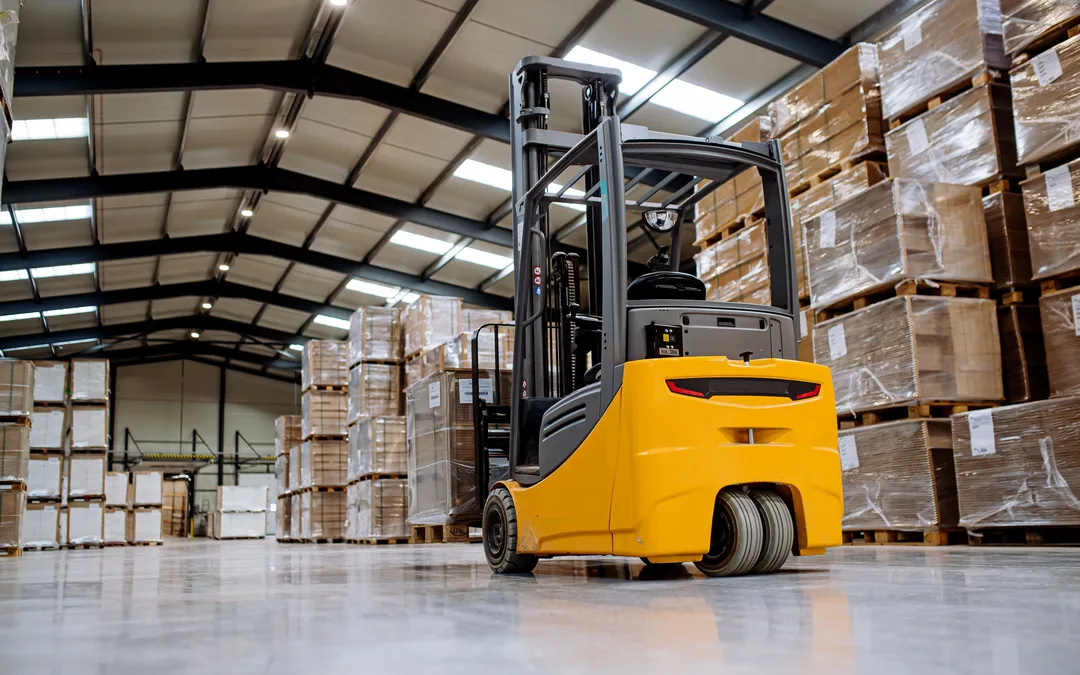
The machine usually walks away; the load, the finished work and the people do not. New Hampshire concentrates that around ground and season. Ledge runs close to the surface through much of the state, so a setup can have one outrigger on rock and another on backfill within the width of the chassis, and the difference is invisible until weight goes on it. Lots are wooded and steep enough that the best place to stand the machine often is not available, and the crew takes the second-best. The season is short and the shoulder months are soft, which pushes work into a narrow window where more machines run with less patience for setup, and then leaves the fleet standing through months in which nobody inspects anything.
Common New Hampshire forklift claims we see
- Outrigger dropping into backfill beside ledge. The characteristic New Hampshire setup failure, and it shows up under load rather than at rest.
- Load lost while placing on a slope. Material that lands on grade keeps moving, and what it reaches was usually finished work.
- Forward tip at extension. Capacity leaves as the boom goes out, and the chart in the cab is read once and then trusted from memory.
- Injury to a worker under a raised load. The most serious outcome available on this machine, and it lands in liability and work comp.
- Damage while moving between town jobs. Short hauls on narrow roads put the machine at risk on days it lifts nothing at all.
Why New Hampshire forklift owners choose Equipment Guard Insurance
When authority is this scattered, the broker’s job is to be the one party holding the whole map. We start by writing down which obligation belongs to which government, then build the program around the exposure that actually decides a bad year — the operator and the person standing near the load, not the repair bill on a boom. We write the equipment monoline so a telehandler can be scheduled properly without reopening arrangements that already suit the way you work, and we place through markets — named on our homepage — that will read a lifting exposure on wooded, ledged ground as its own class rather than as indoor equipment moved outside.
Major New Hampshire forklift markets
- Manchester. The state’s densest commercial and mill-conversion work, with loads set beside occupied buildings on tight downtown lots.
- Nashua. Border-corridor commercial and industrial projects, where crews and rental fleets move between two states in the same week.
- Concord. State and municipal building where operator documentation tends to be checked before a machine is allowed to work.
- Portsmouth. Seacoast commercial and marine-adjacent construction on fill, with weather that closes a lift window quickly.
- Dover. Steady residential and light industrial growth on mixed ground, with a rental market that keeps reach machines close by.
- Derry. Suburban and site-development work on wooded, sloping lots, where setup is usually the hardest part of the lift.
Related
- Forklift insurance — the machine physics that hold in every state.
- Backhoe insurance in New Hampshire — the machine whose New Hampshire questions start the moment it leaves the site on its own wheels.
- All equipment insurance in New Hampshire — the state hub.
- Equipment floater · Rented & leased equipment
Primary sources
- State Plans — Occupational Safety and Health Administration (operator safety)
New Hampshire forklift insurance FAQs
Which New Hampshire agency enforces forklift operator requirements?
There is not one. Private-sector enforcement stayed with the federal government here, so the powered-industrial-truck training and evaluation rules apply as federal standards and the inspection, the citation and the appeal all run through the federal system. No state office has standing in that process, which means no local escalation and no local relief either.
Is anything else about my equipment work federal in this state?
The stormwater permit is, which makes New Hampshire unusual. This is a non-delegated state for construction stormwater, so the permit covering disturbed ground is issued by the U.S. EPA rather than by a state department. Two of the biggest compliance obligations attached to a jobsite therefore sit with the federal government at the same time, which is not the arrangement most contractors are used to.
Who licenses me to do the work at all?
A town, or a trade board, depending on what you do. New Hampshire issues no statewide general-contractor license; specific trades are licensed through state boards and everything else is left to municipalities. Practically, that means a contractor working a handful of towns is answering to a handful of building departments and to no single state credential.
I work across the border regularly. Does the enforcement picture change?
Drive west and it does. Vermont runs its own approved program covering private employers, so the same telehandler doing the same lift there is under a state agency rather than a federal one — different inspector, different citation, different appeal. It is worth knowing which side of a line a job sits on before an incident forces you to find out.
What does New Hampshire ground do to a rough-terrain machine?
It hides things. Ledge sits close to the surface across much of the state, so a pad can be rock-hard on one side and soft fill on the other within the width of the machine, and the outrigger that finds the soft side is the one that matters. The building season is short, mud season is real, and steep wooded lots mean setup often happens on the least convenient ground available rather than the best.
Can the telehandler be written on its own?
Yes. Equipment Guard Insurance writes equipment monoline in New Hampshire, so the machine and its attachments are scheduled separately without disturbing what is already in place. With authority this scattered — federal, regional, municipal — the most useful thing a broker can do is write down which obligation belongs to whom before a loss makes it urgent.