
A telehandler on a Pennsylvania site usually exists because a crane cannot get there. The lot is narrow, or the ground falls away, or the building has been standing for a century and there is nowhere to set outriggers except the street — so the machine that reaches from wherever it can park becomes the one everything depends on.
The state-level fact here is a double absence with an unusual substitute. Pennsylvania regulates neither the safety of your crew nor the competence of your business, and the one register it does keep is aimed somewhere else entirely. For the parts of this machine that hold in every jurisdiction — the capacity curve, the load chart, ground bearing, attachments — start at the forklift insurance pillar.
What forklift insurance costs in Pennsylvania
No published figure survives contact with this class, because what is being underwritten is a group of operators working a set of awkward sites. The Pennsylvania inputs that move a quote are how many people run the machine and what evaluation record stands behind each of them, whether the unit is a fixed-mast truck or a telescopic machine placing loads at reach, how much of the work is on sloping or benched ground and how much is on constrained street frontage, the attachments carried, where the machine sits through the winter, and a loss record read for injury and third-party damage first. Site geometry drives this state harder than machine value does.
Pennsylvania forklift regulations: who enforces operator safety
Pennsylvania is under federal OSHA for private-sector employers, so the powered-industrial-truck operator training and evaluation requirements are the federal standard applied directly.
The absence is worth stating precisely, because there are two of them stacked here. There is no Pennsylvania occupational safety authority for private employers — no state inspector, no state citation, no state appeal. And there is no statewide competency license for general contracting either. What the state does maintain is a registration for home-improvement contractors doing residential work above an annual threshold, administered by the Attorney General’s consumer protection bureau, and the wording of that arrangement tells you what it is for. A registration establishes that a business exists and can be found; a license asserts that someone assessed whether it can do the work. This state keeps the first, holds it in a prosecutor’s office, and points it at protecting homeowners rather than crews. So the practical answer to who is watching how your telehandler is operated is: a federal agency, at a distance, and no one else with a Pennsylvania badge. That is not an argument for relaxing. It is an argument for owning the operator file yourself, because in this state nobody local will ever ask to see it until something has already gone wrong and a lawyer wants it.
Common forklift risks in Pennsylvania
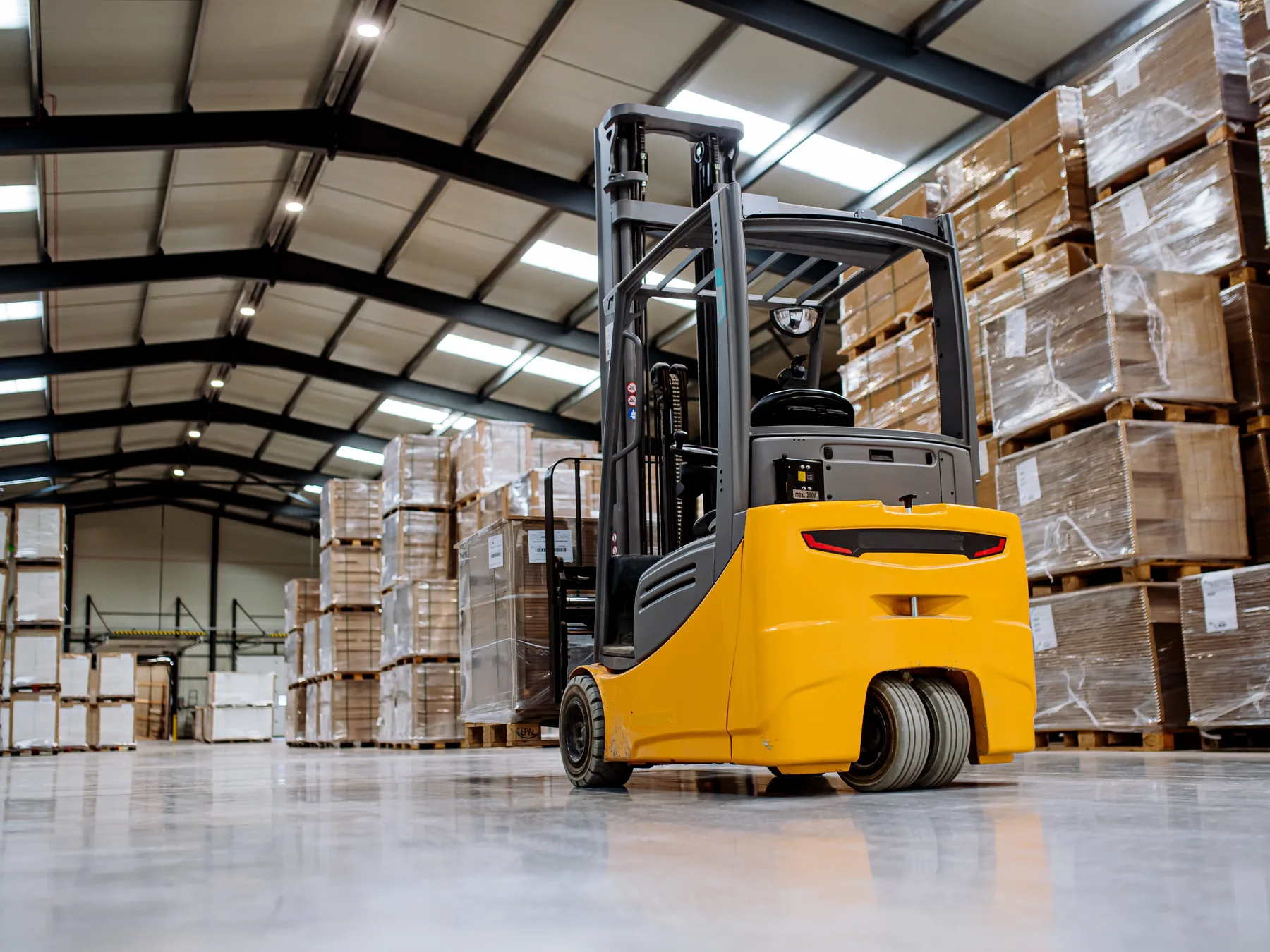
Capacity falls away as the boom extends and outrigger ground is rarely what the chart assumes — that much is true in every state. Pennsylvania makes both harder in two distinct ways depending on which end of it you are working. In the west and northeast, sites are cut into slopes, so the machine sets up on a benched pad with engineered fill on one side and undisturbed ground on the other, and the boom often travels downhill toward the load. In the southeast, the constraint is width: row-street work where there is one place to park the machine, the swing path crosses a public sidewalk, and repositioning means closing a lane. Underneath both sits an old building stock. Placing modern material into masonry that predates the code it is now being brought up to means the most likely casualty of a bad lift is structure that is expensive and slow to repair.
Common Pennsylvania forklift claims we see
- Load dropped into old masonry. The rebuild claim — the structure damaged is a century old and there is no quick way to make it good.
- Downhill tip on a benched pad. Slope and reach working together, with fill on the side the machine settles toward.
- Boom or load over public frontage. Row-street setups put the swing path across a sidewalk that stayed open through the work.
- Struck-by injury on a confined site. The severe outcome, investigated federally with no Pennsylvania authority in the chain.
- Damage to a neighboring property during placement. On lots this narrow, the adjoining building is inside the working radius by default.
Why Pennsylvania forklift owners choose Equipment Guard Insurance
We would rather be useful than reassuring, so the honest framing is this: the equipment floater is the inexpensive part of a Pennsylvania telehandler account, and the part that decides a bad year is the operator, the person under the load, and the neighbor whose wall was inside the working radius. Because this state supplies no safety authority and no competency license, the operator documentation nobody is forcing you to keep is the documentation that will be demanded the moment there is a claim — and it is also what makes you a better submission today. We write the machine monoline so it can be scheduled properly without reopening the rest of your program, and we place through markets — named on our homepage — that will underwrite a constrained-site lifting exposure rather than averaging it into a contractors equipment fleet.
Major Pennsylvania forklift markets
- Philadelphia. Row-street rebuilding where the machine parks once, the swing path crosses a sidewalk, and the neighbor is a party wall away.
- Pittsburgh. Hillside sites benched into slope, where setup position and the direction of the boom travel decide the lift.
- Allentown. Lehigh Valley commercial and industrial build-out with large-footprint work on freshly graded ground.
- Harrisburg. Capital-region institutional and public projects where a managing contractor runs the qualification review the state does not.
- Scranton. Northeastern rehabilitation and industrial work on old ground, with mine-country fill and steep, narrow approaches.
- Reading. Older-city redevelopment and light-industrial lifting into masonry structures that predate the loads now placed into them.
Related
- Forklift insurance — the machine physics that hold in every state.
- Backhoe insurance in Pennsylvania — the machine this state does define, and exempts, within a mile of the site it works on.
- All equipment insurance in Pennsylvania — the state hub.
- Equipment floater · Rented & leased equipment
Primary sources
- State Plans — Occupational Safety and Health Administration (operator safety)
- Home Improvement Contractor Registration - PA Office of Attorney General — No statewide contractor license; the Pennsylvania Office of Attorney General administers home-improvement contractor registration under the Home Improvement Consumer Protection Act (contractor licensing)
Pennsylvania forklift insurance FAQs
Which authority handles a forklift incident in Pennsylvania?
A federal one, throughout. No approved state plan reaches private-sector employers here, so the operator training and evaluation obligations are the federal standard applied directly, and the inspector, the citation and the appeal are federal. There is no Pennsylvania occupational safety agency involved at any point, which regularly surprises contractors who work into neighboring states.
Does Pennsylvania license contractors at all?
Not for competency. There is no statewide general-contractor license in this state. What exists is a home-improvement contractor registration for residential work above an annual threshold, administered by the Attorney General’s consumer protection bureau — and the distinction matters, because a registration records that you exist and have given an address, while a license asserts that somebody assessed whether you can do the work. Pennsylvania keeps the first kind.
Why does it matter who holds the register?
Because it tells you what the state is looking for. A registry kept by a consumer protection bureau exists to protect homeowners from bad contracting, so its remedies are civil and prosecutorial rather than occupational. Nothing in it examines how a machine is operated or who was trained on it. In practical terms Pennsylvania has neither a safety authority nor a competency authority for the crew running your telehandler.
Does the terrain change how this machine is used here?
Considerably, and it varies more within this state than in most. Southwestern sites are frequently benched into a hillside, so the machine sets up on a cut pad with fill on the downhill side and a slope in the direction the boom is about to travel. The southeast is the opposite constraint: narrow row-street work where the machine cannot reposition and the swing path crosses a public sidewalk. One crew doing both is running two different setup disciplines.
What about the age of the buildings being worked on?
It is a real driver of severity here. A great deal of Pennsylvania construction is rebuilding rather than building — placing modern material into masonry structures put up long before anyone designed for equipment access, from yards that were laid out for horses. Reaching into that kind of structure means the thing most likely to be damaged is old, load-bearing and expensive to make good.
Can the telehandler go on its own schedule?
Yes. Equipment Guard Insurance writes equipment monoline in Pennsylvania, so the machine and its attachments sit on a schedule of their own. In a state that supplies no safety layer, we would rather spend the conversation on what the boom passes over and who is standing under it.