
The telehandler is the quietest expensive machine on a South Carolina site. It hands block to a mason, lifts trusses into place, unloads a delivery nobody planned for, and gets treated as furniture until the afternoon it sets a load down beyond what the boom could actually hold.
Two things about this state shape what happens next. The program that governs how that machine is operated is administered by South Carolina rather than by Washington, and the credential that lets you take the job in the first place is issued by the state as well, with a ceiling attached to it. One government, both levers. The machine physics that hold everywhere — reach against capacity, boom geometry, ground bearing — are set out on the forklift insurance pillar.
What forklift insurance costs in South Carolina
A printed premium for this class would be fiction, because the rating question is about the crew and its records rather than the value on the invoice. What moves it in South Carolina is how many operators touch the machine and whether each has a documented evaluation on that specific unit, whether the fleet is fixed-mast trucks or telehandlers working at reach, whether the sites are coastal fill or upstate clay, how the machine is secured when a hurricane watch goes up, and the losses already behind you. The replacement cost of the unit is the input that moves the number least.
South Carolina forklift regulations: who enforces operator safety
South Carolina operates its own OSHA-approved State Plan covering private-sector employers, so powered-industrial-truck operator training, evaluation and enforcement run through the state program rather than federal OSHA directly.
The consequence worth planning around is concentration rather than severity. Nobody should read a state program as a lighter standard — an approved program is held to at least the effectiveness of the federal baseline, so the training, evaluation and refresher obligations are exactly where a contractor would expect to find them. What is different is that in South Carolina the same government sits on both sides of your business. The Department of Labor, Licensing and Regulation houses the contractor licensing board that decides how large a project you may hold, with a per-job ceiling tied to a financial group, and the state also administers the program whose inspector examines the lift, whose citation you receive, and whose process hears your response. Elsewhere those are two governments that never speak. Here they are one, which raises the value of clean operator documentation well above its nuisance cost — a training file assembled after an incident reads exactly like a training file assembled after an incident. It is also worth noting that this state does move responsibilities between agencies: the construction stormwater permit passed to a newly created environmental department in a 2024 reorganization. The safety answer is settled; the habit of checking which office holds a file is a good one to keep here.
Common forklift risks in South Carolina
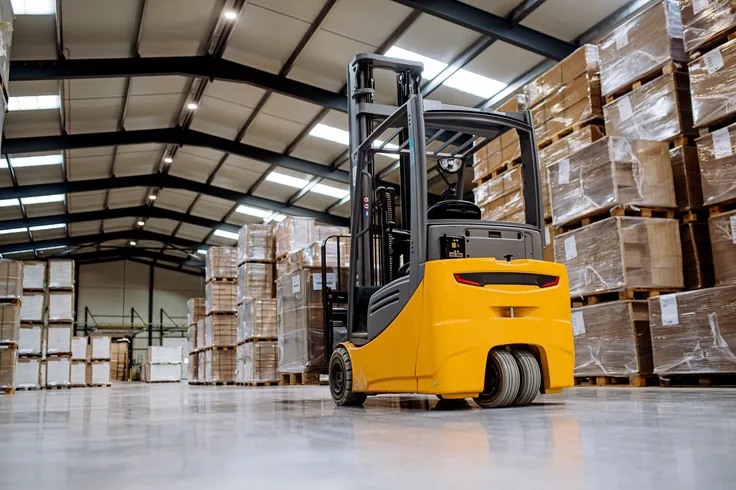
This machine is expensive to insure because of what surrounds it, not because of what it costs. A telehandler that drops what it is carrying or leans forward at full extension is usually repairable, while the material, the finished work it was reaching into and any worker below it are not. South Carolina divides that exposure geographically. Along the coast the machine works on sand and fill in a corridor that empties out several times a season, and the risk includes where the fleet sits while nobody is on site. Inland and upstate the ground is firmer but the work is closer to live plant operations, where a boom reaches over equipment that must not be touched and heat through the middle of the day thins out the attention the lift deserves.
Common South Carolina forklift claims we see
- Load released while placing at height. The material and whatever it lands on set the value of the claim, not the machine.
- Forward tip at extension. Reach spends capacity quietly, and the chart in the cab is the least-consulted document on the site.
- Worker injured beneath a suspended load. The costliest outcome in this class, and it lands in liability and work comp.
- Damage to live plant equipment during a lift. Upstate industrial work puts the boom over things that cost more than the building.
- Storm exposure at a closed coastal site. Wind, surge and opportunistic theft find machines left where they do not usually sit.
Why South Carolina forklift owners choose Equipment Guard Insurance
Most brokers treat this unit as a rounding error on a schedule. We treat it as the account’s sharpest edge, because the loss that hurts is the person under the load rather than the repair to the boom. In a state that both licenses you and inspects you, the documentation around each operator is worth more than an extra layer of equipment limit, and we will say so. We write the equipment monoline so the machine can be scheduled honestly on its own, and we place through markets — named on our homepage — that understand a rough-terrain lifting exposure instead of rating it from a table built for a level indoor floor.
Major South Carolina forklift markets
- Charleston. Port-adjacent and lowcountry construction on fill, with tidal ground and a genuine seasonal evacuation question for the fleet.
- Greenville. Upstate commercial build-out and campus work, where machines lift into occupied buildings on constrained sites.
- Spartanburg. Plant and production-facility projects where a boom regularly reaches over production equipment that cannot be shut down.
- Columbia. Midlands institutional and public work, where documented operator evaluation is checked before a machine is cleared onto the site.
- Myrtle Beach. Resort and coastal residential construction on sand, with a compressed build season around the visitor calendar.
- Rock Hill. Fast metro-edge growth drawing crews and rental fleets across the state line, and two licensing regimes to keep straight.
Related
- Forklift insurance — the machine physics that hold in every state.
- Backhoe insurance in South Carolina — the machine South Carolina classifies as special mobile equipment the moment it touches a highway.
- All equipment insurance in South Carolina — the state hub.
- Equipment floater · Rented & leased equipment
Primary sources
- State Plans — Occupational Safety and Health Administration (operator safety)
- Contractor’s Licensing Board — South Carolina Department of Labor, Licensing and Regulation (contractor licensing)
South Carolina forklift insurance FAQs
Whose inspector shows up after a forklift incident in South Carolina?
The state’s. South Carolina runs an approved program that reaches private employers, so enforcement of the powered-industrial-truck requirements is administered here rather than by federal OSHA directly. The practical difference is proximity and paperwork: a state office, state contacts, a state citation and an appeal heard inside the state system rather than a federal one.
Does a state-run program mean the standard itself is easier?
No, and expecting that is how contractors get caught. An approved program has to be at least as effective as the federal baseline, so operator training, evaluation and refresher obligations are not somewhere to look for relief. What changes is administration — who arrives, whose name is on the paper, and how quickly the file moves.
Why does my contractor license matter to a safety conversation?
Because South Carolina ties the two hands together more tightly than most states. The license carries a per-job ceiling set by a financial group, so the state has already examined your capacity before you bid, and that same state administers the safety program on the site. A pattern of citations and a strained loss record are not just insurance problems here; they touch the credential that lets you take the work.
Coastal work and upstate work feel like different businesses. Do they underwrite differently?
They do. Charleston and the Grand Strand put machines on sand and fill in a hurricane-exposed corridor, where storage and evacuation habits genuinely matter. The upstate corridor is industrial and plant work on red clay, where the machine is often reaching into or beside live operations. Same standard, same program, very different set of ways for a lift to end badly.
Does the state ever move responsibility between agencies?
It has, recently and visibly. Construction stormwater permitting was reorganized into a newly created environmental department in 2024, which is a useful reminder that “which agency holds this” is a live question in South Carolina rather than a settled one. For operator safety the answer is stable — the state program runs it — but it is worth confirming which office holds a file before assuming.
Will scheduling the telehandler separately disturb what I already have?
No. Equipment Guard Insurance writes equipment monoline in South Carolina, so the machine and its attachments go on their own schedule while everything else stays where it is. Because enforcement and licensing both sit with the state here, we spend the time on documentation that stands up to a state inspector rather than on rearranging your program.