
Nobody puts a telehandler at the top of a risk register. It walks material across a pad, lands a bundle on an unfinished floor, keeps a wall going all afternoon, and behaves for years — and then, once, sets something down where a person happened to be standing.
Texas looks ordinary on the safety question and is unusual on the one that follows it. Enforcement over your operators is federal and identical to twenty-two other states. What is not identical is the injury route afterward, because this is the only state that lets a private employer step outside the workers compensation system altogether. For the machine physics that hold everywhere — capacity at reach, load charts, bearing, forward tip — see the forklift insurance pillar.
What forklift insurance costs in Texas
There is no premium worth publishing for this class, because the rating is driven by people, paperwork and geography rather than by the unit. What moves it in Texas is the number of operators and whether each has an evaluation recorded against the specific machine, whether the work is vertical infill or open site development, how many metros the crew works across in a year, how far the machine travels and where it sits overnight, and your loss record — with the injury structure you have chosen sitting underneath all of it. The value of the telehandler contributes less than any of them.
Texas forklift regulations: who enforces operator safety
Texas is under federal OSHA for private-sector employers, so the powered-industrial-truck operator training and evaluation requirements are the federal standard applied directly.
Which is to say there is no Texas safety agency in this picture, and on its own that fact is shared with roughly half the country. The part that is genuinely Texan is what happens next, on the same incident. This is the one state in which a private employer may decline workers compensation entirely, so a worker crushed under a load may be pursuing the business directly rather than entering a statutory benefit system — while the safety investigation of that same event proceeds federally, on a separate timetable, answering a different question. Two processes, one incident, and the outcome of the second one is a decision the contractor made long before, often years before, and sometimes without revisiting it since. Layered on top is a third structure that is also not a state safety record: no statewide general-contractor license exists here, so permission to work is granted municipally and varies between the cities a crew crosses in a season. The practical instruction is short. Know which injury route your business is actually on, keep operator evaluations documented to the specific machine because that is the record both processes will ask for, and do not assume the equipment policy is standing anywhere near the expensive half of this.
Common forklift risks in Texas
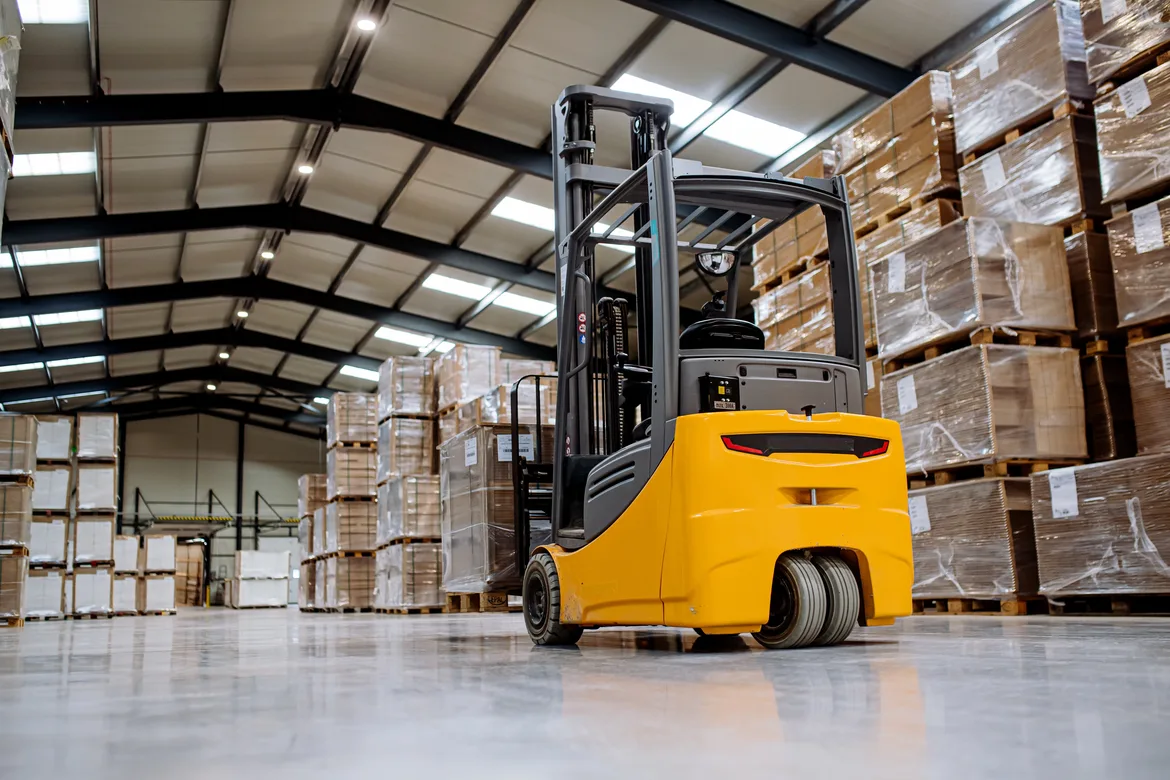
The load is the exposure, and the person near it is the cost. A machine that releases what it is carrying, or leans forward as extension quietly spends the capacity the operator started with, produces injured people, ruined material and damaged structures while the telehandler itself is often working the next morning. Texas adds range. Ground character changes across the state — clay that moves with the season, limestone and caliche that are firm until they are cut, coastal soils that hold water — and a crew that works several of those in a year is carrying set-up habits that were formed somewhere else. Heat runs long here too, and it degrades exactly the judgment a load chart assumes.
Common Texas forklift claims we see
- Load released while landing on an unfinished floor. Material and structure carry the number; the machine gets an inspection and goes back out.
- Forward lean at full extension. Capacity disappears with reach, and the chart is the document nobody rereads mid-lift.
- Worker injured beneath a placement. The largest outcome on this class, and in this state the route it takes afterward is not automatic.
- Pad settlement on seasonal clay or backfilled ground. The same set-up gives different answers in different parts of the state.
- Contact with completed facade or interior work. Where a routine reach meets work that is already installed and already billed.
Why Texas forklift owners choose Equipment Guard Insurance
We will say the unwelcome thing early: the floater is the cheap half of a Texas lifting account. What decides a bad year is the person under the load, and in this state the path that claim takes depends on an election the business made rather than on a system that applies automatically. That is a conversation worth having while nothing is on fire. We write equipment monoline so the machine gets scheduled properly without reopening arrangements built around municipal certificate requirements, and we place through markets — named on our homepage — that will read a jobsite lifting exposure rather than pricing a boom machine as ordinary indoor equipment.
Major Texas forklift markets
- Houston. Industrial, plant and port-adjacent lifting where placements are made around live operations that do not stop for a machine.
- San Antonio. Steady institutional, military-adjacent and residential build-out with long hauls to outlying jobs and machines that stay out.
- Dallas. Dense commercial and vertical work over ground that moves with the season, on footprints where the machine is set once and stays there.
- Fort Worth. Industrial and rail-adjacent construction with rock closer to grade, and a separate registration regime from the city beside it.
- Austin. Constrained infill on hill-country lots where the boom crosses somebody else’s property line on almost every placement.
- El Paso and Corpus Christi. The far corners — desert isolation on one side, coastal industrial work and storm staging on the other, both a long way from support.
Related
- Forklift insurance — the machine physics that hold in every state.
- Skid Steer insurance in Texas — the machine on the same trailer that disappears from a yard instead of dropping a load.
- All equipment insurance in Texas — the state hub.
- Equipment floater · Rented & leased equipment
Primary sources
- State Plans — Occupational Safety and Health Administration (operator safety)
Texas forklift insurance FAQs
Who inspects a forklift incident on a Texas jobsite?
Federal OSHA. Texas operates no approved state plan reaching private-sector employers, so the powered-industrial-truck training and evaluation requirements arrive as the federal standard applied directly, and the inspector, the citation and the appeal all belong to a federal office. There is no Texas safety agency in that chain to call, which routinely surprises contractors arriving from a state-plan state.
If safety is federal here, what makes Texas different at all?
The other half of the incident. Texas is the one state where private employers may choose not to carry workers compensation, and a business that has opted out faces an injured employee directly rather than through a statutory benefit system. On a machine whose worst day is a worker under a dropped load, that decision matters more than anything on the equipment schedule, and it is worth reviewing with your own counsel rather than assuming the position you inherited is still the right one.
How does that change the way I should insure a telehandler?
It moves the center of gravity of the account. The floater repairs the machine; it does not answer for the injured operator, for the material destroyed, or for damage the boom does reaching into a structure. In a state where the injury route is a choice rather than a given, the boundary between what the equipment policy does and what the rest of the program does has to be drawn explicitly, not assumed.
Does the state have any hold on an equipment contractor?
Not through a general license. Texas issues no statewide general-contractor license; specific trades are state-licensed and general building work is governed by municipal registration and permitting instead. So permission to work is granted city by city, safety is enforced federally, and a crew running a telehandler across several metros in a season is producing different paperwork for the same machine without any of it being a state safety record.
What does Texas ground do to a rough-terrain machine?
It changes character every few hours of driving, which is the underrated part. Expansive clay across the north moves seasonally and will not hold a pad the same way twice; limestone and caliche in the center are firm until they are cut and backfilled; the coastal plain is soft, wet and slow to drain. An operator who sets up by habit rather than by looking at what is actually under the machine is relying on a rule that stops working somewhere along the drive.
Can you schedule the machine on its own?
Yes. Equipment Guard Insurance writes equipment monoline in Texas, so the telehandler and its attachments go on their own schedule and nothing else has to be reopened. Given how the injury side works in this state, we would rather map that boundary with you plainly than let it be discovered during a claim.