

A skid steer is the machine that keeps an Illinois crew earning through a short season. It loads, grades, digs, breaks, lifts and pushes snow, it works between a house and a lot line, and for several months a year it is the only piece of iron small enough to be worth moving at all. Then the ground freezes, the work stops, and the same machine becomes something else entirely: an expensive asset sitting still.
What follows is specific to Illinois: a state that licenses almost no building trades itself and leaves contractor rules to home rule, a construction calendar that turns the loader into stored property for part of every year, and a freight geography that makes a trailered machine effectively invisible. What holds regardless of jurisdiction — the attachment ecosystem, the steering method and the forward-tip failure — is covered on the skid steer insurance pillar.
What skid steer insurance costs in Illinois
We do not print a premium, because a real one is assembled from your machine and your habits, not from a state average. In Illinois the calendar is the first lever: a loader that works a season and then overwinters is priced largely on where it overwinters, and indoor or gated storage is worth more here than almost anything else you can change. The second lever is range — a machine that stays inside one collar county is not the machine that follows work from Rockford to Joliet. After those come the value and number of attachments on the schedule, the valuation basis, whether a tracking unit is fitted, how much rented-in iron passes through in a season, and your own loss record.
Illinois skid steer regulations: title, lien and ownership
A skid steer is untitled construction equipment (not issued a certificate of title), and a security interest is perfected by filing a UCC-1 financing statement with the Illinois Secretary of State, the central UCC filing office.
The consequence is unremarkable in law and easy to get wrong in practice. With no title in existence, the financing statement and the serial number are together the ownership record, and a lender on a financed loader is added to the policy as loss payee against that scheduled unit, so any loss payment is issued jointly. Keep the two in step: a lienholder still named against a machine you sold or paid off is the clearest sign a schedule has gone stale. Where Illinois adds something of its own is at the entity level. Because contractor regulation here is a home-rule matter rather than a state license, the credential a general contractor or a village asks to see is whatever that municipality requires — and the certificate of insurance is read alongside it. The named insured on the certificate, the entity registered with the municipality and the owner of record on the machine should all be the same legal person. When they are not, it surfaces at a gate on the first cold morning of a job.
Common skid steer risks in Illinois
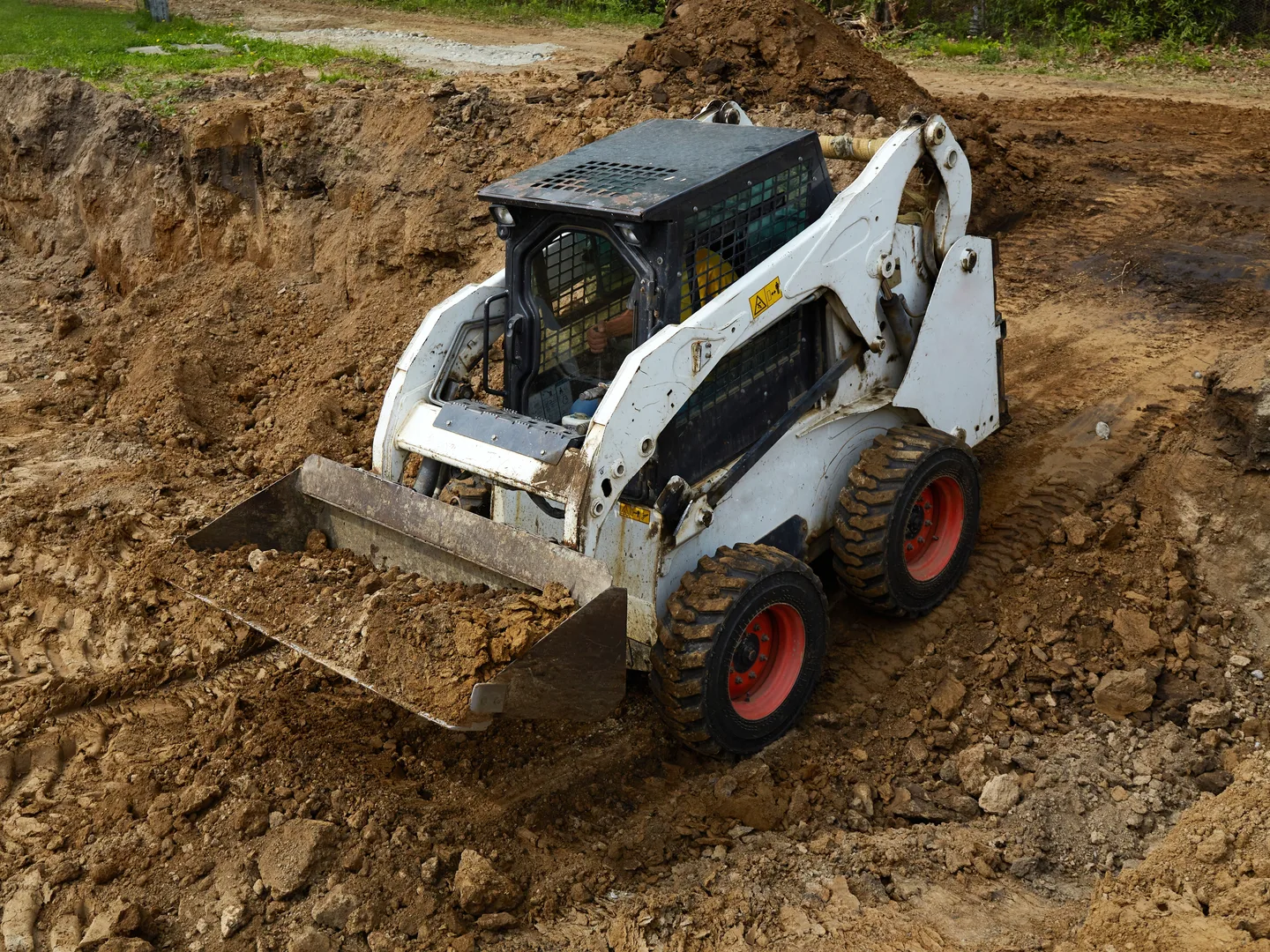
Theft leads, and in Illinois it is a logistics problem more than a crime problem. The interstates and intermodal yards that make Chicagoland the country’s freight crossroads also make a trailered loader anonymous, and the Wisconsin, Indiana, Iowa and Missouri lines all sit within a working day of most jobsites. Winter is the second exposure and it arrives in two forms: the direct cold damage a machine takes outdoors — hydraulics, batteries, seals, glass — and the months of unwatched storage that follow the last job of the year. Frozen and thawing ground is a third, quieter exposure, because a loader working frost-heaved surfaces and refrozen mud does damage to finished work that nobody budgeted for. What remains is machine-shaped: the forward tip with a raised load, and damage taken loading onto a trailer on ice.
Common Illinois skid steer claims we see
- Off-season theft from a back lot. The most costly Illinois pattern, because the machine can be gone for weeks before anyone visits the lot, and it settles against the serial number since no title exists.
- Cold-weather damage to a loader stored outdoors. Cracked lines, dead batteries and water in places it should not be, discovered on the first job of the spring rather than when it happened.
- Attachment stolen on its own. A breaker or mulching head lifted from a yard rack while the loader stays put, then found to sit under a blanket per-item cap instead of scheduled by name.
- A rented-in loader damaged during a peak week. Settled against the rental contract rather than the schedule, and routinely for more than the renter expected.
- Finished-surface damage on a frozen or thawing site. Drives, walks and turf on suburban work where the ground behaves differently at first light than it does by mid-afternoon.
Why Illinois skid steer owners choose Equipment Guard Insurance
We write equipment monoline, and in Illinois that removes an obstacle a lot of crews recognize. A contractor here has usually built its liability program around the municipal registrations it holds, and being told the whole thing must move so one loader can be scheduled properly is a reason to leave the machine underinsured instead. We do not ask for that. Attachments go on by name as a matter of course, because on this machine the attachments quietly hold much of the value, and we place through markets — named on our homepage — that will read an Illinois equipment schedule, winter storage and all, on its own merits.
Major Illinois skid steer markets
- Chicago. The densest site-work market in the state, with alley-width access, no yard space to speak of, and machines that live on the job because there is nowhere else to put them.
- Joliet. Intermodal and industrial site development at the point where the freight network converges — good for business and good for anything on a trailer heading elsewhere.
- Aurora. Fox Valley residential and commercial growth work, with loaders following subdivisions and overnighting on open sites through the building season.
- Naperville. High-value suburban and institutional work on finished lots, where surface damage and confined-site loading drive the claims that are not thefts.
- Rockford. Northern industrial and municipal work close to the Wisconsin line, a short tow from another jurisdiction in either direction.
- Peoria and Springfield. Downstate municipal, agricultural and drainage work where machines travel long distances between jobs and the nearest replacement is not around the corner.
Related
- Skid steer insurance — the machine physics that hold in every state.
- Backhoe insurance in Illinois — the machine the special-mobile-equipment definition in the vehicle code was written for.
- All equipment insurance in Illinois — the state hub.
- Equipment floater · Rented & leased equipment
Primary sources
We do not link an Illinois filing document here. The ownership and lien rules described above follow Article 9 as Illinois has adopted it; where a state publishes a document that states the rule directly, this page links it.
Illinois skid steer insurance FAQs
Is a skid steer titled or plated in Illinois?
No. The state treats it as construction equipment rather than a vehicle, so the Secretary of State never issues it a certificate of title and it carries no plate. Identity comes from the serial number on the frame, the bill of sale, and the financing record — which is why a loader described on a schedule by make and size, with no serial, is the line item most likely to cause an argument after a loss.
Do I need an Illinois license to do site work with a loader?
Not from the state, in most cases. Illinois issues no statewide general-contractor license, and the state credentials only two building trades directly — roofing through the financial and professional regulation department, plumbing through the public health department. Everything else is a creature of home rule: municipalities set their own contractor registration and bonding requirements, and Chicago runs one of the more demanding versions. The rules that reach the machine itself do not change as you cross a municipal line; the paperwork that lets you work does.
What does the off-season do to the risk on this machine?
It changes what kind of risk it is. For a stretch of every Illinois year the loader is not a working asset at all, it is a stored one, and storage is where most of the loss on this class happens. A machine that goes unwatched in a back lot from December to March is a soft target and an easy one; the same machine indoors is a different underwriting proposition. Cold does its own damage in the meantime — hydraulics, batteries and seals all pay for a winter outdoors, and road salt reaches the undercarriage on every haul.
Why is theft worse in Illinois than the crime numbers suggest?
Because of the road network rather than the crime. Chicagoland is where the national freight system converges, and the interstates that meet there reach Wisconsin, Indiana, Iowa and Missouri inside a working day. A compact loader on a trailer is entirely ordinary traffic on any of them, and it is far more portable than a large tracked machine. Once it is gone and there is no title anywhere in the system, recovery depends on the serial record and whatever telematics were fitted before it left.
Are attachments covered, and what about a loader I rent for a peak week?
Attachments only to the extent you schedule them: buckets, augers, breakers, grapples and mulching heads normally sit under a blanket limit with a per-item cap, and the heads that earn money exceed it. Rented-in machines are a separate arrangement, and they matter here because the Chicago-area rental fleet is deep enough that most crews rent through the busy months rather than buying — which means the rental contract, not your schedule, sets what you owe if that loader is damaged or taken.
Can I place the loader on its own policy?
Yes. Equipment Guard Insurance writes equipment monoline, so the loader and its attachments go on a schedule of their own and the general liability you already hold stays where it is.