
In Iowa a compact loader does more different kinds of work than any other machine a small crew owns: feedlot and grain-complex cleanup, tile and drainage repair, acreage grading, subdivision utility work, tree and brush clearing, and snow from the first storm to the last. It goes through a farm gate and a residential one, and it travels behind the truck already going that way. Everything on that list is a reason to own one, and every one of them puts the machine somewhere nobody is watching.
What follows is specific to Iowa: a contractor credential that is a registration with a bond rather than an examination, a working landscape where the job is usually a long way from the yard, and weather that can flatten a county in an afternoon. For the machine itself — what the attachment ecosystem turns it into, why skid steering is hard on finished surfaces, where the forward tip comes from — see the skid steer insurance pillar.
What skid steer insurance costs in Iowa
We do not print a premium, because a figure that holds up is built out of your machine and the way you keep it. In Iowa the first question is nearly always where the loader spends the night when the job is well out of town — a fenced yard, a shed, a shop lot, or the field it was working. The second is the attachment list, which in agricultural work is longer and more valuable than owners usually recall. After those come the valuation basis you choose, whether a tracking unit is fitted, how much of the year the machine works snow, and your own loss history. A loader that goes home every night and one that stays out for a week are not the same risk and are not priced alike.
Iowa skid steer regulations: title, lien and ownership
A skid steer is untitled construction equipment; a security interest is perfected by filing a UCC-1 financing statement with the Iowa Secretary of State.
Two consequences, and they run in different directions. On the machine: with no certificate of ownership in existence, the financing statement and the serial number together are the ownership record, so a lender on a financed loader is added to the policy as a loss payee against the scheduled unit and any loss payment is issued jointly. On the credential: Iowa registers contractors rather than licensing them, and the registration carries a bond, so the state’s interest in you is a surety interest rather than a competency judgment. That has a practical consequence worth stating plainly, because it is a genuine source of confusion. A registration bond is not equipment coverage. It does not pay for a stolen loader, a burned one, or one recovered from a ditch. The bond answers for obligations arising out of the work; the floater answers for the iron. A file containing only the first is a file with an uninsured machine in it.
Common skid steer risks in Iowa
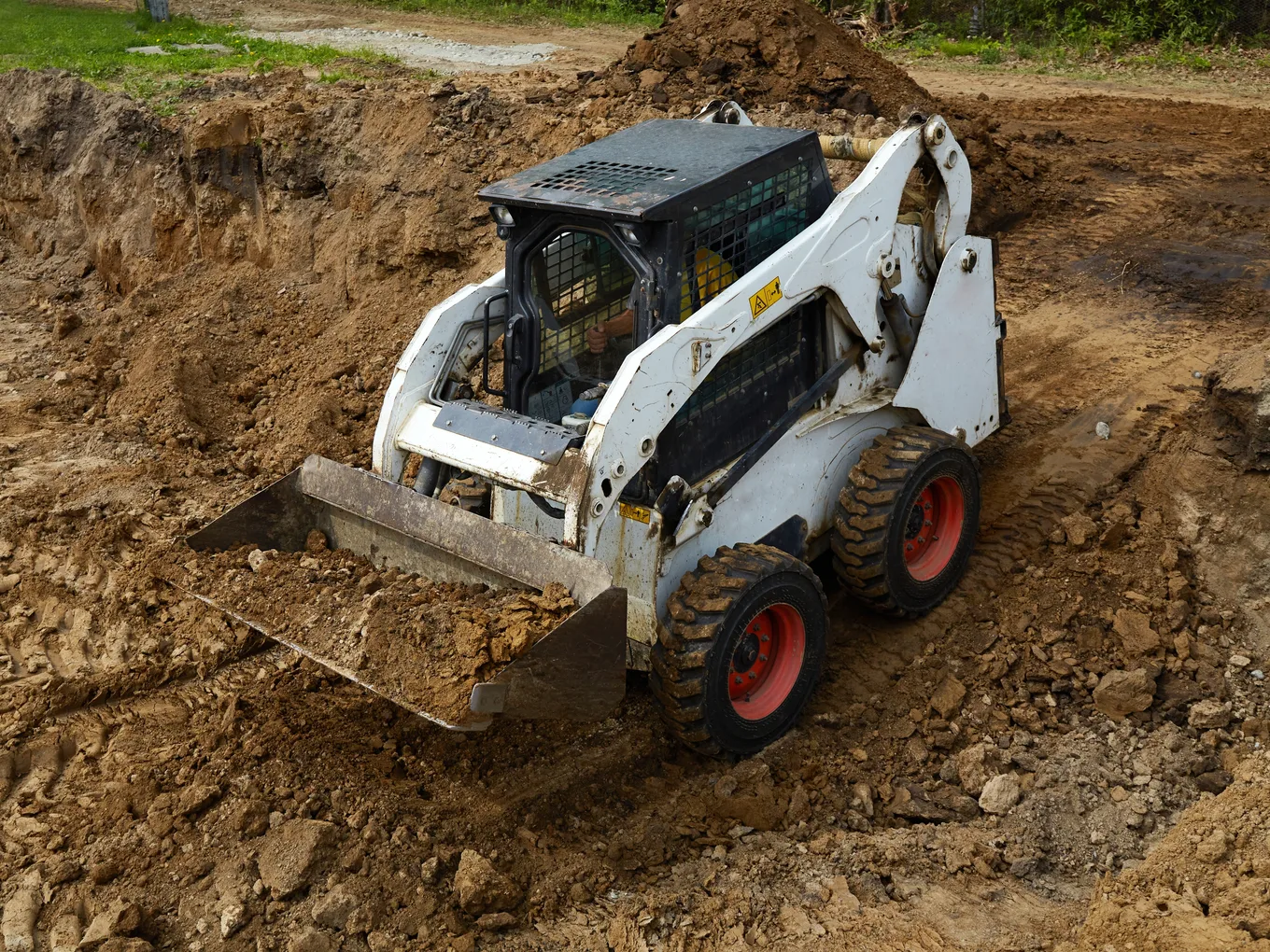
Theft leads this class in Iowa, and the mechanism is distance rather than density. Compact loaders are taken far more often than large tracked machines because one person and a trailer are enough, and out here the machine is frequently sitting on private ground well off any road, where a loader may not be missed until the next morning or the next week. Severe convective weather is the second exposure and it is not a small one: straight-line wind events of the kind that cross this state can flatten buildings and roll unsecured equipment, and hail damages glass, lights and cab on anything left in the open. Winter contributes a third group — cold starts, ice, and snow work that keeps the machine out at accounts through the worst of the season. The forward tip and loading damage account for most of the rest.
Common Iowa skid steer claims we see
- Theft from a farm or acreage site. The defining claim in this state, usually discovered late because nobody was due back at that site, and settled off the serial record because no ownership certificate exists.
- Straight-line wind damage. A loader rolled, struck by structure debris, or buried under what used to be a building, after the kind of wind event this state gets.
- Attachment loss from an unfenced yard. A grapple, tree shear or snow pusher taken off the rack, then found to sit under a blanket per-item sublimit rather than scheduled by name.
- Hail damage to a machine left out. Glass, lights and cab damage on a loader parked in the open through a spring or summer storm line.
- Forward tip on soft or frozen-then-thawed ground. Usually while placing a load at height on a surface that carried the machine fine a week earlier.
Why Iowa skid steer owners choose Equipment Guard Insurance
We write equipment monoline, which fits the way Iowa accounts are actually built. A crew here often has a registration folder, a bond, a general liability policy carried for years and a farm or commercial package alongside it, and being told to move all of that to get one loader scheduled properly is how the loader ends up carried on nothing. We do not ask for that. We schedule attachments by name as a matter of course — in agricultural work there are more of them than anyone remembers — and we place through markets named on our homepage that will read an Iowa equipment schedule on its own merits.
Major Iowa skid steer markets
- Des Moines. The largest jobsite market in the state and the deepest rental market in it, so rented-in loaders and rental-house certificates are routine parts of an account here.
- Cedar Rapids. Industrial and grain-processing site work with a rebuild history that taught the whole market what wind does to unsecured equipment.
- Davenport. River-edge industrial and commercial work at the eastern boundary, where crews cross into the neighboring state routinely and a machine can follow them unnoticed.
- Iowa City. Institutional and dense residential build-out on tight lots, where finished-surface damage and confined-site loading drive the claims that are not thefts.
- Sioux City. Agricultural processing and heavy site work at a boundary corner, with the longest routine travel distances in the state and the slowest discovery times after a theft.
- Council Bluffs. Work belonging to the large metro economy immediately across the western river boundary, so the loader crosses a state line as ordinary routine.
Related
- Skid steer insurance — the machine physics that hold in every state.
- Dozer insurance in Iowa — the machine the land-disturbance permit reaches once a site gets big enough.
- All equipment insurance in Iowa — the state hub.
- Equipment floater · Rented & leased equipment
Primary sources
We do not link an Iowa filing document here. The ownership and lien rules described above follow Article 9 as Iowa has adopted it; where a state publishes a document that states the rule directly, this page links it.
Iowa skid steer insurance FAQs
Is a skid steer titled or registered in Iowa?
No. It is untitled construction equipment rather than a titled motor vehicle, so no certificate is issued for it and nothing changes hands at a county treasurer counter when it sells. Identity rests on the serial plate, the bill of sale and the financing record. That is worth taking seriously in a state where a great deal of the work happens on private ground with no gate, no fence and nobody around after five.
Do I need an Iowa contractor license to run a skid steer?
Iowa does not issue one. What it requires instead is registration: a person or business earning more than a statutory annual amount from construction work must register with the Contractor Registration Unit at the Division of Labor, and that registration carries a bonding requirement rather than a competency examination. Nobody is tested on the trade. The distinction matters because a bond and a certificate of insurance are different instruments doing different jobs — the bond answers to the state and to the party you contracted with, the floater answers for the machine — and the same folder tends to hold both.
Does the bond cover a stolen loader?
No, and it is worth being blunt about that because the two documents live side by side. The registration bond exists for obligations arising from the work and from the registration itself; it is not property coverage and it does not respond to a machine that has been taken, damaged or burned. The loader is covered by an equipment floater that schedules it and its attachments. If you hold a registration bond and nothing else, the iron itself is uninsured no matter how tidy the file looks.
How does farm and grain-facility work change the exposure?
It moves the machine away from anything you control. A loader working a feedlot, a grain complex, a drainage repair or an acreage build-out is usually parked where the job is — down a gravel road, out of sight of any road, sometimes for a week at a time. That is the single largest driver of theft frequency on this class, and it is also why a tracking unit earns more in this state than in a dense metro: distance is what delays discovery, and time is what makes recovery unlikely.
Are attachments covered on an Iowa skid steer policy?
Only the ones that are scheduled. Buckets, augers, grapples, tree shears, snow pushers and mulching heads typically sit under a blanket limit with a per-item sublimit, and the heads worth real money exceed it. In agricultural work the attachment count tends to be higher than the owner remembers, because heads accumulate season by season. Anything above the sublimit belongs on the schedule by name, with its serial number where it carries one.
Can I insure just the skid steer, without a package policy?
Yes. Equipment Guard Insurance writes equipment monoline in Iowa, so the loader and its heads can be scheduled by themselves. The general liability policy you already carry stays put, and so does the bond.