

Nebraska is unusual in what it asks of a contractor: not a license, a registration. Every contractor and subcontractor working on real property signs up with the state, and nobody is examined on the way in. The consequence for an equipment owner is quiet but real — the document that actually persuades a project owner you are worth letting on site is your certificate of insurance, not your credential.
The other thing that shapes this account is distance. Two metros sit at the eastern edge of the state and the work runs west from them along one corridor, so a compact loader here logs highway hours that the same machine would never log in a compact state, and it spends nights in open country with nothing between it and the weather. For the mechanical story — attachments, skid steering, the forward tip — see the skid steer insurance pillar.
What skid steer insurance costs in Nebraska
There is no published rate for this class and there should not be, because two loaders of the same model can be very different risks. In Nebraska the first two questions are how far the machine ranges and what it parks next to at the end of a job, and open-country hail is the third — a machine that overwinters and overnights under a roof is treated differently from one that does not, for reasons that have nothing to do with theft. Then the ordinary levers: attachment values and count, valuation basis, telematics, deductible and loss record.
Nebraska skid steer regulations: title, lien and ownership
A skid steer is untitled off-road construction equipment; a lender perfects its lien by filing a UCC-1 financing statement with the Nebraska Secretary of State.
Two consequences are worth spelling out. First, ownership is proved by documents rather than by a certificate: the financing statement and the serial plate are the record, the lender that filed goes on the policy as loss payee against the scheduled unit, and settlements are issued jointly — so the schedule and the filing have to describe the same machine. Second, because this state registers contractors rather than testing them, the insurance paperwork carries proportionally more weight in the diligence a general contractor or a public owner does. A registration confirms you are in the system; the certificate and the equipment schedule are what show the loader on the job is actually covered, and both need to name the same entity as the registration does.
Common skid steer risks in Nebraska
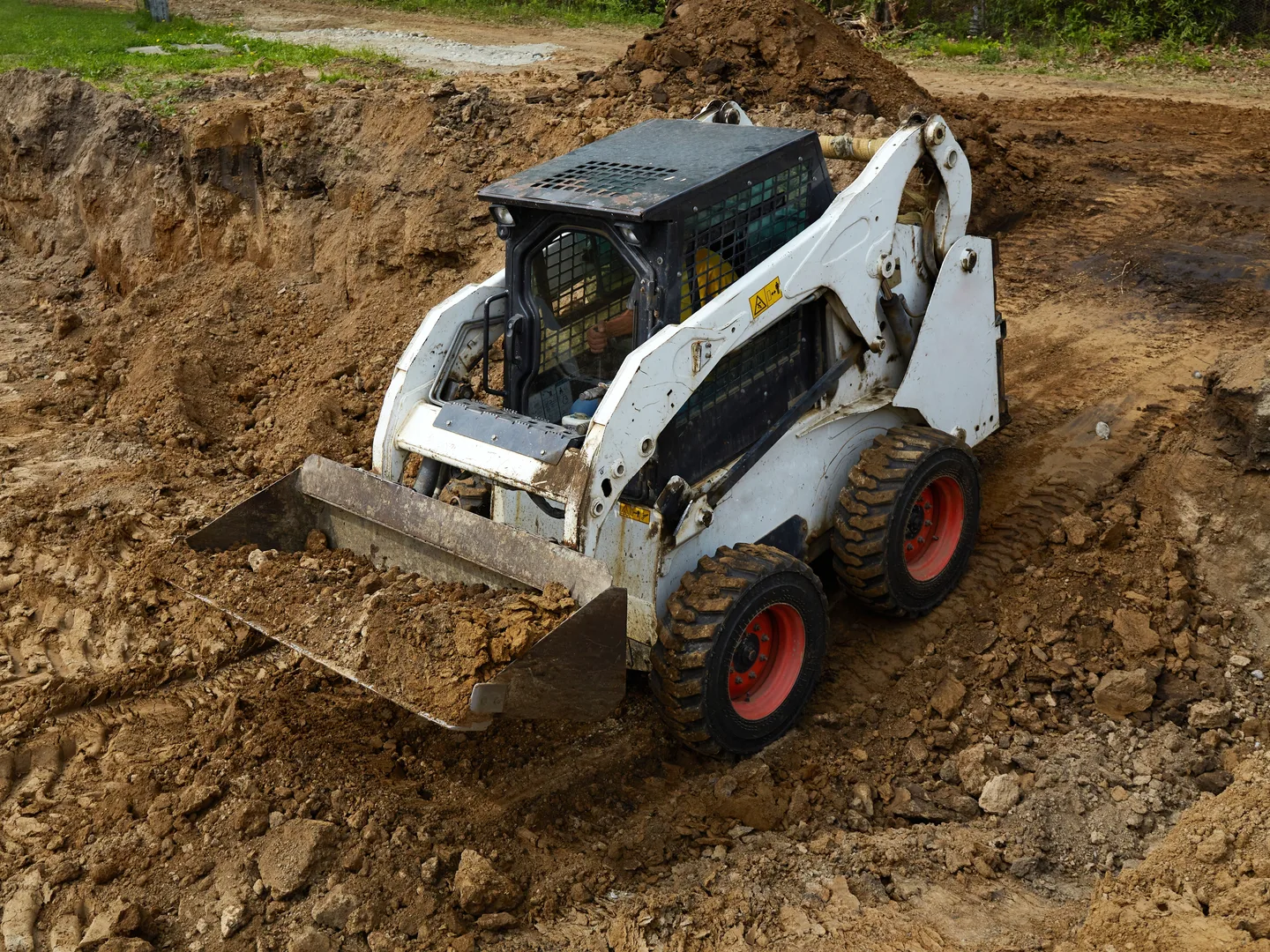
Two exposures dominate and neither is exotic. Hail and straight-line wind reach a loader in the open across the whole state, with no terrain to break either one, and the damage lands on glass, lights, cab and hood on machines that are almost never parked under anything. Theft is the other: compact loaders are taken far more often than large tracked units, and here they are usually taken from unfenced rural staging rather than from a metro yard, which delays discovery for hours or days. Deep cold adds a seasonal layer on hydraulics, batteries and seals. The forward tip with the arms raised and damage during loading account for most of the remainder and belong to the machine rather than the state.
Common Nebraska skid steer claims we see
- Hail and wind damage in the open. The claim this state produces most reliably, on a loader with nothing above it and no practical way to move it before a line of storms arrives.
- Theft from unfenced rural staging. Discovered late, sometimes the following week, and worked entirely from the serial plate because no title exists.
- Attachment gone on its own. A grapple, auger or bale spear off a rack or a fence line, then found to sit under a blanket per-item cap rather than scheduled by name.
- Cold-weather hydraulic and seal failure. On machines started hard in deep cold after a night spent out in it.
- Loading and transit damage on a long haul. Ramp, tie-down and deck damage on a machine that spends more time on a trailer than most.
Why Nebraska skid steer owners choose Equipment Guard Insurance
Equipment monoline is the whole proposition, and in a registration state it is a natural fit. A Nebraska contractor generally has liability written to satisfy the people it works for and no reason to reopen it because one loader is scheduled badly — and being told to move the whole program is how a loader ends up carried at a value nobody has checked in years. We schedule the iron on its own, list attachments by name as a matter of course because on this machine they hold the value, and we place through markets named on our homepage that will read a Nebraska equipment schedule on its own merits.
Major Nebraska skid steer markets
- Omaha. The largest jobsite market in the state, with industrial, institutional and infill work, the deepest rental counter, and the sharpest urban theft picture.
- Lincoln. Capital and university work on a steady calendar, where machines cycle back to a yard more reliably than anywhere else in Nebraska.
- Bellevue. Suburban and public-sector build-out south of the metro, with residential lots tight enough that finished-surface damage outpaces theft on some accounts.
- Grand Island. The central hub for agricultural and utility-adjacent site work, where a loader may spend an entire job away from its home yard.
- Kearney and North Platte. The western corridor, long hauls between jobs, open-country hail and wind, and staging areas with no fence anywhere in sight.
Related
- Skid steer insurance — the machine physics that hold in every state.
- Backhoe insurance in Nebraska — the machine this state writes out of the motor-vehicle definition entirely.
- All equipment insurance in Nebraska — the state hub.
- Equipment floater · Rented & leased equipment
Primary sources
- Contractor Registration — Nebraska Department of Labor (contractor licensing)
We do not link a Nebraska filing document here. The ownership and lien rules described above follow Article 9 as Nebraska has adopted it; where a state publishes a document that states the rule directly, this page links it.
Nebraska skid steer insurance FAQs
Does Nebraska license contractors or register them?
It registers them. There is no statewide general-contractor license and no competency examination behind the requirement: a contractor doing work on real property registers with the Department of Labor, and that registration is what a project owner or general contractor asks to see. It is a real obligation and worth keeping current, but it certifies enrollment rather than skill — which is precisely why the certificate of insurance carries more weight in this state than the credential does.
Do subcontractors have to register too?
Yes. The requirement reaches subcontractors as well as general contractors performing work on real property, so a small grading or clearing outfit working under someone else is inside the same system as the contractor above it. For an equipment account that matters in one specific way: the name on the registration, the name on the certificate and the name on the equipment schedule should all be the same legal entity, because the person checking them at the top of the job will compare them.
Is a skid steer titled or plated in Nebraska?
No. It is off-road construction equipment, so nothing is issued for it at a county treasurer office and there is no certificate to hand over at resale. The serial plate, the bill of sale and the central financing record identify the machine instead. That is workable right up until a theft, when the quality of your own records determines how fast a claim moves and whether a recovered loader can be proven to be yours.
Where does a lender file to secure a financed loader here?
Centrally, with the Nebraska Secretary of State, where UCC financing statements against equipment are filed and searched. The lender then belongs on the policy as loss payee against the scheduled unit, and settlements on that machine are issued jointly. The common defect is a schedule that has fallen behind reality — a lienholder still named on a machine already paid off, or a newer loader that replaced a traded one and never got added.
The next job is most of a day away. Does that change the risk?
It changes the whole storage answer, which is the largest single lever on this class. In a state this wide a loader often stays out for the duration of a job rather than returning to a yard, which means it sleeps beside a rural road, a feedlot, a job trailer or nothing at all. Underwriters read that honestly: keys removed, a tracking unit fitted to the loader rather than the trailer, and the machine parked where it is at least visible are what separate two otherwise identical Nebraska accounts.
Can the equipment be written on its own?
Yes — that is what we do. Equipment Guard Insurance writes equipment monoline in Nebraska, so the loader and its attachments go on their own schedule and the liability policy backing your registration is left exactly as it is. No package is required to get the iron carried at the right value.