

A compact loader earns its place in Tennessee by being the machine that can be quoted into almost any job: residential lots in a metro adding houses faster than it can pave streets, pad and utility work for distribution buildings, slope and drainage repair in the hills, and farm and municipal work in between. The trade-off never changes — the machine that fits everywhere also fits on a trailer.
Two things about Tennessee shape the account, and neither of them is Article 9. The state puts its licensing gate before the bid rather than before the job, which pulls insurance evidence forward in the process; and the geography puts a state line within easy reach of most sites while concentrating freight at the western end. For the machine physics that hold in every state — attachments, skid steering, the forward-tip pattern — see the skid steer insurance pillar.
What skid steer insurance costs in Tennessee
A premium is not something we publish, because the figure is assembled from your machines, your storage and your record rather than from a table. The levers that move a Tennessee schedule most are the overnight location and the spread of the work: three metro economies means crews that follow work between them, and a loader that sleeps on a job at the far end of the state is priced accordingly. Then come attachment values and how many are named, the valuation basis, telematics, the deductible, and the mix of owned and rented units on the account. Licensing status matters indirectly too — the evidence you file with a bid is the same evidence an underwriter reads.
Tennessee skid steer regulations: title, lien and ownership
A skid steer is untitled construction equipment, and a lender perfects a security interest by filing a UCC-1 financing statement with the Tennessee Secretary of State, the central UCC filing office.
Because no title exists, the financing statement and the serial number together are the ownership record, and everything downstream depends on them agreeing. A lender on a financed loader is named on the policy as loss payee against the scheduled unit so that any settlement is issued jointly; when a machine is paid off or traded and the lienholder stays on the schedule, that is the clearest sign nobody has reviewed the account this year. Tennessee then adds something at the layer above the machine that is worth planning around: the license has to exist before you bid, and the insurance evidence the board and the project owner want is produced at the same moment. Crews that leave the certificate until the award find out that the bid was the deadline.
Common skid steer risks in Tennessee
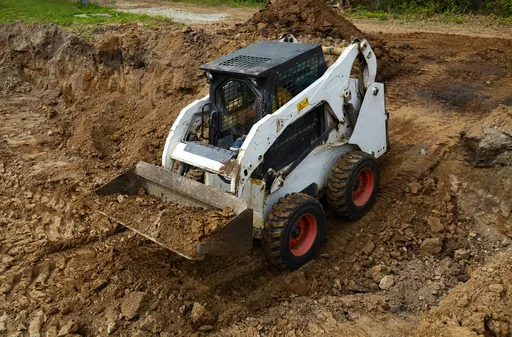
Theft is the risk that defines this class in Tennessee, and the state raises it through connectivity rather than through any one city. Sites are strung along interstates that carry national freight, the west end of the state is a road, rail and barge junction, and a state line is rarely more than a couple of hours from the job — so a compact loader on a trailer is out of the jurisdiction that will investigate it before the crew arrives in the morning. Weather is the second exposure and it splits east to west: slope and ice in the mountains, the spring storm and flash-flood line through the middle and the west, humidity on seals and electrics everywhere. The remainder is the machine — a forward tip with the arms loaded and up, and loading damage from twice-daily trailer work.
Common Tennessee skid steer claims we see
- Overnight theft from a job in another metro. The characteristic Tennessee loss: the crew was working away from base, the machine stayed on site, and the trailer often went with it.
- Cutting head or breaker taken by itself. Lifted from a yard rack while the loader was left untouched, then found to have been carried under a blanket per-item ceiling.
- Flood or hail damage on a low-lying site. Water through the cab and drivetrain, or glass and lights lost to a spring storm line, on iron nobody had a reason to move.
- Slide or roll on graded slope in the east. Frequently on ground that was stable in dry weather and was not after two days of rain.
- Bid rejected on insurance evidence. Uninsured but costly: the certificate did not exist yet, because the crew assumed it was needed at award rather than at bid.
Why Tennessee skid steer owners choose Equipment Guard Insurance
Writing equipment on its own is what makes this workable for a licensed Tennessee contractor. The liability and workers’ compensation behind your license are usually arranged to satisfy a board, a bond and a list of general contractors, and unpicking that to get a loader scheduled properly is not a trade anyone should accept. So we schedule the iron by itself, name attachments individually with their own values as routine practice, and account for what you rent in during a busy quarter. The markets we place through — named on our homepage — will read a Tennessee equipment schedule as its own risk.
Major Tennessee skid steer markets
- Nashville. The fastest-moving jobsite market in the state, with residential and commercial work running simultaneously on lots too tight for anything larger than a compact loader.
- Memphis. Freight, warehouse and industrial construction at a road, rail and river junction, which is exactly the environment in which trailered iron leaves quietly.
- Knoxville. Slope and drainage work on hill ground, where machines park on grade and the non-theft claims concentrate.
- Chattanooga. Heavy-industry and plant site work in valley terrain, with long hauls up into surrounding county jobs.
- Murfreesboro. Subdivision and institutional build-out at the metro edge, where loaders stay on a development for months at a time.
- Clarksville. Dispersed residential and public work near the state line, with short trailer runs that cross a jurisdiction boundary as a matter of course.
Related
- Skid steer insurance — the machine physics that hold in every state.
- Backhoe insurance in Tennessee — the sibling machine that drives itself between jobs instead of riding.
- All equipment insurance in Tennessee — the state hub.
- Equipment floater · Rented & leased equipment
Primary sources
- Contractor (Tennessee Board for Licensing Contractors, Dept. of Commerce & Insurance) - raw <title> is 'Contractor' — Tennessee Board for Licensing Contractors, Department of Commerce and Insurance (contractor licensing)
We do not link a Tennessee filing document here. The ownership and lien rules described above follow Article 9 as Tennessee has adopted it; where a state publishes a document that states the rule directly, this page links it.
Tennessee skid steer insurance FAQs
Is a skid steer registered with the state of Tennessee?
No. It stays outside the vehicle system entirely as untitled construction equipment, so there is no county clerk transaction when it sells and no title document to produce when it is stolen. What identifies it is the serial number stamped on the frame, backed by the invoice and any financing record — which is why a schedule listing three loaders by horsepower class is close to useless in a claim.
Do I need a Tennessee contractor license before I bid a job?
On projects above a statutory threshold, yes — and the timing is the point. The Board for Licensing Contractors, inside the Department of Commerce and Insurance, requires the license to exist before a prime or general contractor bids or contracts, not merely before it breaks ground. Licenses are issued by classification, so the class you hold limits the work you may quote as much as the license itself permits you to work at all. Practically, an unlicensed bid is a problem you discover at the worst possible moment, and the insurance evidence the board and the owner both want is checked at the same time.
Why is recovery harder in Tennessee than the map suggests?
Because of the shape of the state and where the freight goes. Tennessee is long and narrow with neighbors on every side, so from most jobsites a trailer reaches a state line long before it reaches the far end of Tennessee — and the western end of the state is a junction where road, rail and river freight all meet. A stolen loader crosses jurisdictions early, and once it does, the serial record and any telematics on board are the only things still working for you.
What happens to attachments that are not on the schedule?
They fall to a blanket limit with a per-item ceiling, and the ceiling is where the trouble is. Breakers, augers, grapples, cutting heads and cold planers routinely exceed it, and they go missing independently of the loader because a rack in a yard is easier to reach than a cab. Anything you could not replace out of pocket the same week belongs on the schedule by name with its own value.
Does Tennessee terrain and weather change the underwriting?
It changes the non-theft half of the claim picture, and it varies markedly across the state. The eastern end is genuine slope country, where machines operate and park on grade and the tip and slide claims concentrate. The middle and west take the spring storm line — hail, straight-line wind and flash flooding on sites with poor drainage — and humidity works on seals and electrics everywhere. Where the loader spends the night is still the biggest single lever, for both halves of the file.
Will you cover the equipment without the rest of my program?
Yes. Equipment Guard Insurance writes equipment as a standalone account, so owned loaders, their attachments and rented-in machines sit on one schedule. The liability and workers’ compensation your license and your general contractors already accept stay where they are.