

In Vermont a skid steer is usually not one machine among several — it is the machine, the piece of iron a two-truck crew buys first and pays for by keeping it busy. It loads, grades, digs, breaks and lifts, turns inside a dooryard between a stone wall and a porch, and in this state it keeps earning after the ground freezes. Everything that makes it that useful also makes it the easiest thing in the yard to drive onto a trailer and take out of the state overnight.
What follows is specific to Vermont: a registration system that reaches residential work and stops there, a land-use review that can decide when the machine starts rather than how it is owned, and a winter that writes half the claim file. The mechanical story — how attachments multiply the machine, why skid steering chews finished surfaces, and where the forward tip comes from — lives on the skid steer insurance pillar instead.
What skid steer insurance costs in Vermont
There is no honest premium to publish, because the number is assembled from your specific machine and the way you keep it. In Vermont the first lever is almost always the season: a loader that spends the cold months pushing snow at accounts spread across a valley is stored, driven and exposed differently from one that shuts down in a barn until spring. After that come storage security, the value and count of attachments on the schedule — winter heads included — the valuation basis you choose, whether a tracking unit is fitted, and your own loss history. One loader locked in a shed off a paved lot in South Burlington and one parked at the end of a dirt road for a month do not price alike.
Vermont skid steer regulations: title, lien and ownership
A skid steer is untitled construction equipment, not a DMV-titled motor vehicle; a security interest is perfected by filing a UCC-1 financing statement under Vermont’s UCC Article 9 with the Secretary of State.
Vermont arranges the consequence unusually tidily. No certificate of ownership exists for the machine, so the financing statement and the serial number are the ownership record — and both live with the same office that keeps the residential contractor register. A lender on a financed loader is added to the policy as a loss payee against the scheduled unit, so a loss payment is issued jointly, and the two records have to agree; a lienholder still named against a machine you paid off two seasons ago is the clearest signal a schedule has gone stale. Keep one thing separate from all of it: the residential registration is a permission to contract, not a statement about the iron. It says nothing about who owns the loader and does not reach commercial jobs at all, so a crew moving between the two carries an obligation on some sites and none on others while the rules touching the machine never change.
Common skid steer risks in Vermont
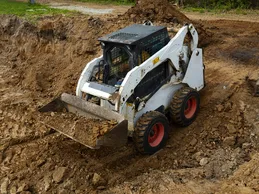
Theft leads this class in Vermont, and the shape of it here is isolation rather than volume. Compact loaders are taken far more often than large tracked machines because one person can load one, and a good deal of Vermont work happens at the end of long town roads where nobody is watching and a response takes time. Winter is the second exposure and it is not a single peril: cold starts and cold hydraulics, ice damage, road salt on hoses and pins, and a machine that spends the season away from any yard because that is where the snow is. Frost heave and thaw-softened ground drive a third group of losses, the ones where a loader ends up somewhere it was never supposed to be. The forward tip and loading damage account for most of the remainder, and neither belongs to this state.
Common Vermont skid steer claims we see
- Overnight theft from a rural site. The claim that defines the class here, usually taking the trailer and whatever was on the rack, and proved out of the serial record because no ownership certificate exists.
- Winter attachment loss. A snow pusher or grapple taken off a yard rack in the dark, then found to sit under a blanket per-item sublimit rather than scheduled by name.
- Cold-weather hydraulic and hose failure. Sometimes maintenance, sometimes a sudden loss — and the distinction is where a good description earns its keep.
- Machine through soft ground during thaw. A recovery and repair claim on ground that carried the loader fine a week earlier.
- Forward tip placing a load at height. Usually on a surface less level than it looked.
Why Vermont skid steer owners choose Equipment Guard Insurance
We write equipment monoline, which suits Vermont accounts particularly well: crews here are small, they have often held the same general liability policy for years, and being told to move the whole program to get one loader scheduled properly is a reason to do nothing at all. We do not ask for that. We schedule attachments by name as a matter of course, winter heads included, and we place through markets named on our homepage that will read a small Vermont equipment schedule as a real risk rather than an afterthought to a package.
Major Vermont skid steer markets
- Burlington. The largest jobsite market in the state and the densest infill work in it, where tight lots, finished surfaces and street-side storage drive the claims that are not thefts.
- South Burlington. Commercial and institutional build-out on paved sites — the corner of the state where a loader is likeliest to sleep behind a fence and likeliest to be working next to something expensive.
- Essex Junction. Mixed light-industrial and residential work on short hauls, so a machine here logs trailer miles in small repeated doses rather than long runs.
- Montpelier. Government and institutional work on constrained downtown sites, where staging space is scarce and the loader stays put across a whole project.
- Barre. Stone, aggregate and heavier site work — hard duty on a compact machine, and the market where attachment wear shows up fastest.
- Rutland and the southwest. Dispersed rural and municipal work reached over mountain routes, where recovery after a theft rests entirely on the serial record.
Related
- Skid steer insurance — the machine physics that hold in every state.
- Excavator insurance in Vermont — the machine the premarking rule reaches before the first cut.
- All equipment insurance in Vermont — the state hub.
- Equipment floater · Rented & leased equipment
Primary sources
- Residential Contractors — Vermont Secretary of State, Office of Professional Regulation (contractor licensing)
We do not link a Vermont filing document here. The ownership and lien rules described above follow Article 9 as Vermont has adopted it; where a state publishes a document that states the rule directly, this page links it.
Vermont skid steer insurance FAQs
Is a skid steer titled or registered in Vermont?
No. It is untitled construction equipment, not a DMV vehicle, so nothing is issued for it and nothing is signed over at a DMV counter when it changes hands. The serial plate, the bill of sale and the financing record carry the whole weight of proving whose machine it is — which is why a schedule that lists a loader by make and color rather than by serial number is the weakest page in a Vermont claim file.
Do I need a Vermont contractor registration to run a skid steer?
It depends entirely on what the work is. Vermont issues no general-contractor license of any kind, but residential contractors must register with the Office of Professional Regulation before contracting for residential construction above a statutory threshold. That registration reaches residential work only — it is not a commercial credential and does not stand in for one. So the same loader can spend Monday on a job where the crew is a registered residential contractor and Tuesday on commercial site work where no state registration touches it at all.
Why does the Secretary of State come up twice on this page?
Because in Vermont one office holds both records that matter to a financed loader. The Office of Professional Regulation, which keeps the residential contractor register, sits inside the Secretary of State — and the UCC financing statements that perfect an equipment lien are filed with that same office. The register that says you may contract and the register that says who has a claim on your iron live under one roof.
Does Act 250 review change anything about insuring the machine?
Not the coverage, but often the calendar. Act 250 land-use review can add a permitting layer to larger earth-disturbing projects, and a permitting layer means a machine that is mobilized, then idle, then mobilized again. Idle iron is exposed iron: a loader waiting out a review sits somewhere for weeks rather than working days, and where it waits is a question your schedule should be able to answer.
Are attachments covered on a Vermont skid steer policy?
Only the ones that are scheduled. Buckets, augers, grapples, breakers and snow pushers commonly sit under a blanket limit with a per-item sublimit, and the heads worth real money exceed it. Attachments also vanish on their own, taken off a rack while the loader stays put. In this state the winter attachments deserve the hardest look, because they are the ones bolted on when the machine is working furthest from a locked yard.
Can I insure just the skid steer, without a package policy?
Yes. Equipment Guard Insurance writes equipment monoline in Vermont, so a loader and its attachments can go on a schedule of their own. If the general liability policy you have works for you, it stays exactly where it is.