
Security on an equipment yard divides into four separate jobs: making the machine a worse target, slowing whoever tries anyway, noticing while it is happening, and getting the machine back. Most operations buy one of those well and assume they bought all four. Naming which is which is the useful exercise.
A control is worth whatever it costs the person taking the machine
Start from the other side of the fence. Somebody approaching a yard is making a short series of practical judgments: is this worth the attention it will attract, how long will the machine take to free, is anyone likely to react, and can it be moved somewhere it will not be recognized. Every control you can buy interferes with exactly one of those judgments.
That framing is more useful than a list, because it exposes the mismatches. A camera answers the third question and nothing else. A gate answers the second. A tracking unit answers only the fourth, and only after the machine has already gone. None of them substitutes for another, and an operation with excellent equipment addressing one question is not well protected — it is protected in one dimension.
Read your own arrangements against those four questions once. The gap is usually obvious and usually cheap.
Deterrence: making the yard the harder of two choices
Deterrence is comparative. Nobody has to be defeated, only persuaded that somewhere else is easier, which means the object is to look organized rather than to look impregnable.
The elements are ordinary. A defined perimeter with one way in. Machines parked so the largest and least portable sit between the road and the compact units, which reverses the arrangement most yards fall into naturally. Buckets down and attachments off where a machine will sit for days. Lighting that makes the yard legible from outside rather than lighting the fence and blinding the view. Signage that says the site is monitored only where that is true, because signage that lies teaches nothing and is quickly read as a bluff.
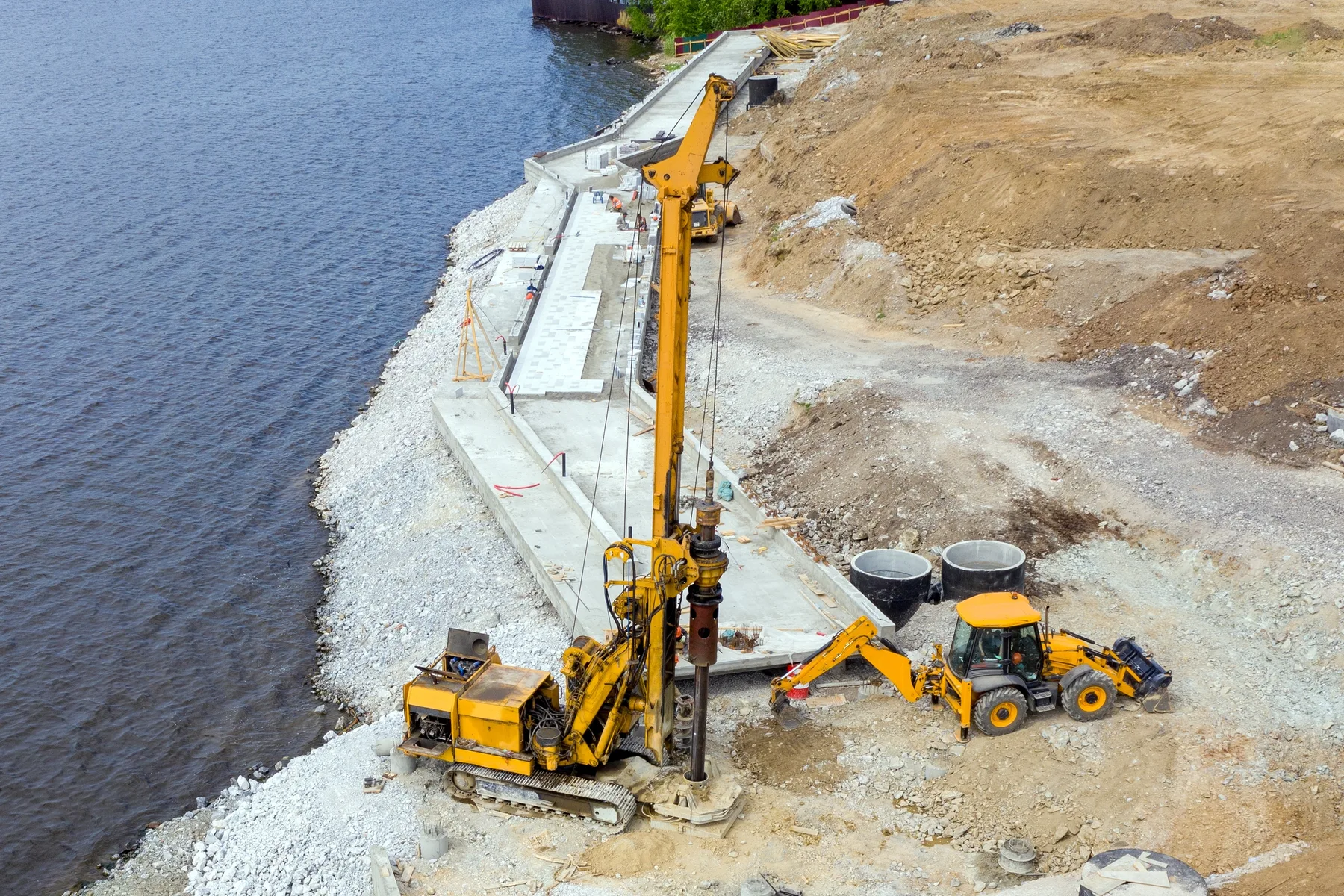
Site work is harder than a yard, and that is precisely why machines left on open sites between phases are the ones that go. Where a machine has to stay out, park it where it can be seen from a road with traffic on it rather than tucked out of sight behind the building — concealment protects the person taking it more than it protects the machine.
Access: the key problem almost nobody wants to own
Here is the uncomfortable part of the subject. A great deal of construction equipment is keyed in common across a model line, so the key that starts your loader starts a great many others. Possession of a working key proves nothing about authority.
The discipline that follows is unglamorous and effective. Keys out of cabs, without exception, including the machine that will be used first thing in the morning. Keys off site overnight rather than in the site box or the truck parked beside it. One person accountable for where the set is. And a written note of who holds a key, kept current, because a key nobody can account for is a key that has to be assumed to be in circulation.
Aftermarket ignition and starter interlocks matter for the same reason: they make the machine specific to your operation rather than to its model line. On machines with keypad or code start, the code is only a control while it is not written inside the cab door.
Delay: the physical layer, where minutes are the unit
Delay is the only category that can stop a theft in progress, and it is measured in minutes rather than in strength. Nobody expects a lock to be unbreakable; the point is that everything takes longer, in the open, with the noise that goes with it.
Wheel and track locks on machines that will sit. Hydraulic or fuel-line immobilization where it is available from the machine itself. Blocking geometry: machines nosed together, or nosed into a bank, so a unit cannot be driven straight out. Trailers unhitched, dropped onto locked couplers and stored apart from the machines they haul, since a stolen machine usually needs a way to travel and the trailer is half of that problem.
The pattern to look for is a single point that undoes all of it. A yard with excellent locks and a gate secured by a chain that can be cut in a moment has bought delay for the machines and none for the perimeter.
Detection: who is actually watching after midnight
Detection is where spending most often outruns benefit, because a recording is not a response. The question to ask of any detection measure is who receives the signal and what they are able to do about it within a few minutes.
Monitored alarms with a named responder are detection. Telematics geofences that send an alert to a phone somebody will hear are detection. Cameras recording to a box in an office nobody enters until Monday are documentation, and documentation belongs to the recovery category rather than this one. That is not an argument against cameras — footage supports a report and occasionally identifies a vehicle — it is an argument against counting them twice.
Real-World Scenario: A contractor invests in a camera system covering every approach to the yard, and it works perfectly. The footage shows a pickup and trailer arriving in the evening, a loader being driven up the ramps, and the trailer leaving, all in clear view and good light. Nobody sees any of it until the following morning, because nothing was configured to tell anybody. The yard had bought detection hardware and no detection, and the machine had left through a gap in a fence that a length of pipe would have closed.
Recovery: where a tracker has to live to be worth having
Recovery is the category with the narrowest requirement and the most common installation error. A tracking unit is only useful if it is still on the machine an hour later, which is a question about placement rather than about the device.
Fit it to the machine, wired into the machine’s own power, and not in the first two places a knowledgeable person checks. A unit on the trailer follows the trailer. A unit in the cab in plain sight goes out with the door. Battery-backed units keep reporting after the power is cut, which is exactly the moment their reporting matters.
Then test it. A geofence nobody has ever triggered on purpose is an assumption, and the machine leaving the yard is the wrong time to discover that the alert address is a mailbox no longer read.
Attachments leave separately, and rarely come back
Attachments are the part of the fleet that theft controls habitually skip, and they are unusually attractive: valuable, unmarked, liftable by two people, and easy to sell without explanation.
Store them inside where possible, and where not, chain them together so that taking one means taking the pile. Mark them somewhere that is not the obvious plate. Keep a photographed list with serials where serials exist, because an attachment that was never recorded is nearly impossible to describe to anybody afterward and is the item most often short at settlement on an equipment floater claim. Small tools follow the same logic at a smaller scale and disappear at a higher rate.
The controls an underwriter can actually verify
Equipment submissions ask about storage, keys, immobilization and tracking directly, and the answers are read against the claim history sitting behind them. That is the whole mechanism: controls describe the pattern of losses an insurer expects, and history says whether the description held.
Two practical consequences. First, describe the arrangement that exists rather than the one intended — a control claimed on paper and absent in the yard makes the file wrong about the risk, and every other answer becomes less reliable with it. Second, tell your broker when something changes, because a yard secured mid-year is a fact worth having on the file before renewal rather than after. Where machines are rented in during busy months, the same questions reach the not-owned side of the program, and the yard those machines sleep in is yours.
Controls that survive a crew change
The last failure is organizational rather than physical. Controls that live in one long-serving foreman’s habits leave with the foreman, and the operation that follows looks identical from the road while doing none of it.
Write the arrangement down as a short standing rule — where machines park, where keys go, who checks the gate, who is responsible for the last unit at the end of the day. Make the check part of shutdown rather than something recalled afterward. Then treat a near miss as information: a cut chain, a moved machine, an unexplained hour on a meter. Those are the cheapest data you will ever get about your own exposure, and they are the ones most likely to be tidied away.
If a machine does go, the sequence in the first hour decides much of what happens next, and the ownership records behind the claim have to already exist. The machine-class cost drivers explain why compact units carry this weight, larger machines trade portability for other exposures, and the liability layer sits under all of it. To have your controls read against the schedule they protect, send the detail through the quote form or read more about the agency.