

Virginia is one of the few states whose vehicle code did not have to stretch to accommodate a backhoe. Instead of the residual category most legislatures use — equipment defined mainly by what it is not — the Commonwealth wrote a class around what construction machinery is actually for, and a backhoe sits in it as the obvious example rather than the awkward one.
That is where this page starts, because it is the one genuinely distinctive legal fact about running this machine here. After it come the two things that shape a Virginia equipment file in practice: a three-tier contractor license that states the scale of work you may take, and ground that changes character completely between the tidewater and the mountains. The machine physics that hold in any state belong to the backhoe insurance pillar.
What backhoe insurance costs in Virginia
No premium is quoted on this page, and none could be honestly. The number is built from the machine and attachment list with serial numbers, the valuation basis you select, where the backhoe is kept, how much of its week is spent on public roads, and your own record. Virginia then adds a question of its own: which Virginia the machine works in. Tidewater soft ground, northern-corridor traffic and Blue Ridge grade produce different claims from each other, and a schedule that says which one it lives in gets a better answer than one that does not.
Virginia backhoe regulations: road operation
Virginia classifies a self-propelled backhoe as ‘special construction and forestry equipment’ under Vehicle Code § 46.2-100 — any vehicle designed primarily for highway construction, highway maintenance, earth moving or other construction work and not designed for the transportation of persons or property on a public highway — so a backhoe reaching a jobsite over public roads does so as off-highway construction equipment rather than as a registered highway vehicle.
The difference there is easy to miss and worth spelling out. In most states a backhoe becomes special mobile equipment, a residual class assembled out of exclusions — not built to carry people, not built to carry property, only incidentally on a highway. Virginia instead uses Code of Virginia § 46.2-100 to define special construction and forestry equipment by purpose: highway construction and maintenance, earth moving, other construction work. A backhoe is not argued into that category, it is the category’s central case, and an owner here never has to make the classification argument that owners in neighboring states occasionally do. What the narrower class does not do is change the road. The machine reaches its jobsites over public highways as off-highway construction equipment, and while it is out there it can strike a curb line, a parked vehicle or a signal base like anything else — a liability exposure rather than a floater one. Above that sits the license: the Commonwealth licenses contractors in Class A, B and C through the Board for Contractors at the Department of Professional and Occupational Regulation, with the class fixing the permitted value of the work you may take. Both the vehicle-code section and the licensing authority are linked below, and both were read before they were cited.
Common backhoe risks in Virginia
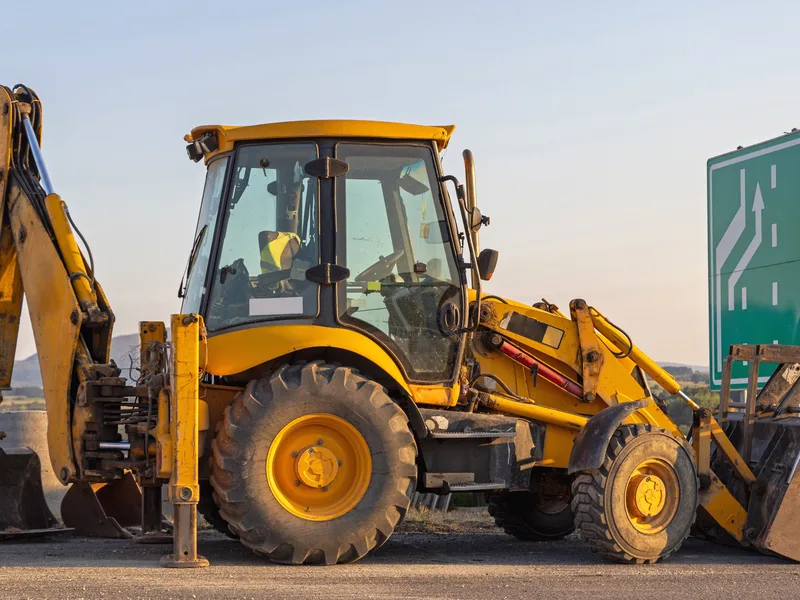
Virginia gives the same machine three different working lives. On the tidewater the risk is underfoot: saturated ground and a high water table mean a stabilizer can settle under load on a pad that looked sound, and the storm season adds a yearly question about where the iron is standing in September. In the northern corridor the risk is proximity and pace — constrained sites, finished surfaces on every side, night work windows and traffic that turns every short road move into an event. Along the Blue Ridge it reverts to grade, distance and slow recovery. The through-line is that a backhoe here spends more of its week on public roads than owners estimate, and road movement is where the largest single numbers come from.
Common Virginia backhoe claims we see
- Stabilizer settlement on saturated tidewater ground. The signature coastal Virginia loss, and it happens with the machine loaded.
- Contact damage during a short road move in heavy traffic. Northern corridor specialty, high frequency and rarely the machine’s fault alone.
- Boom or counterweight into finished work on a constrained site. Nothing behind the operator but somebody else’s completed job.
- Storm and flood damage decided by where the machine was parked. Not where it is based — where it actually was.
- Recovery and downtime after a loss on a mountain job. Where the standing costs outrun the repair bill.
Why Virginia backhoe owners choose Equipment Guard Insurance
A Virginia contractor with a Class A, B or C license has a program arranged around it, and being told to move the whole thing so one machine can be scheduled correctly is not advice. We write equipment on its own and leave the rest alone. We also treat the road exposure as real rather than notional, ask where the backhoe stands during storm season instead of assuming a yard, and place through markets named on our homepage that will read a Virginia equipment schedule on its own terms.
Major Virginia backhoe markets
- Virginia Beach. Coastal residential and municipal work on soft, high-water-table ground, with a storm question every autumn.
- Norfolk. Port, naval and industrial site work where the machine is close to finished surfaces and heavy traffic at the same time.
- Chesapeake. Utility, drainage and roadway work across low ground that stays wet long after the rain stops.
- Richmond. Capital and reconstruction work through an old street grid, with buried services older than the drawings for them.
- Arlington and the northern corridor. Constrained urban sites, night windows and the densest traffic any road move in the state will meet.
- Roanoke. Blue Ridge grade and longer approaches, where recovering a stopped machine takes days rather than hours.
Related
- Backhoe insurance — the machine physics that hold in every state.
- Skid Steer insurance in Virginia — the machine whose Virginia filing goes to the State Corporation Commission rather than a Secretary of State.
- All equipment insurance in Virginia — the state hub.
- Equipment floater · Rented & leased equipment
Primary sources
- § 46.2-100. Definitions — Virginia Law Library (road use and registration)
- Board for Contractors — Virginia Department of Professional and Occupational Regulation (contractor licensing)
Virginia backhoe insurance FAQs
What class does Virginia put a backhoe in?
Special construction and forestry equipment — a category of its own, defined around vehicles built for highway construction and maintenance, earth moving and other construction work rather than for carrying people or property on a public highway. That is narrower than the residual special mobile equipment class most states apply, and a backhoe answers the description directly instead of being reasoned into it. The section is linked on this page.
Does the narrower category help me in practice?
It removes ambiguity, which is worth something when a machine is being classified by somebody who has never operated one. What it does not do is take the backhoe off the road or answer the liability question. Reaching a jobsite over public roads as off-highway construction equipment still means being on a public road, and the damage the machine does out there is settled by liability coverage while the floater deals with the machine itself.
How do the Class A, B and C licenses affect an equipment account?
They tell an underwriter what scale of work you are permitted to take. The Commonwealth licenses contractors in three classes through the Board for Contractors at the Department of Professional and Occupational Regulation, and the class you hold sets the permitted value of the contracts and projects you can accept. A schedule of machines that clearly outruns — or badly undershoots — the class you carry is the sort of mismatch that produces questions, and it is easier to have the license and the equipment tell one story.
What does Hampton Roads ground do to a backhoe?
It removes the margin under the stabilizers. Tidewater sites sit on soft, saturated ground with a high water table, and a leg that seems well placed can settle while the machine is loaded. It also means dewatering, trench support and slow going, and it means an autumn storm season during which where the machine is standing is a genuine underwriting question rather than a formality.
Is the Northern Virginia work different from the rest of the state?
Materially. Utility, data-center and roadway work in the northern corridor happens in some of the heaviest traffic in the country, on constrained sites with finished surfaces on every side and night windows for anything touching a road. A backhoe there makes short, frequent moves under pressure, which is the profile that produces contact claims. The Roanoke and Blue Ridge end of the state runs the opposite pattern — longer approaches, more grade, fewer people to hit.
Can the backhoe be written by itself?
Yes. Equipment Guard Insurance writes equipment as a standalone policy, so the machine gets scheduled properly while the general liability and workers compensation supporting your contractor class stay exactly as they are.