
A Wyoming outfit buys a backhoe because it does the work of several machines and needs no help getting to the job. It trenches, it loads, it sets pipe and it drives itself down the county road afterward, which is exactly the habit that puts it into a category most owners never think about.
This page is about that category and what surrounds it — how Wyoming actually handles a work machine on public roads, who is regulating the contractor operating it, and what wind, elevation and genuine remoteness do to a schedule. Reach, breakout and the loader end are physics rather than geography and belong to the backhoe insurance pillar.
What backhoe insurance costs in Wyoming
We will not quote from a webpage, and a figure invented to look helpful would help nobody. What actually drives a Wyoming backhoe premium is remoteness and exposure to weather: how far the furthest job sits from support, how much of the machine’s time is spent under its own power on county and state roads, whether it is stored inside anything at all, how much of the work is energy-services versus municipal, the valuation basis you pick and your own history. A machine working inside one town and a machine running to leases several hours out are different risks, and remoteness costs more after a loss than it does before one.
Wyoming backhoe regulations: road operation
A self-propelled backhoe is treated as ‘mobile machinery’ — self-propelled heavy equipment used primarily in construction/maintenance — which Wyoming registers under a distinct county mobile-machinery registration rather than standard vehicle registration.
Wyoming records that arrangement at W.S. 31-18-203. We name it and link nothing: our record grades this lens general, meaning the fact was not read and confirmed to the standard a published link is held to, and a name claims less than a link does. What deserves attention is how far Wyoming’s answer sits from the usual one. Most states resolve the road question by leaving a work machine out of the registration system; Wyoming resolves it by building a separate system and putting the machine into it, administered at the county rather than from one state counter. That is an affirmative obligation, and an owner whose habits were formed in an exemption state can be perfectly compliant everywhere else and out of step here. None of it, however, decides a coverage question. A registered machine that strikes a fence, a cattle guard or a parked vehicle on the way to a lease creates a liability claim, and the floater that repairs the backhoe does not answer for the fence. Licensing sits above all of that and is likewise local: general, plumbing and mechanical contractors answer to cities and counties, with electrical work licensed statewide, so a crew working several counties may satisfy several different requirements in a season and carry one set of certificates through all of them.
Common backhoe risks in Wyoming
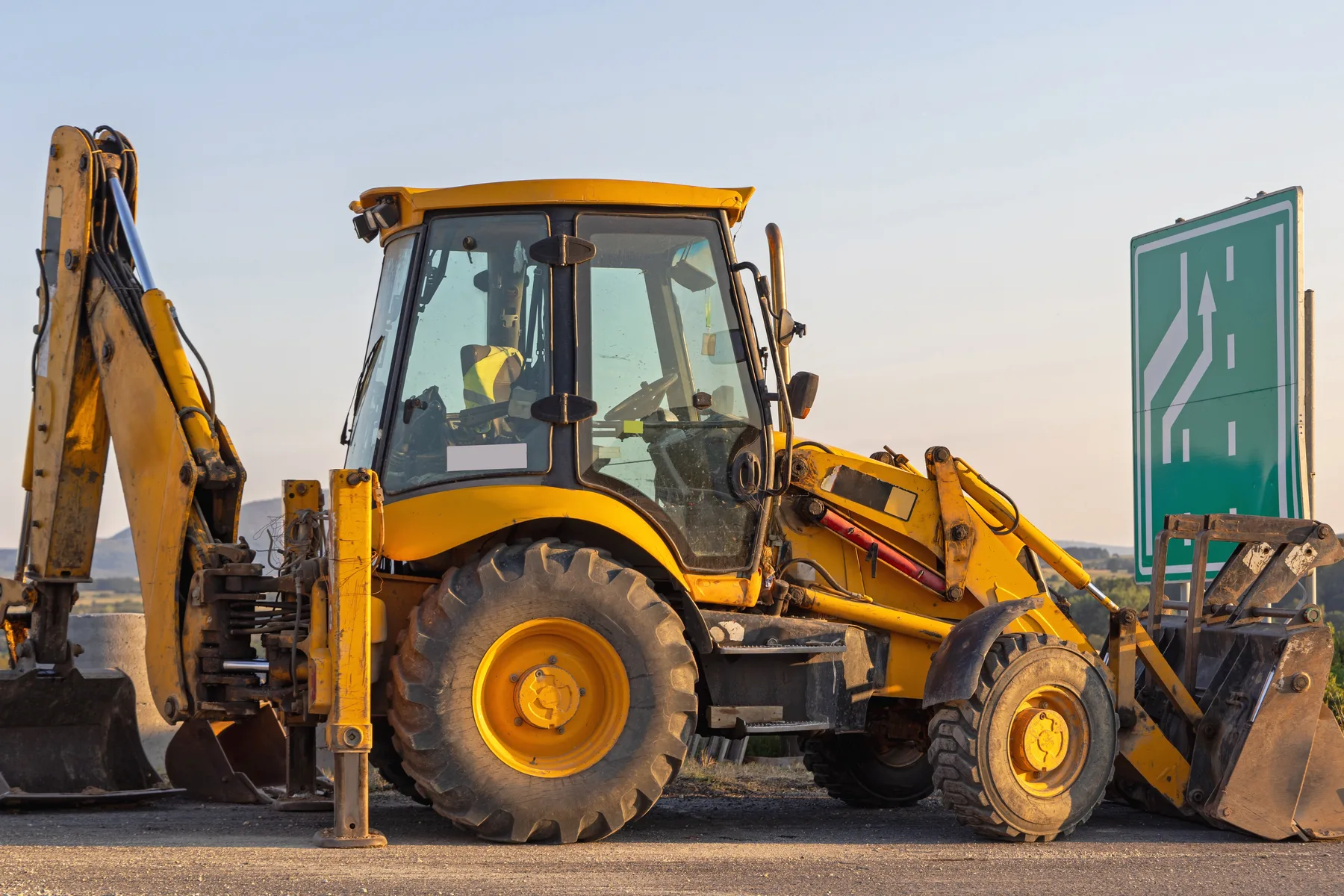
Exposure in Wyoming is set by how far help is, not by how busy the road is. A machine that goes down on a lease or a county job hours from the yard turns a modest repair into a stalled crew, a rented replacement dispatched a long way and a recovery that has to wait on weather. Wind and elevation shape the physical side: sustained wind drives abrasive material into pins, seals and rams and makes a raised boom worth thinking about, and hard cold at altitude is unkind to hydraulics and starting systems. Road movement over long unshouldered stretches supplies the contact losses, and the ground itself supplies the rest, with stabilizer legs finding fill and disturbed material on energy-services sites that never behaved like undisturbed soil.
Common Wyoming backhoe claims we see
- Downtime losses on remote jobs. The characteristic Wyoming file, where the recovery and the replacement cost more than the damage did.
- Road contact on long unshouldered county and state stretches. Fences, cattle guards, gates and passing vehicles.
- Wind-driven abrasion and debris damage. Slow on glass and paint, faster on seals, rams and exposed pivots.
- Stabilizer settlement into pad fill on energy-services sites. Placed material that never consolidated the way undisturbed ground would.
- Cold-weather hydraulic and starting failures argued as sudden loss. Worth separating early, because wear is not a peril and the distinction settles the claim.
Why Wyoming backhoe owners choose Equipment Guard Insurance
Writing equipment on its own fits a state where the rest of the program answers to whichever counties the crew happens to work. Nobody here wants a liability and workers compensation arrangement reopened so one backhoe can be scheduled properly, and we do not propose it. We price remoteness as a real cost rather than a rounding note, we ask what the machine is standing on at an energy-services site before we ask what it is worth, and we place through markets — named on our homepage — that will read a Wyoming equipment schedule on its own merits.
Major Wyoming backhoe markets
- Cheyenne. The state’s largest municipal and institutional market, and the base for crews running east-west along the southern corridor.
- Casper. Central energy-services and industrial work, with the deepest concentration of contractor yards outside the southern corridor.
- Gillette. Northeastern energy country, where jobs sit on placed pad material and approaches are long in every direction.
- Laramie. High-elevation campus, municipal and highway work, with the coldest sustained operating conditions in the state.
- Rock Springs. Southwestern industrial and pipeline-adjacent sitework, exposed to wind and to winter closures on the corridor that serves it.
- Sheridan and Jackson. Two very different build-outs — one steady and northern, one resort-driven and constrained — sharing the same problem of distance from support.
Related
- Backhoe insurance — the machine physics that hold in every state.
- Skid Steer insurance in Wyoming — the machine Wyoming leaves to a filing office rather than a county counter.
- All equipment insurance in Wyoming — the state hub.
- Equipment floater · Rented & leased equipment
Primary sources
- Licensing - Electrical Safety, Wyoming State Fire Marshal's Office — Local city/county governments (general contractors); Wyoming Department of Fire Prevention and Electrical Safety (electricians) (contractor licensing)
We do not link a Wyoming vehicle-code section here. The road-use treatment described above follows how Wyoming classifies self-propelled construction equipment; where the state publishes a section that states it directly, this page links it.
Wyoming backhoe insurance FAQs
Is a Wyoming backhoe exempt from registration?
No, and this is where owners moving in from elsewhere get caught. Wyoming does not hand self-propelled construction machinery an exemption; it puts it in a category of its own — mobile machinery — and registers it under a distinct county scheme rather than as an ordinary vehicle. It is an affirmative step somebody has to take, not an absence of one, and the difference matters if your compliance habits were formed in a neighboring state.
Does that county registration affect the insurance?
Not directly, and indirectly quite a lot. Registration status and coverage answer different questions, so nothing about the county record decides who pays for a loss. What it does is create a paper trail per machine, per county, which is the sort of thing an underwriter appreciates and a claims adjuster asks for. Keeping the schedule, the serial numbers and that record consistent is cheap to do and awkward to reconstruct after an event.
Why is the section named here and not linked?
Because our record grades this lens general. The section reference is Wyoming’s own datum and we will name it, but the underlying fact has not been fetched and read to the standard our published links are held to, and publishing a link would claim more than we have earned. If and when the document is confirmed, the citation surfaces here without this page changing.
Who licenses contractors in Wyoming?
Cities and counties, for general, plumbing and mechanical work; electrical is the exception and is licensed statewide. So a crew working several counties may be answering to several different sets of requirements over one season, and there is no single state credential that travels with them. In that situation the insurance certificates are the document everybody actually looks at, which puts a premium on the schedule behind them being right.
What does Wyoming weather do to this machine?
Wind is the underrated one. Sustained wind across open country moves loose material, drives grit into every exposed joint and makes a raised boom a genuinely different proposition than it is in sheltered terrain. Add elevation and hard cold, which are unkind to hydraulics, batteries and cold starts, and you get a machine that is fine most of the time and unforgiving on the days it is not.
Our jobs are hours from anywhere. Does that change the coverage conversation?
It changes what a loss costs after the loss. When a machine goes down on a job a long way out, the expensive part is rarely the repair — it is the stalled crew, the replacement unit that has to come from a distant yard, and the recovery of the machine itself over roads that may be closed. Equipment Guard Insurance would rather size that into the placement at the outset than have you discover it while the machine sits.