

There is not much regulation standing between a South Dakota contractor and a jobsite, which sounds like freedom until you notice what it concentrates. With no competency license to hold and little else asked of you statewide, the dig duty carries nearly the entire weight — and the ground it applies to is frequently ground nobody has ever properly mapped.
This page covers how the notice period is counted, why the citation for it is missing here on purpose, what the ticket leaves in your hands, and the specifically rural version of the strike problem: private infrastructure that no notification system will ever mark. The machine itself — reach, swing, undercarriage, running attachments — is on the excavator insurance pillar, which does not change by state.
What excavator insurance costs in South Dakota
No published figure would survive contact with an actual submission, because the machine is the smaller input. What sets a South Dakota excavator placement is the work and the geography around it: how deep, how often you are inside a live utility envelope versus out on section-line and field work, how far the machine travels between jobs and how it gets there, unit size and age, the attachments on the schedule, where it sits over a hard winter, and your record. A firm trenching in a city right-of-way and a firm building dams and approaches ninety minutes from the nearest town are different risks in every direction.
South Dakota excavator regulations: dig notice and the one-call duty
at least forty-eight hours (two working days) before excavation, the 48-hour period beginning 12:01 a.m. the following day and excluding Saturdays, Sundays, and state legal holidays
We name the governing section without linking it. Our data identifies it in the codified chapter 49-7A, and the notification center for the state was established under the same chapter — but the address we hold for the text does not deliver readable text to an ordinary client, so linking it would imply a reading we have not done. That is the whole of the disclosure; we make no claim about what the section says beyond the rule our verified record carries. And the rule is workable as stated: notice at least forty-eight hours ahead, the period beginning at 12:01 a.m. on the day after you call, with weekends and state legal holidays excluded from the count. What that notice produces is a duty on the registered operators to locate and mark. It is not a guarantee of depth, it does not reach anything unregistered, and it does not relieve a crew of digging carefully around whatever marks appear. In a state where a great deal of the buried world was installed privately and recorded nowhere, the space those exclusions leave open is unusually wide.
Common excavator risks in South Dakota
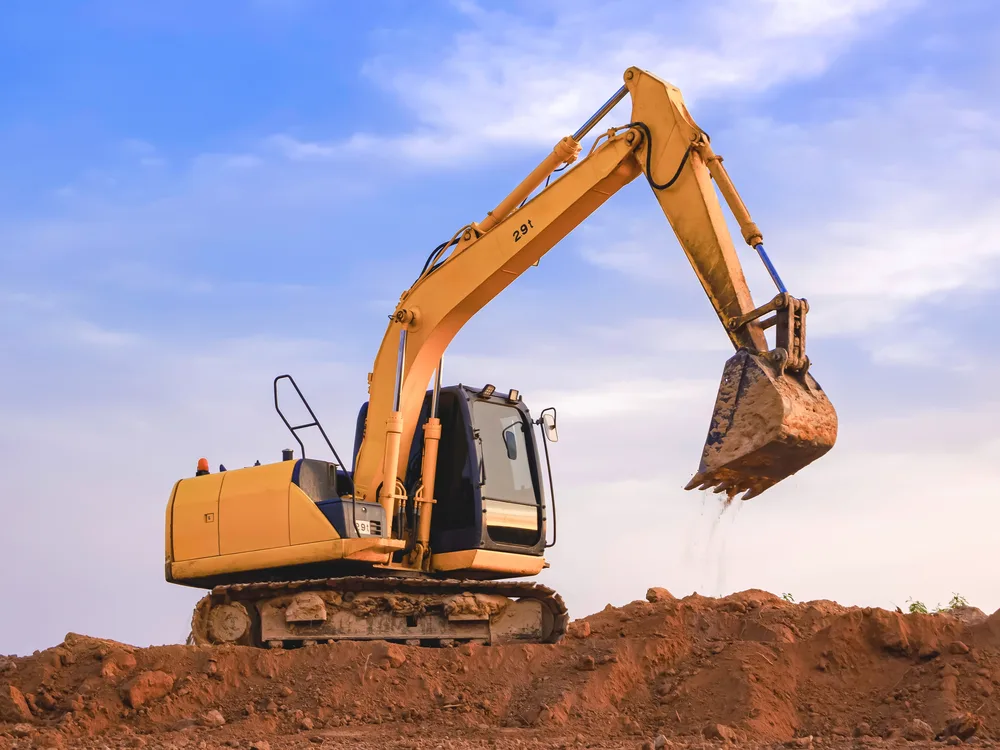
The strike still leads, but its rural form is different from the metropolitan one. Out on acreage the struck line is as likely to be drain tile, a private water run or a landowner’s own fiber as it is to be a registered main — and the loss is a dispute with a property owner rather than a utility restoration file. Nearer town the familiar version applies, with service interruption dwarfing the repair. Then the state adds distance: a machine that breaks or is damaged a long way from support is out of service for the travel as well as the repair, recovery and towing are their own line items, and a unit parked on a remote site overnight is unwatched in a way an urban yard is not. Frost runs deep here, so the dig season is short and hard, and the machines that are not working sit for months.
Common South Dakota excavator claims we see
- Cut drain tile or private farm service. The characteristic rural claim — unmarked because unregistered, and argued with a landowner rather than a utility.
- Registered utility strike near town. Interruption and restoration costs that run well past the value of the machine that caused them.
- Rollover on an approach or a dam face. Grade, loose fill and a machine working the edge of what it just built.
- Remote-site theft or vandalism. Discovered on the next visit rather than the next morning, which is a very different loss report.
- Transport damage over long hauls. Gravel and section roads, repeated loading, and attachments riding with the machine.
Why South Dakota excavator owners choose Equipment Guard Insurance
In a state that issues no competency credential, an owner or general contractor sizing you up has your certificates and not much else — so those certificates should be assembled for that purpose rather than inherited from whoever wrote the first policy. We place the equipment monoline, ask about travel, overnight parking and the rural unmarked problem before quoting, and use markets that will underwrite dispersed work instead of penalizing it. Those markets are named on our homepage, and nothing about the placement requires you to move liability or comp you are content with.
Major South Dakota excavator markets
- Sioux Falls. The state’s largest concentration of street, commercial and subdivision excavation, and the only market where the buried congestion resembles a big-city job.
- Rapid City. Rock, grade and Black Hills terrain, where the ground fights the bucket rather than concealing things in it.
- Aberdeen. Regional agricultural and municipal work with long approaches and heavy seasonal compression.
- Brookings. University and research-campus construction alongside continuing town infrastructure replacement.
- Watertown and Mitchell. Trade-center towns serving wide farm territories, so crews cross constantly between right-of-way work and private ground.
Related
- Excavator insurance — the machine physics that hold in every state.
- Backhoe insurance in South Dakota — the machine whose statewide question is whether it may be on the highway at all, rather than what waits below it.
- All equipment insurance in South Dakota — the state hub.
- Equipment floater · Rented & leased equipment
Primary sources
- S.D. Codified Laws § 49-7A-5 — Notification of proposed excavation--Promulgation of rules (South Dakota Legislature statute API) — South Dakota One Call notification center (established under § 49-7A-2) (dig notice and one-call)
South Dakota excavator insurance FAQs
How is the South Dakota waiting period counted?
In whole days that start after your call, not from it. The requirement is at least forty-eight hours — two working days — and the period begins at 12:01 a.m. on the day following notification, with Saturdays, Sundays and state legal holidays left out of the count entirely. A Thursday call therefore does not release a Saturday start. Building the mobilization around the first minute of the following day, rather than around the moment the phone was answered, is what keeps a crew from arriving before the locators do.
Why does this page not link the South Dakota statute?
Because we cite only documents we have opened and read, and this one has not been delivered to us in readable form. The address recorded in our data does respond, but what comes back is an empty shell that then loads its text by script; a client that does not run that script receives no section text at all. A page answering is not the same as a page saying what you think it says, so we state the rule from our verified record of it and leave the citation off rather than link an address and imply we read what it served.
Then where does the rule on this page come from?
From our own verified ledger for this state, which records the notice duty, the counting method and the notification center established for it — held under the codified section our data identifies as chapter 49-7A. That is the rule we are willing to state. What we are not willing to do is describe the wording, structure or headings of a document we have not actually seen, because a page that characterizes an unread source is how a confident error gets published.
Who is going to check my qualifications to run this work?
Not the state, in any competency sense. South Dakota has no statewide general-contractor license; a construction contractor registers for an excise tax license with the revenue department, and only trades such as electrical and plumbing are separately licensed. The effect for an excavation firm is that your statewide obligations concentrate almost entirely into the dig law and the construction stormwater permit — and that whoever hires you is evaluating your certificates, because there is no license class to evaluate instead.
What about lines the one-call system does not cover?
They are a large part of rural work here, and they are the ones that hurt. A notification system reaches the facilities its member operators own and have registered. It does not reach agricultural drain tile, a private water run between a well and a barn, a yard line downstream of a meter, or the fiber a landowner trenched to an outbuilding himself. On farmstead, feedlot and acreage work, the marked utilities are frequently the minority of what is actually under the site, and the only defense is asking the owner and exposing carefully.
Will you write just the excavator?
Yes. Equipment Guard Insurance places equipment monoline in South Dakota, so the machine and its attachments go on their own schedule and the below-grade exposure is handled with them, without moving anything else.